
Leupold GX-5C Golf Rangefinder
4.6Editor score
Accurate readings to 700 yards
True golf range slope adjustment
PinHunter 3 obstacle filtering
Continuous scan mode
Leupold Rangefinder guide comparing ranging distance, ballistics, optics, displays, durability, and features for hunting, shooting, and golf.
A dependable rangefinder can turn an uncertain field estimate into a more informed shooting or golf decision. Leupold options range from dedicated bow and firearm units to binocular rangefinders, while the comparison also includes two versatile Vortex hunting models. The right choice depends on range, target type, optical needs, ballistic features, and display readability.
This guide compares ten rangefinders using the supplied specifications, customer ratings, ranging distances, display technology, ballistics, optical features, weather resistance, and intended activities. It covers dedicated archery models, advanced long-range units, binocular rangefinders, a golf-specific model, and approachable hunting rangefinders. Product availability and technical details can change, so readers should verify current listings.
Each review identifies the model’s strongest use case, important trade-offs, and the buyer most likely to benefit. The top selections highlight a budget-friendly dedicated option, a versatile all-around recommendation, and a feature-rich premium unit. Ratings reflect the supplied marketplace feedback, while ratings, configurations, and offers can change over time, making current product pages worth checking before purchase.
4.6Editor score
4.7Editor score

4.6Editor score
The comparison spans dedicated archery rangefinders, advanced firearm and bow systems, binocular rangefinders, a golf unit, and two general-purpose hunting options. Read the maximum ranges carefully, because reflective, tree, and game-distance figures are not directly interchangeable.


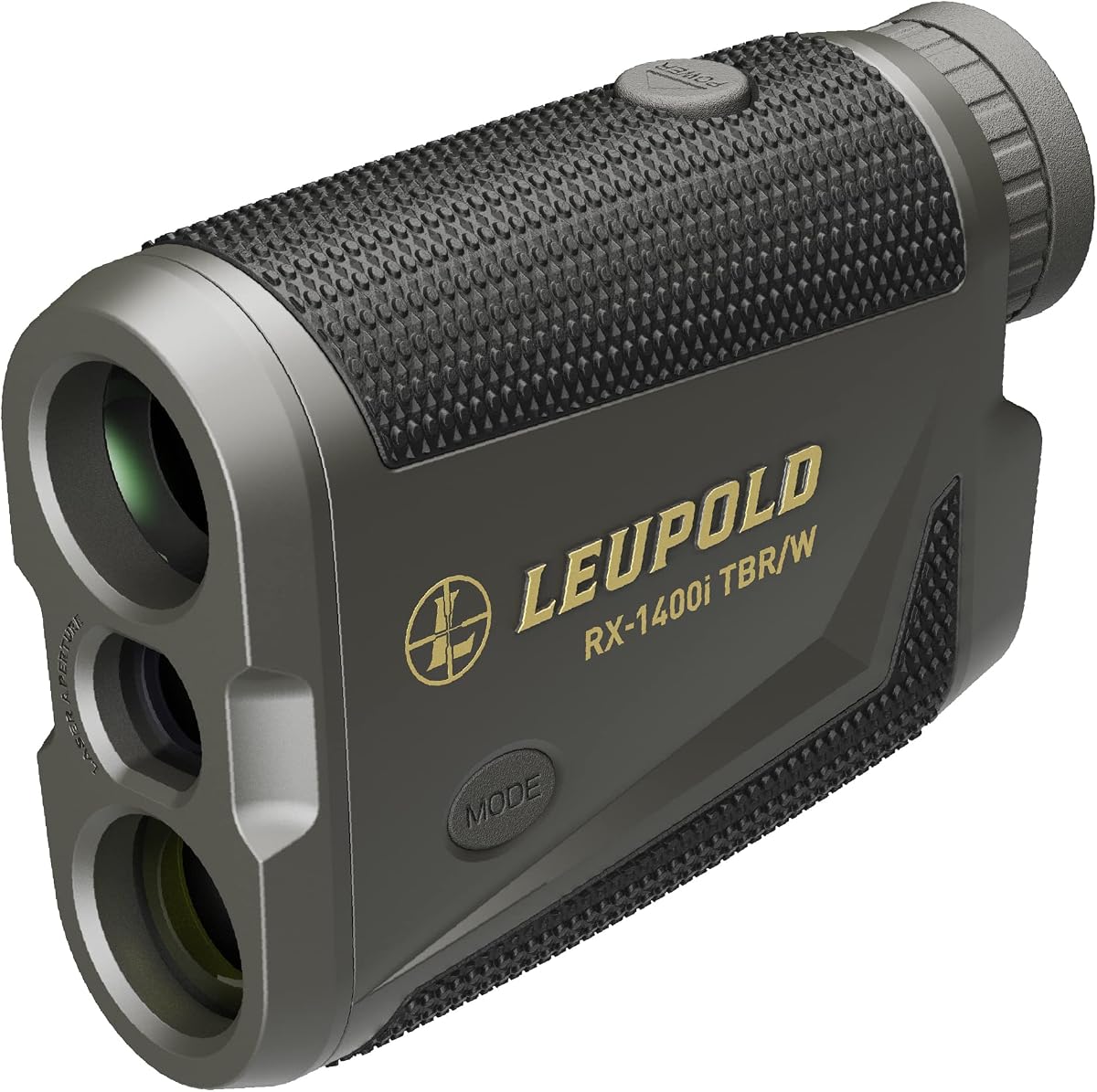
The Leupold RX-1400I TBR/W Gen 2 is an all-around rangefinder for archers who want more than a basic distance reading. Its supplied rating is 4.7, and the combination of 1,400-yard reflective-object capability, True Ballistic Range and Wind calculations, bow mode, and Flightpath technology gives it a particularly strong balance of range and specialized shooting information.
We may earn a commission when you buy through this link, at no additional cost to you.
Its standout feature is the combination of TBR/W and archery tools. TBR/W can produce ballistically calculated ranges for longer shots and steeper angles, and the supplied specifications also describe a hold point for a 10-mph crosswind at a 90-degree angle out to 800 yards. In bow mode, Flightpath displays potential arrow obstructions while calculating angle-compensated ranges using the distance information.
The model can range to 1,400 yards on reflective objects and 1,200 yards on trees, but buyers should interpret those figures as target-dependent capabilities rather than a guarantee of a readable result against every distant object. Its TOLED display uses bright red characters and letters with adjustable brightness, which is useful for changing light conditions. The main limitation is that the supplied information does not list Bluetooth app compatibility.
This is the strongest general recommendation for a bowhunter who values ballistic support and a long maximum range without moving to a premium binocular system. It is less obviously suited to golfers, and those who require wireless configuration should examine the RX-5000 instead. For a dedicated archery tool with clear Flightpath and TBR/W functionality, the RX-1400I Gen 2 is especially compelling.
TBR/W gives the rangefinder a more useful role than simply reporting a straight-line distance. Its calculations are designed to account for the effects associated with longer-range and uphill or downhill shooting, helping archers make a more informed hold decision when the shot is not level.
Bow mode goes further by showing potential arrow obstructions and providing angle-compensated ranges. That makes this model more relevant when branches, brush, or uneven terrain complicate the relationship between the bow, the shooter, and the target.
We may earn a commission when you buy through this link, at no additional cost to you.
The Leupold RX-FullDraw 5 is built around bow ballistics, making it one of the most focused archery products in this comparison. It carries a supplied rating of 4.7 and uses Archer’s Advantage technology to factor arrow weight, arrow velocity, and peep height into range calculations. The result is a unit aimed at shooters who want information beyond a single numerical distance.
We may earn a commission when you buy through this link, at no additional cost to you.
Flightpath is the model’s most distinctive feature. Rather than only telling the user how far away a target is, it uses the bow’s ballistics to display the highest point of the arrow’s flight. This can help a shooter understand where the arrow may pass and whether an obstruction is likely to become a problem. The display also includes a Last Target mode that seeks the farthest target along the laser path, reducing confusion from grass, twigs, and other intervening material.
The supplied title refers to a black and green OLED configuration, while the feature list describes bright red characters and adjustable brightness. The current listing and its color description should therefore be checked before purchase, particularly for buyers who care about display appearance or expect a particular interface. The model also lacks listed Bluetooth app compatibility, so configuration appears to be handled directly on the device.
This rangefinder is most appropriate for serious bowhunters who prioritize trajectory information and obstruction awareness over firearm-oriented long-range features. It is not a natural choice for golf or general target identification, and its advantages may be less meaningful for someone seeking a simple point-and-shoot unit. Within archery-focused tools, however, its combination of bow ballistics, Flightpath, and Last Target selection is particularly purposeful.
Archer’s Advantage uses arrow weight, velocity, and peep height to calculate more accurate ranges for steep-angle and long-distance shots. These are details a general-purpose distance meter cannot account for, which gives the RX-FullDraw 5 a clear identity as a bowhunting instrument.
Flightpath gives the shooter visual context about the arrow’s high point. In woods or areas with branches and brush, that extra context may matter more than another decimal place on a conventional range display.
We may earn a commission when you buy through this link, at no additional cost to you.
The Leupold RX-5000 TBR/W with DNA is the most advanced conventional handheld model in this group. Its supplied rating is 4.6, and its defining advantage is a Long Range Mode that gathers laser pulses over several seconds to extend ranging capability to more than 5,000 yards on trees and deer-sized game. That performance targets shooters operating far beyond ordinary hunting distances.
We may earn a commission when you buy through this link, at no additional cost to you.
Its ballistic tools are unusually broad. Hornady 4DOF uses real bullet data to calculate a bullet’s true flight path, while Precision Cut Archery Software uses arrow weight, velocity, peep height, and atmospheric data for bow ballistics. Bluetooth compatibility with the Leupold Control App adds another layer of convenience because users can drop waypoints, adjust settings, and remotely control the rangefinder.
The red OLED display and long-range electronics make the RX-5000 a purpose-built tool rather than a simple distance meter. Buyers should understand that the 5,000-yard figure belongs to Long Range Mode and applies to trees and deer-sized game; it should not be interpreted as a universal maximum against every possible target. Its specialized design may also be excessive for archers who only need moderate ranges and basic ballistic assistance.
Choose the RX-5000 when extreme-range capability, firearm trajectory support, and app-based control are genuine priorities. It is especially relevant to long-range precision shooters who understand the importance of ballistics and are willing to work with a more advanced unit. For ordinary game hunting or casual target ranging, the RX-1400I Gen 2 offers a more focused and less elaborate path.
By collecting laser pulses over several seconds, Long Range Mode can acquire readings on trees and deer-sized game beyond 5,000 yards. This is the defining capability for shooters who work at distances where a standard handheld laser may not return a quick, dependable number.
Bluetooth connection to the Leupold Control App allows waypoint storage, setting changes, and remote control. For a precision shooter, that means important adjustments and marked positions can be managed away from the unit itself.
We may earn a commission when you buy through this link, at no additional cost to you.
The Leupold GX-5C Golf Rangefinder is a focused course accessory, and its supplied rating of 4.6 reflects a generally favorable response among buyers. It is not intended to compete with hunting models that calculate arrows or bullets. Instead, it concentrates on the decisions golfers need to make: distance to the pin, adjusted club selection, and rapid assessment of multiple targets.
We may earn a commission when you buy through this link, at no additional cost to you.
Its most useful feature is True Golf Range, which calculates the actual strike-to-pin distance based on inclines, declines, and other conditions. That makes the displayed number more useful for club selection than a simple line-of-sight measurement. Flag Lock works in the opposite direction, helping the rangefinder identify the flag among trees and bushes so the unit can lock onto the intended target.
PinHunter 3 is designed to eliminate false readings caused by background obstacles, while Scan Mode supplies continuous readings with a single button press. Digitally Enhanced Accuracy is specified at plus or minus one yard out to 700 yards. These combined functions make the GX-5C useful for quick course navigation, from checking a green before a putt to mapping distances after a tee shot.
This is the sensible Leupold choice for golfers who want dedicated pin-finding and slope-adjusted functions without paying for firearm or archery ballistics. It will not satisfy a hunter looking for wind compensation or trajectory calculations, and no such modes are listed. As a focused, approachable golf rangefinder, however, it covers the central needs of the course very effectively.
True Golf Range adjusts for slopes and other conditions, giving golfers a more useful figure for planning a shot. The distinction is especially valuable on courses where uphill and downhill approaches can make a direct line-of-sight reading misleading.
Flag Lock and PinHunter 3 work together to separate the intended pin from nearby obstacles. The result is a quicker, more confident acquisition when the flag sits against trees, bushes, or other course clutter.
We may earn a commission when you buy through this link, at no additional cost to you.
The Leupold BX-4 Range HD TBR/W combines 10×42 binocular viewing with laser ranging and ballistic calculations. Its supplied rating is 4.7, making it one of the strongest-rated options in the list. For users who want to identify an animal, scan terrain, and obtain a distance in the same optical platform, the binocular format offers a compelling alternative to a small handheld unit.
We may earn a commission when you buy through this link, at no additional cost to you.
Leupold’s Elite Optical System is specified to provide high light transmission, glare reduction, and strong resolution. The red OLED display is designed to produce bright, clear range readings, while TBR/W supplies ballistically calculated ranges for uphill and downhill shooting. Together, these features make the BX-4 more than a simple rangefinder with extra magnification; it is a complete observation and distance tool.
The binocular format is the central trade-off. Compared with a compact handheld rangefinder, a 10×42 optic is bulkier and less convenient to carry in a small pocket or on a bow quiver. It also costs considerably more in the supplied data, which is an important consideration even though prices are not a focus of this guide. No Bluetooth or app compatibility is listed, so the buyer should not expect the RX-5000’s remote configuration features.
The BX-4 is best for hunters and shooters who value the ability to observe at 10x magnification as much as they value ranging. It also makes sense for anyone who dislikes switching between conventional binoculars and a separate rangefinder. The water resistance, fog resistance, and lifetime guarantee add long-term confidence, but portability and simpler controls are the areas in which a handheld model may fit more naturally.
Combining a 10×42 binocular with a rangefinder reduces the need to switch devices while scanning. That convenience is especially valuable when glassing a distant ridge, identifying wildlife, and then determining the distance to a selected target.
The Elite Optical System emphasizes light transmission, reduced glare, and resolution. Combined with the red OLED readout, it creates an integrated viewing experience rather than a basic numerical range unit with a small viewing window.
We may earn a commission when you buy through this link, at no additional cost to you.
The Leupold BX4-Range HD Gen 2 TBR/W is a 10×42 binocular rangefinder built around portability, optical clarity, and rugged outdoor construction. Its supplied rating is 4.2, below several other entries, but the product’s core design remains appealing for shooters who want magnification and ranging in one package. The open-bridge, dual-hinge design is specifically described as extremely lightweight and ergonomic.
We may earn a commission when you buy through this link, at no additional cost to you.
Its optical system uses Leupold’s Elite Optical System, with emphasis on light transmission, glare reduction, and resolution. Guard-ion lens coating helps shed water, dirt, and fingerprints, a practical advantage when the unit is handled in rain, on muddy ground, or while wearing gloves. The model is also listed as waterproof and fogproof, with support from Leupold’s customer care program.
TBR/W appears in the product name, indicating support for Leupold’s True Ballistic Range and Wind approach, although the supplied feature list provides fewer detailed ballistic and maximum-range figures than it does for the BX-4 Range HD. That means buyers should review the complete current listing carefully, especially if exact ranging distances or display functions are central to the decision. The lower supplied rating also warrants attention before making a final purchase.
The BX4-Range HD Gen 2 is a good candidate for shooters who prioritize a light, ergonomic binocular format and durable optics. It may appeal to travelers or hunters who want one device for scanning and ranging without accepting the higher bulk of traditional binoculars. It is less suitable for buyers who require an explicitly listed long-range specification, extensive app control, or archery-specific software on the supplied data.
The open-bridge, dual-hinge design is intended to reduce bulk and improve handling. That makes the rangefinder easier to carry over long periods and more comfortable to raise repeatedly while searching across open country.
Guard-ion coating is designed to repel water, dirt, and fingerprints. These qualities are especially relevant for a device that is repeatedly raised to the eye during wet or dusty hunts.
We may earn a commission when you buy through this link, at no additional cost to you.
The Vortex Triumph HD 850 is a straightforward hunting rangefinder with a supplied rating of 4.7. It focuses on quick distance acquisition rather than ballistic calculations, archery software, or wireless control. That makes it a practical alternative for hunters who want a compact, easy-to-understand unit and frequently operate within common deer-hunting distances.
We may earn a commission when you buy through this link, at no additional cost to you.
Its stated maximum reaches 850 yards on reflective targets, 500 yards on trees, and 350 yards on game. Those differentiated figures are useful because hunters may try to range a person, an animal, or a natural background object. The unit offers LOS, HCD, and Scan ranging modes, along with Normal, First, and Last target modes, giving the user reasonable control over how the laser evaluates the scene.
The 5x magnification, 21mm objective lens, fully multi-coated optics, and black LCD support clear viewing in bright and low-light conditions. A soft-touch exterior supports a secure grip, including when the user is wearing gloves. The rangefinder is also listed as waterproof and shockproof, and the supplied information states that a soft carry case is included.
This model is most attractive to buyers who value understandable controls and dependable ranging modes over advanced trajectory features. It cannot be recommended as a TBR/W alternative because no ballistic calculation is listed. For general deer hunting, particularly at moderate distances, the Triumph HD 850 is a clean and functional choice with a range of target-selection options.
Normal, First, and Last modes give the user different ways to interpret the laser return. These controls can help isolate a selected target or make a more informed choice when multiple objects sit along the same line.
The soft-touch exterior is intended to remain secure in wet conditions or while wearing gloves. Combined with water and shock resistance, it supports use in outdoor environments where a bare, smooth device could be awkward to handle.
We may earn a commission when you buy through this link, at no additional cost to you.
The Leupold BX-6 Range HD 4DoF is a specialist binocular rangefinder for shooters who want premium optics, firearm trajectory calculations, archery software, and app control in one package. Its supplied rating is 3.5, the lowest among the ten products here, so the feature set and current customer feedback should be weighed carefully. The model number and supplied specifications nevertheless indicate a high-end approach.
We may earn a commission when you buy through this link, at no additional cost to you.
Hornady 4DOF uses real bullet data to calculate a bullet’s true flight path, providing trajectory information for firearm shooters. Precision Cut Archery Software applies arrow weight, velocity, peep height, and atmospheric data for archery calculations. This dual-sport approach is unusual among binocular rangefinders and is reinforced by Bluetooth compatibility with the Leupold Control App for waypoints, setting changes, and remote control.
The 10×42 configuration is the natural centerpiece for users who want to scan and range together. Leupold’s waterproof and fogproof technology uses internal gasses and sealing methods designed to withstand extreme temperatures and elevation changes while keeping the optics free from moisture. That durability is a long-term advantage for a product positioned at the upper end of the category.
The BX-6 is a logical choice for a serious precision shooter who wants a premium binocular platform and is willing to accept a large, specialized instrument. Its supplied 3.5 rating is the main caution, and buyers should examine recent customer feedback for recurring concerns. Those who mainly need a straightforward distance meter will find more approachable options in the list.
Hornady 4DOF draws on real bullet data to calculate a bullet’s true flight path. This makes the BX-6 more relevant for shooters who need ballistic context rather than only a number, particularly when working at long or angled distances.
The 10×42 viewing platform keeps ranging and target identification in the same device, while Bluetooth app support allows waypoints, adjustments, and remote control. That combination suits a shooter who wants a comprehensive field tool rather than a minimal rangefinder.
We may earn a commission when you buy through this link, at no additional cost to you.
The Vortex Crossfire HD 1400 has the highest supplied rating in the comparison at 4.8. It combines a stated 1,400-yard maximum with a lighter handheld format, offering a strong combination of reach and portability. At 4.8 ounces, it is particularly suitable for bowhunters carrying a light load or hunters who want a rangefinder that is easy to keep accessible all day.
We may earn a commission when you buy through this link, at no additional cost to you.
The optical system uses select glass elements, XR coatings, and a 5x magnification with a 21mm objective lens. The red TOLED display is designed to remain clear in varying lighting conditions. Three target modes—Normal, First, and Last—and two ranging modes—HCD and LOS—provide flexibility when the shooter is evaluating different targets or needs to distinguish a specific distance.
Its range figures are differentiated by target type. The product reaches 1,400 yards overall, with a stated 750 yards on game. ArmorTek lens coatings provide added protection, and the unit is listed as waterproof and shockproof. A soft carry case is included, and the supplied information describes a fully transferable lifetime warranty that covers defects and damage while excluding loss, theft, deliberate damage, and purely cosmetic harm.
The Crossfire HD 1400 is best for hunters who want long range, readable optics, and low weight without paying for advanced ballistic software. It is not the right tool for users who require TBR/W, archery trajectory data, or app-based waypoint management. For portable general-purpose ranging, however, its strong rating and extensive 1,400-yard reach make it one of the most competitive products here.
A 4.8-ounce body and 1,400-yard maximum range create a useful balance for hunters on foot. The unit can deliver long reflective-target reach without the bulk of a binocular rangefinder.
ArmorTek coatings protect the lenses, while waterproof and shockproof construction helps the unit cope with weather and handling. These features matter when the rangefinder is carried through rain, brush, and rough terrain.
We may earn a commission when you buy through this link, at no additional cost to you.
The Leupold TBR Laser Rangefinder is model 179640, an RX-1400I-style unit with TBR/W functionality. Its supplied rating of 4.7 indicates favorable customer feedback. It delivers the core capabilities associated with Leupold’s True Ballistic Range and Wind system while offering both line-of-sight and bow-oriented range interpretations.
We may earn a commission when you buy through this link, at no additional cost to you.
TBR/W provides ballistically calculated ranges for longer and steeper-angle shots, and the supplied specifications describe a hold point for a 10-mph wind at a 90-degree angle out to 800 yards. Bow mode uses the ranged distance to calculate the ballistic equivalent to the target for uphill and downhill archery situations. Line of Sight mode provides the traditional straight-line distance regardless of incline or decline.
Last Target mode selects the farthest target in the laser path, reducing the chance that grass or twigs will produce the reading. The set of modes makes the device flexible enough to switch between raw distance and ballistic interpretation. Compared with newer connected models, it does not list Bluetooth, app control, waypoint functions, or advanced bullet-flight software.
This is a practical recommendation for a buyer who values established TBR/W tools without needing the newest connected ecosystem. It should be considered alongside the RX-1400I Gen 2, which adds Flightpath obstruction awareness and a more advanced display concept. As a straightforward Leupold rangefinder with bow and wind support, this model remains a credible option for traditional hunting and archery needs.
TBR/W translates the measured distance into a ballistically useful result for longer or angled shots. The listed hold-point function for a 10-mph crosswind at 90 degrees adds a concrete wind reference up to 800 yards.
Line of Sight and bow modes serve different needs. The first reports the direct distance, while bow mode calculates an equivalent ballistic range for uphill and downhill archery situations.
We may earn a commission when you buy through this link, at no additional cost to you.
The right rangefinder depends first on the activity and second on the conditions you expect. Maximum range, target type, ballistics, viewing format, display, connectivity, portability, and weather resistance all influence the outcome, but no single specification matters in isolation.
A golf rangefinder and a hunting rangefinder solve different problems. The GX-5C includes True Golf Range, Flag Lock, PinHunter 3, and Scan Mode to support club selection and locate the pin. Hunting and target models instead center on game, tree, or reflective-object distances, often with bow or firearm ballistics. Buying across categories may produce a technically capable device without the specific information you actually need.
Choose for your primary activity first, then consider secondary uses. A dedicated bowhunter may prioritize Flightpath, angle compensation, and arrow data, while a precision shooter may want bullet trajectory calculations and extreme-range capability. A golfer should look for slope adjustment and reliable pin acquisition rather than a long maximum range.
Maximum-range claims are meaningful only when the target type is identified. Reflective targets can produce longer readings than trees, while game-distance figures are usually lower. The RX-1400I Gen 2 reaches 1,400 yards on reflective objects and 1,200 yards on trees, whereas the RX-5000 uses a specialized long-range mode to exceed 5,000 yards on trees and deer-sized game. The Crossfire HD 1400 lists a 1,400-yard maximum and a 750-yard game range.
Compare like with like and consider the targets you will actually encounter. A reflective maximum may impress on paper but have limited relevance if every hunt takes place in dense woodland. For most practical hunting, examine the tree and game figures, then allow additional margin for vegetation, weather, angle, and target quality rather than choosing solely by the largest advertised number.
Ballistics turn distance into a shooting solution. Leupold’s TBR/W technology calculates ranges for longer and steeper-angle shots, and some models can generate a crosswind hold point. Bow mode adds arrow-specific data such as weight, velocity, and peep height, while Fire Flight and Hornady 4DOF solutions use bullet data and atmospheric information to estimate trajectory.
If you consistently shoot at elevation, across substantial wind, or at long distances, these calculations can be more valuable than extra ranging modes. If you only need a direct distance for general observation or close-range hunting, a simpler model may be easier to operate. Confirm that the ballistic type matches your projectile and that the required data can be entered.
Handheld rangefinders prioritize portability, while binocular rangefinders combine distance measurement with magnified viewing. The BX-4 Range HD, BX4-Range HD Gen 2, and BX-6 use 10×42 binocular configurations, offering a more complete way to scan and identify distant targets. The RX models and Vortex units are smaller dedicated rangefinders, with the Crossfire HD 1400 listed at 4.8 ounces.
Consider how you will carry and use the device. Binoculars are appropriate when glassing, scanning terrain, and identifying game are central to the task. A compact unit is easier to operate quickly and can be carried with less bulk. Magnification also does not guarantee a readable or successful laser reading, so optics and ranging remain separate but related requirements.
A range is only useful if the shooter can read it quickly. Red TOLED and red OLED screens provide bright characters, while the GX-5C uses a black LCD for golf. Some models offer adjustable brightness, including the RX-1400I Gen 2, RX-FullDraw 5, and the dedicated Vortex unit. Consider the display’s color, character size, layout, and how the information appears in dawn light, heavy shade, or bright sun.
Pay attention to more than the technology label. A simple numerical readout may be preferable for quick field use, while a flight-path graphic can be valuable to an archer. Screen menus and target-selection indicators should also be easy to understand. If color sensitivity or readability is a concern, reviewing current product photos and user feedback can provide useful context beyond the technical description.
Trees, grass, twigs, shrubs, and multiple animals can all complicate a laser reading. Last Target mode, available on the RX-1400I, RX-FullDraw 5, and TBR Laser Rangefinder, seeks the farthest target along the laser path. The Vortex models provide Normal, First, and Last target modes, while PinHunter 3 and Flag Lock help the GX-5C isolate a golf pin from background clutter.
Choose modes that match your environment. Last Target can be valuable in brushy terrain, while First Target may be preferable when something closer is a deliberate aiming point. Golf users benefit from pin-specific filtering because flags are often framed by trees or bushes. The more target logic a unit offers, the more important it is to understand how its buttons and indicators behave.
Some advanced models connect to the Leupold Control App through Bluetooth. The RX-5000 and BX-6 can use the app to drop waypoints, adjust settings, or remotely control the rangefinder. The RX-1400I Gen 2, RX-FullDraw 5, and TBR Laser Rangefinder do not list app compatibility, so their settings are managed on the device itself.
Connectivity is useful for shooters who manage multiple rifles, marked positions, or repeatable settings. It can also simplify configuration for archers entering arrow data. However, a connected device is not automatically better for every user. If simplicity, fewer dependencies, and straightforward standalone operation matter more, a non-connected rangefinder may be preferable.
A rangefinder must be carried, operated, and kept ready in the field. The Vortex Crossfire HD 1400 weighs 4.8 ounces, and the BX4-Range HD Gen 2 uses an open-bridge, dual-hinge design intended to be lightweight and ergonomic. Conversely, 10×42 binocular models provide magnification but naturally occupy more space. Waterproofing, fogproofing, and shock resistance are listed across several products.
Match construction to the conditions you will encounter. Rubberized or soft-touch surfaces can improve grip with wet hands or gloves, while lens coatings help resist water, dirt, and fingerprints. For hunting in rain, cold, mud, or rugged backcountry terrain, verified weather resistance and a reliable case are often more valuable than a small reduction in weight. Always follow the manufacturer’s care and operating-temperature guidance.
Before going afield, read the model-specific manual and identify the appropriate ranging mode. For archery models, enter arrow weight, velocity, peep height, and other required information; for firearm models, use the ballistic and bullet data requested by the device. For the GX-5C, learn how True Golf Range, Flag Lock, PinHunter 3, and Scan Mode appear before beginning a round.
Use the rangefinder as a tool for a more informed decision rather than an automatic answer. Aim the laser at the intended target, wait for a stable reading, confirm the selected target, and then interpret the result according to the active mode. Avoid using an unstable reading as the basis for a shot, and remain aware that vegetation, angle, target reflectivity, and atmospheric conditions can affect performance.
After use, wipe the lens and body with a soft, clean cloth, remove dirt before it becomes abrasive, and keep the unit in its supplied case or another protected location. Do not immerse it beyond its stated protection, open the housing, or use harsh solvents. If readings become erratic, check the battery and lens condition, then consult the manufacturer’s support guidance before attempting a repair.
The RX-1400I TBR/W Gen 2 is the strongest general bowhunting choice because it combines 1,400-yard reflective-object ranging, 1,200-yard tree ranging, TBR/W calculations, bow mode, and Flightpath obstruction awareness. The RX-FullDraw 5 is even more archery-focused, with Archer’s Advantage ballistics, Flightpath, and Last Target selection. Choose the Gen 2 for its more extensive stated range, or the FullDraw 5 when bow-specific trajectory emphasis is the priority.
A binocular rangefinder is better when you want to combine magnified observation and distance measurement in one device. Models such as the BX-4 Range HD and BX-6 provide 10×42 viewing alongside TBR/W or advanced trajectory tools. A handheld rangefinder is usually easier to carry and quicker to access, making it more convenient for simple distance checks and lightweight hunting loads.
TBR refers to True Ballistic Range, which provides a ballistically calculated range for applicable shots. TBR/W adds wind-related information, including the listed ability in some models to generate a hold point for a 10-mph wind at a 90-degree angle out to 800 yards. These functions are intended to provide a more useful firing or shooting solution than a raw line-of-sight distance.
A general hunting model can provide distance readings useful for recreational target shooting, but it will not automatically offer golf-specific functions. The GX-5C is built for golf with True Golf Range, Flag Lock, PinHunter 3, and Scan Mode. Hunters should look for game, tree, and reflective-target ranges, target selection modes, and ballistic support relevant to arrows or bullets.
No. Maximum ranging figures are target-dependent, and reflective objects generally return readings at greater distances than trees or game. The RX-1400I Gen 2 specifies 1,400 yards on reflective objects and 1,200 yards on trees, while the Vortex Crossfire HD 1400 lists 1,400 yards overall and 750 yards on game. Always compare the target type relevant to your use.
Flightpath gives an archer visual information about the arrow’s projected high point and potential obstructions. The RX-1400I Gen 2 can also calculate angle-compensated ranges in bow mode, while the RX-FullDraw 5 uses the bow’s ballistics to display the highest point of the arrow’s flight. This context can be useful in wooded terrain or whenever branches interfere with a shot.
The Leupold RX-5000 and BX-6 are listed as compatible with the Leupold Control App via Bluetooth. The app can be used to drop waypoints, adjust settings, and remotely control those rangefinders. The other listed products do not have app compatibility in their supplied specifications, so users should confirm the current listing if wireless functions are essential.
Store the unit dry, protected from impact, and within the manufacturer’s recommended operating and storage conditions. After a wet hunt, wipe off moisture and debris and let the device air-dry before placing it in its case. Do not use a high-heat source to dry it, open the housing, or expose it to harsh chemicals, because those actions can compromise seals and the optical system.
The RX-1400I TBR/W Gen 2 stands out as the most balanced all-around recommendation, combining generous target-dependent range, bow-specific Flightpath information, wind and ballistic calculations, and an adjustable red TOLED display. The RX-5000 takes over for shooters who need extreme long-range capability, Hornady 4DOF firearm calculations, archery software, and app control. For golf, the GX-5C provides the focused feature set that dedicated course use requires.
Prioritize the features that affect the actual use case rather than the largest number on the box. Archers should compare bow data, angle compensation, and obstruction tools; precision shooters should examine projectile-specific ballistics and maximum range; golfers should focus on slope-adjusted distance and pin acquisition. Portability, display readability, weather resistance, and connectivity should then be balanced against the need for a durable, simple device.
Ratings, configurations, features, and offers can change, so review the current product page before purchasing. Check the model number, maximum range by target type, display information, ballistic requirements, weather resistance, and included accessories. Current pricing also varies, and comparing the complete package is more useful than focusing on the initial cost alone.