
BW Clip BWC2-H
4.6Editor score
Automatic event logging
Configurable alarm setpoints
Fleet-management compatibility
A hydrogen sulfide monitor is a specialized safety instrument for detecting H₂S, a toxic and potentially fatal gas that may be present around sewage systems, farms, mines, industrial facilities, and confined workspaces. A useful monitor must provide timely readings, unmistakable alarms, dependable construction, and functions suited to the working environment.
This guide compares ten single-gas and multi-gas monitors using the supplied specifications, including sensor capabilities, measurement range, alarm styles, data logging, calibration information, power options, portability, and environmental resistance. It covers models intended for everything from personal daily wear to broader industrial monitoring and detailed computer-based analysis.
Each review explains who the monitor appears best suited for, along with the features and limitations that can influence a purchase. The top picks highlight particularly versatile choices, while the full list includes compact single-gas units and multi-gas instruments. Product availability, configuration, and prices can change, so confirm current details before buying.
4.6Editor score

5.0Editor score

4.1Editor score
As an Amazon Associate we earn from qualifying purchases.
The comparison below organizes all ten monitors by gas coverage, resolution, alarm capabilities, data functions, and physical design, making it easier to identify the right instrument for routine wear, fixed workflows, or multi-gas field work.

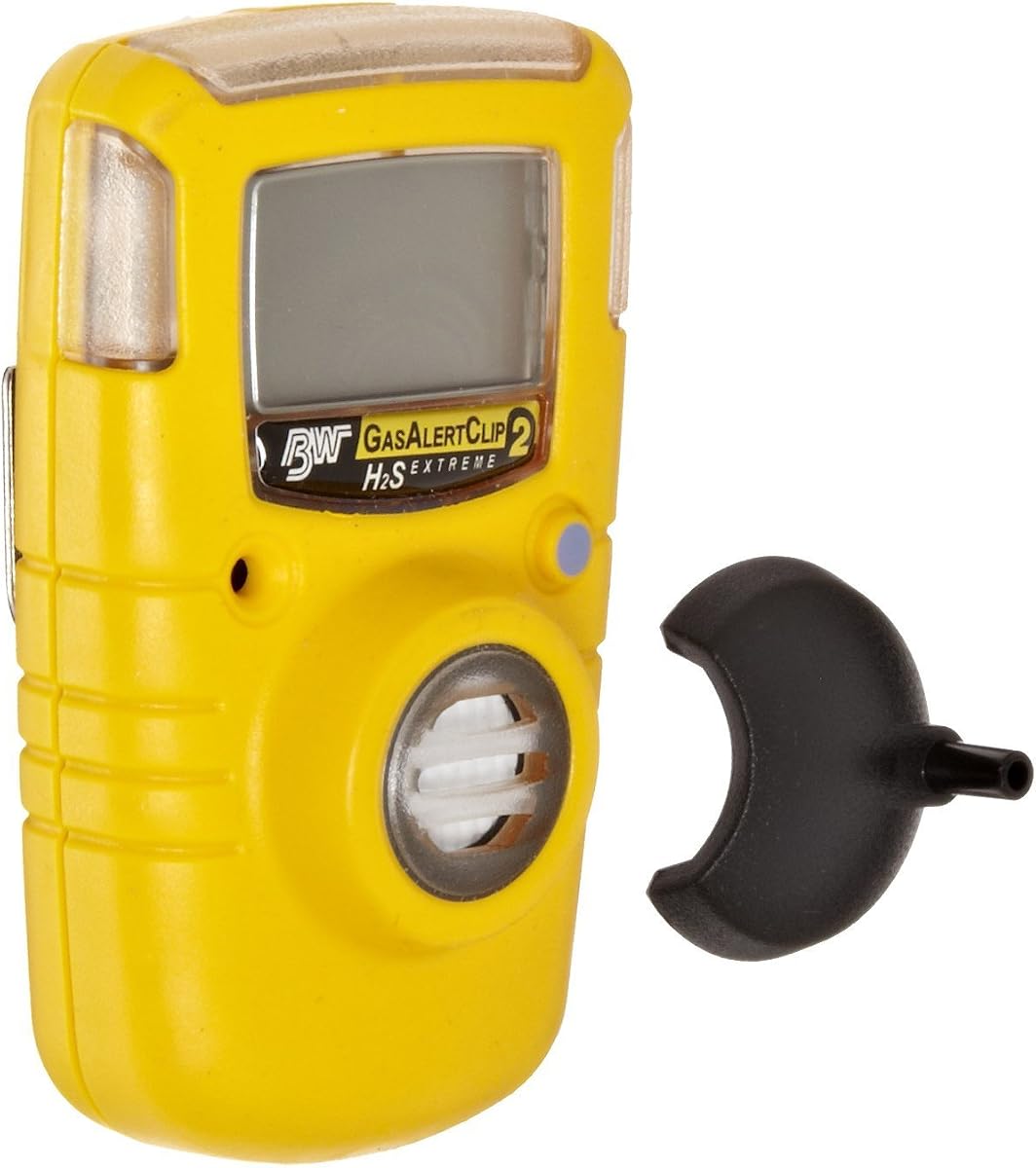


The BW Technologies/Honeywell Analytics BWC2-H earns a 4.6 rating and stands out as a polished, dedicated hydrogen sulfide wearable. Its core appeal is a combination of simple daily operation and professional data functions. It is intended for users who need dependable H₂S awareness without the size, complexity, or broader sensor set of a multi-gas instrument.
We may earn a commission when you buy through this link, at no additional cost to you.
The unit automatically records its 35 most recent gas events and bump-test results, which adds an important layer of accountability for workplace safety programs. High and low alarm setpoints can be configured before activation, helping a supervisor or instrument specialist establish consistent operating limits. Compatibility with IntelliDoX, microdock II, and Fleet Manager II software makes this especially interesting for organized fleet management.
There are trade-offs. This is a single-gas monitor, so it does not cover carbon monoxide, oxygen deficiency, or combustible gas. The advanced docking and fleet-management options also make it most relevant to organizations that already use compatible systems, rather than someone who only needs a basic personal alarm. A buyer should also verify current alarm setpoints and dock compatibility before deployment.
Despite those limitations, the BWC2-H is a strong all-around choice for routine H₂S wear, particularly for employers managing many instruments. The combination of automatic records, flexible setpoints, one-button handling, and fleet software support makes it more than a simple personal gas alarm, while its compact design still favors regular wear.
Automatic gas-event and bump-test records reduce the manual work associated with documenting instrument checks. When combined with compatible docks and fleet software, that visibility can help organizations organize maintenance and review exposure patterns more consistently.
The clip-on, lightweight format and one-button interface are useful for users who need simple operation without giving up configurable alarm limits. Hibernation mode can also support storage and transport when the detector is not actively being worn.
We may earn a commission when you buy through this link, at no additional cost to you.
The Forensics Hydrogen Sulfide Analyzer has a 5.0 rating, the highest numerical score among the listed products. It is designed for users who want more detailed H₂S readings and traceable documentation than a basic personal detector typically provides. Its 0.1 ppm resolution and 0–100 ppm measurement range are particularly useful for documenting lower-level concentration changes.
We may earn a commission when you buy through this link, at no additional cost to you.
A built-in pump and four-foot probe make the analyzer more versatile for sampling tasks than a wrist- or pocket-mounted alarm. The color screen and graph functions help users interpret changes over time rather than relying on a single instantaneous number. USB computer data logging and date-and-time-stamped alarm events add value for workplace records, investigations, and repeated inspections.
The construction is designed for demanding field conditions, using high-strength ABS, anti-slip rubber, and protection against water, dust, and explosive environments. The supplied information also states that it arrives with calibration and QA certificates, carries a one-year limited warranty, and was tested and verified in the United States. Those points support a more traceable purchase experience.
This is not the most compact option, and its single-purpose gas coverage does not suit a buyer seeking one device for every workplace hazard. Nevertheless, for H₂S-focused measurement, sampling, visual trend review, and computer records, the analyzer offers the most specialized feature set in this roundup. It is the editor's choice for users who prioritize resolution and documentation.
The 0.1 ppm resolution is the standout measurement detail. It can help users observe smaller concentration changes over time, making the analyzer more compelling for controlled sampling, process checks, and documentation where a coarser single reading is insufficient.
The built-in pump and four-foot probe expand practical reach when the source of a possible leak is not immediately next to the operator. This configuration is better suited to deliberate sampling than the smallest personal H₂S alarms in the list.
We may earn a commission when you buy through this link, at no additional cost to you.
The MSA 10092521 Altair Hydrogen Sulfide Single Gas Detector is a durable personal instrument designed around straightforward safety monitoring. It offers LED, audible, and vibrating alarms, giving workers alerts through more than one sensory channel. That is especially valuable in noisy, dark, or otherwise distracting environments where a single alarm type may be easy to miss.
We may earn a commission when you buy through this link, at no additional cost to you.
MSA highlights a patented sensor that is designed to operate for more than two years, making sensor longevity an important reason to consider the Altair. Its one-button operation keeps training and daily use uncomplicated, while dust and water protection and high resistance to radio-frequency interference support use in industrial environments.
The principal limitation is scope. The Altair is designed for one gas, so users exposed to oxygen deficiency, carbon monoxide, or combustible gases will need additional equipment. The supplied data also does not include a numerical customer rating, so it is not possible to make a rating-based comparison here. Buyers should evaluate documentation, sensor specifications, and certification independently.
For a worker or site manager seeking a proven-brand, no-frills H₂S wearable with multiple alarm modes, the Altair remains a practical choice. Its sensor-life emphasis, environmental protection, and simple interface may be more meaningful in long-term fleet use than a large color screen or extensive digital reporting feature.
Combining light, sound, and vibration improves the chance that a warning reaches the wearer. The multi-alarm arrangement is particularly useful where hearing protection, machinery noise, or poor lighting can obscure a single notification method.
The patented sensor is described as operating for more than two years. That longevity emphasis can reduce the appeal of units that would need more frequent sensor replacement, although the exact service requirements should still be confirmed with the manufacturer or seller.
We may earn a commission when you buy through this link, at no additional cost to you.
The GasAlertClip Extreme is a two-year H₂S monitor built around low-maintenance operation. The supplied product information says it requires no calibration, sensor replacement, battery replacement, or battery charging, which could make it appealing to organizations seeking a dependable personal gas alarm with fewer routine service tasks.
We may earn a commission when you buy through this link, at no additional cost to you.
Automatic event logging provides useful records, and the full-function self-test checks the sensor, battery status, circuit integrity, and audible and visual alarms. Bright, wide-angle visual alarm bars are designed to be noticeable, while a built-in concussion-proof boot and water resistance support use in rough conditions. Compatibility with the MicroDock II test station extends its administrative utility.
The lack of a charging requirement also means users should understand the device's service model before buying. Its two-year version is not designed to operate like a continuously rechargeable personal monitor, and anyone expecting detailed trend analysis or computer charting may find the event log more limited. MicroDock II compatibility is an added benefit only for users with the relevant equipment.
Overall, the GasAlertClip Extreme is a sensible choice for workers who need a simple, continuously worn H₂S alarm and whose organization values minimal maintenance. It balances automatic records, clear visual warnings, and rugged construction without adding the bulk or complexity of a multi-gas analyzer.
The lack of routine calibration, sensor replacement, and battery charging distinguishes this model from many rechargeable personal alarms. That simplicity can be valuable for distributed teams, although users should follow the stated service life and replacement plan.
Wide-angle visual bars improve awareness of an alarm, while automatic event logging reduces manual recordkeeping. The self-test also checks several core functions, which helps supervisors establish a more consistent pre-use inspection routine.
We may earn a commission when you buy through this link, at no additional cost to you.
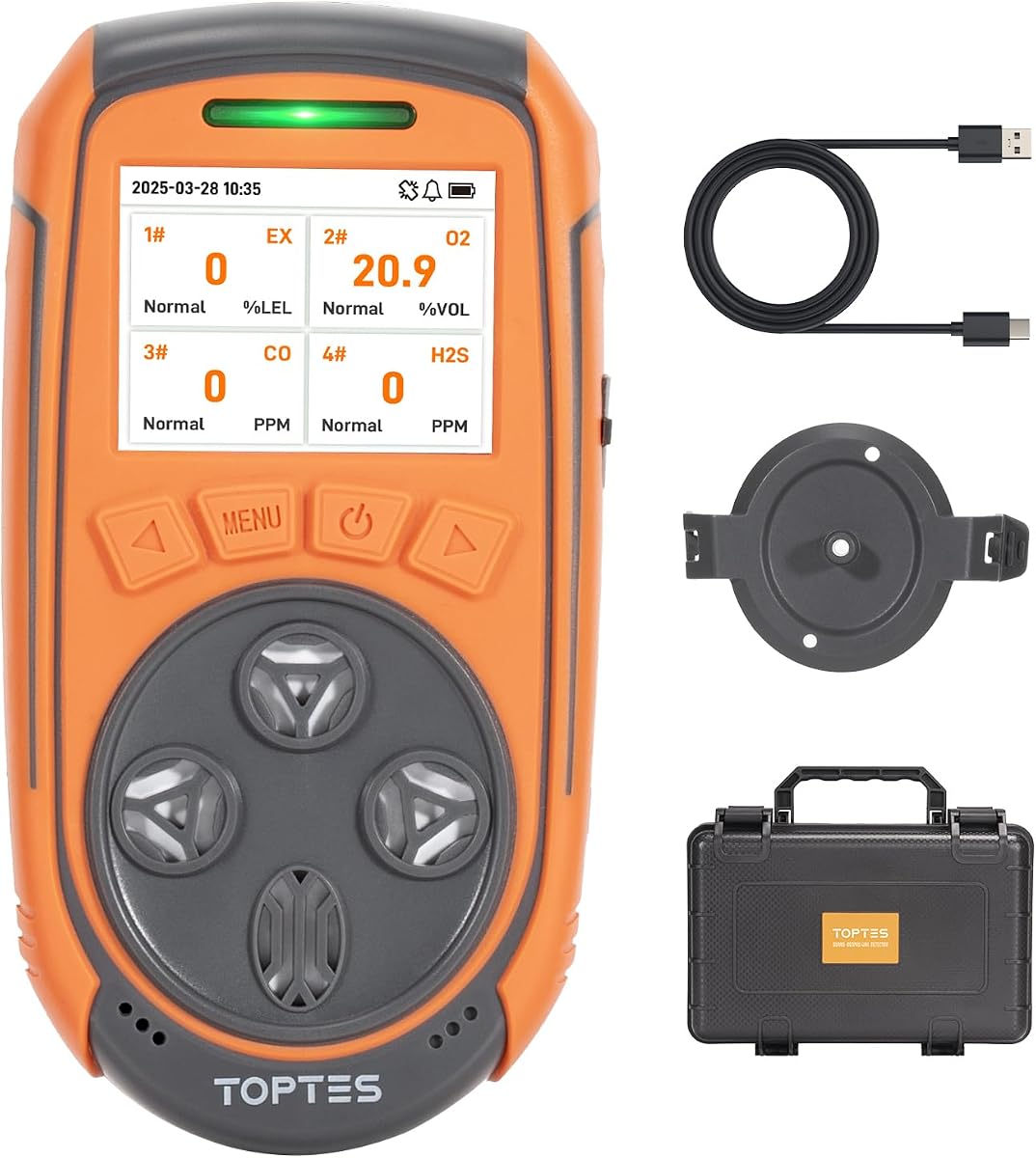
The TopTes Guard-863Pro has a 4.7 rating and is the most feature-rich multi-gas instrument in this list. It detects H₂S, carbon monoxide, lower explosive limit, and oxygen, giving users a broader view of common hazards without carrying separate detectors for each gas. The TFT color screen displays concentration matrices and trend curves, making readings easier to interpret.
We may earn a commission when you buy through this link, at no additional cost to you.
A 0.5-second response time and triple alarm system provide fast, noticeable warnings through sound, light, and vibration. The upgraded oxygen sensor is described as having a lifespan of up to five years, while the battery supports more than 18 hours of continuous operation after a stated 2.5-hour charge. A back clip makes the unit practical to carry during extended work periods.
USB data export is a major advantage for users who need records. Alarm events, fault logs, calibration records, and operating history can be transferred for tracking and analysis. The product information also says the monitor underwent safety testing by an international certification body, which adds reassurance, though buyers should confirm the exact certifications relevant to their industry and location.
The Guard-863Pro is ideal for confined-space preparation, industrial maintenance, emergency response, and other jobs where H₂S may coexist with oxygen, CO, or combustible-gas hazards. It is more capable than a dedicated single-gas unit, though its larger feature set and rechargeable design are unnecessary for someone who only needs a basic H₂S wearable.
Covering H₂S, CO, LEL, and O₂ reduces the need to carry four separate personal monitors. This makes the Guard-863Pro particularly useful for confined-space and industrial teams that want one display and one alarm system for several common atmospheric risks.
The color display's concentration matrices and trend curves help users see how conditions develop over time. USB export of alarms, faults, calibration records, and operation history adds a practical layer for post-incident review and routine program documentation.
We may earn a commission when you buy through this link, at no additional cost to you.
The TopTes Guard-101 has a 4.1 rating and provides a practical four-gas format for buyers seeking H₂S monitoring without a dedicated single-purpose instrument. It detects H₂S, carbon monoxide, lower explosive limit, and oxygen, while its stated response time is 0.5 seconds. That combination makes it a broad option for industrial manufacturing, mining, agriculture, emergency rescue, and other listed applications.
We may earn a commission when you buy through this link, at no additional cost to you.
Visual, audible, and vibration alarms ensure that warnings can reach the user through multiple channels. The alarm continues until gas concentration returns to normal, and an internal record-storage function lets users review monitoring data later. A back clip supports hands-free carrying, while high-strength ABS construction is described as waterproof, dustproof, and explosion-proof.
Password protection helps prevent accidental operation, with an initial password of "69." That security measure is useful for a device that may be carried or temporarily left in a work area, although the user should change or securely manage the default credential according to the manual. The supplied specification gives up to 14 hours of battery life, which is shorter than the Guard-863Pro but still suitable for many shifts.
This is a sensible budget-oriented multi-gas choice for users who want broader coverage and triple alarms without paying for the larger display, trend curves, and extensive USB export offered by the premium Guard-863Pro. It is less appropriate for users needing detailed historical analysis, but it covers the fundamentals well for routine atmospheric monitoring.
The Guard-101 combines four common atmospheric hazards in one device, reducing equipment complexity for users who do not need a specialized analyzer. It is a logical starting point for crews that want coverage beyond H₂S alone.
Password control can reduce the chance of someone changing settings or operating the detector unintentionally. The initial password should be changed according to the manual and shared only with authorized users who need to manage the instrument.
We may earn a commission when you buy through this link, at no additional cost to you.
The TopTes Guard-633 has a 3.9 rating but offers an unusual battery-life proposition for a dedicated hydrogen sulfide detector. A five-hour charge is stated to provide continuous operation for up to seven days, making the clip-on unit appealing for extended tasks where frequent recharging would be inconvenient.
We may earn a commission when you buy through this link, at no additional cost to you.
Its H₂S sensor is described as high precision, with a 0.5-second response time. Users can adjust alarm thresholds and select LED, vibration, and audible alarm modes. Data logging supports management of safety records and review of historical alerts, while a real-time battery indicator and low-battery alert help users avoid an unexpected loss of coverage.
The high-strength ABS shell is described as waterproof, dustproof, and explosion-proof, and the clip-on format is convenient for continuous wear. Calibration certificates and certification documents are included according to the product information. However, the exact range, resolution, certification scope, and calibration interval are not stated in the supplied details, so buyers should verify them before relying on the monitor for a regulated safety program.
The Guard-633 is best suited to a user who wants a dedicated H₂S alarm, long runtime between charges, and configurable alerts without the bulk of a four-gas unit. Its 3.9 rating should prompt a closer review of the documentation and warranty terms, but the advertised endurance and alert options make it worth comparing against other compact clip-on models.
The stated seven-day operating time is the defining feature. It could be useful for site visits, maintenance assignments, and other extended work periods where carrying a spare charged device would add unnecessary bulk.
Adjustable thresholds allow an employer or user to align alerts with established procedures. Combined with three alarm modes and logged alerts, this gives the compact detector more operational flexibility than a minimal beeping alarm.
We may earn a commission when you buy through this link, at no additional cost to you.
The Portable H₂S Gas Detector has a 3.8 rating and offers a lightweight, clip-on design for basic hydrogen sulfide awareness. Its stated 0–100 ppm measurement range and ±5% accuracy specification make its intended measurement scale clearer than many of the basic models in this roundup.
We may earn a commission when you buy through this link, at no additional cost to you.
A high-sensitivity sensor is designed to provide quick response, stable readings, and reliable long-term performance. When H₂S exceeds the configured safe threshold, the built-in buzzer and red indicator light provide immediate audible and visual notification. The backlit LCD presents the ppm reading directly, allowing users to check the current value without navigating through a complex menu.
The IP65 rating offers protection against dust and water, making the unit suitable for industrial and outdoor environments where occasional exposure to moisture or particulate matter is likely. Its compact handheld body and clip make it easy to carry. Password protection is provided, with an initial password of "1111," to reduce accidental operation or unwanted setting changes.
This monitor is best viewed as an accessible, uncomplicated option for a specific H₂S task rather than a complete professional safety program. It lacks stated event logging, has only a buzzer and red light for warnings, and offers no multi-gas capability. Users needing auditable records, vibration alarms, oxygen monitoring, or more advanced documentation should consider one of the feature-rich alternatives.
The backlit display gives users a direct numerical reading, while the stated ±5% accuracy provides a clear performance specification to evaluate. This makes the device more informative than an alarm that offers only an on-or-off warning.
The lightweight clip and IP65 protection suit mobile use in dusty or damp conditions. Its size is convenient, although a user should confirm alarm threshold settings and operating instructions before routine reliance.
We may earn a commission when you buy through this link, at no additional cost to you.
The Forensics Four-Gas Monitor has a 4.4 rating and combines oxygen, carbon monoxide, hydrogen sulfide, and combustible-gas sensing in one traceable package. It is designed for users who need broad atmospheric coverage and who value calibration documentation as part of their instrument selection process.
We may earn a commission when you buy through this link, at no additional cost to you.
The high-quality electrochemical sensors are supplied with USA NIST traceable calibration. Detection error is stated as better than or equal to ±5% of full scale, with a response time under 30 seconds. Zero and span calibration options add service flexibility, while adjustable audio, visual, and vibration alarms can be set according to preset operating levels.
The robust housing uses high-strength ABS and anti-slip grip rubber, with water, dust, and explosion-proof protection. Digital time stamps provide useful context for alarm events, and the package includes calibration and QA certificates, a one-year limited warranty, and verification in the United States. USB recharge supports routine field use without replacing disposable batteries.
The less-than-30-second response is slower than the 0.5-second claims of the TopTes models, although response specifications may be measured differently and should not be compared without context. This monitor is best suited to organizations that need four gases, traceable calibration, and alarm records. Dedicated H₂S users wanting finer resolution and a sampling pump should examine the Forensics analyzer instead.
NIST traceable calibration and included calibration and QA documents make this monitor especially relevant to quality-conscious users. Those records can support internal review processes where instrument provenance and verification matter.
Combining O₂, CO, H₂S, and LEL monitoring simplifies equipment selection for industrial and confined-space workflows. Adjustable alarms and timestamped events support a more structured response than a basic audible detector.
We may earn a commission when you buy through this link, at no additional cost to you.
The Honeywell BW Technologies BW Clip BWC2-H has a 4.4 rating and offers a compact dedicated H₂S monitor with professional fleet features. It automatically logs the 35 most recent gas events and bump-test results, creating a useful operating history without requiring the user to manually write down every alarm or test.
We may earn a commission when you buy through this link, at no additional cost to you.
High and low alarm setpoints can be configured before activation, allowing a consistent setup before the detector enters service. Compatibility with IntelliDoX, microdock II, and Fleet Manager II software gives this model strong potential for employers that maintain multiple instruments and want centralized administration.
The physical design is intentionally straightforward. It is a single-gas, compact, lightweight unit with one-button operation, which helps keep training demands low. Hibernation mode is available through a case accessory or IntelliDoX, supporting storage and transport when the unit is not being worn for active monitoring.
Like the other BW Clip BWC2-H listing in this guide, it does not monitor oxygen, carbon monoxide, or combustible gases. The docking and fleet tools also matter most to organizations already using that ecosystem. For a buyer seeking a simple H₂S wearable with automatic records and flexible alarm settings, however, it remains a compact and well-rounded option.
Recording recent gas events and bump-test results reduces manual documentation and preserves a short history of the instrument's operation. This is particularly helpful for teams that perform regular functional checks across multiple devices.
The lightweight clip and one-button interface support uncomplicated daily use. Compatibility with IntelliDoX and fleet software adds administrative depth for organizations that want to standardize deployment across multiple workers.
We may earn a commission when you buy through this link, at no additional cost to you.
The right hydrogen sulfide monitor depends on the hazards present, the required documentation, environmental conditions, and how long the instrument must operate without charging. These factors matter more than screen size or extra buttons once basic gas detection, alarms, and construction are in place.
A single-gas detector is simpler, lighter, and dedicated to one hazard, which is useful when workers enter areas where only H₂S is a documented concern. A multi-gas instrument is more appropriate for confined spaces, industrial maintenance, and emergency response because oxygen, carbon monoxide, and combustible gases may accompany hydrogen sulfide. A four-gas model can prevent the need to carry and coordinate several personal alarms, although it may be bulkier and require more battery management.
Range determines whether an instrument can measure the concentrations relevant to a site, while resolution indicates how finely it can display changes. The Forensics Hydrogen Sulfide Analyzer specifies a 0–100 ppm range and 0.1 ppm resolution, while the portable alarm in the list also states a 0–100 ppm range and ±5% accuracy. Less detailed products should be checked for their sensor specifications before purchase. A suitable monitor should cover expected low and high readings without obscuring meaningful changes near an alarm threshold.
Visual and audible alarms are the minimum sensible combination, while vibration adds an important alert path for noisy environments or workers wearing hearing protection. Some models continue alarming until readings return to normal, and the Guard-101 and Guard-633 allow adjustable thresholds. Response time is another consideration: the TopTes models claim detection within 0.5 seconds, whereas the Forensics four-gas monitor lists a response under 30 seconds. Because test methods can differ, users should compare like-for-like specifications and follow site procedures.
Data records can support incident reviews, exposure tracking, and routine safety documentation. The BW Clip models log the 35 most recent events and bump-test results, the Forensics analyzer supports USB computer logging and timestamped alarms, and the Guard-863Pro can export alarm, fault, calibration, and operation records. Calibration certificates and NIST traceable calibration are additional differentiators for quality-controlled programs. Decide whether you need simple event history, downloadable records, or instrument-level traceability before choosing.
Battery life should cover the longest expected monitoring period, including delays and unexpected overruns. The GasAlertClip Extreme is positioned as a low-maintenance unit with no battery charging requirement, while the Guard-633 claims up to seven days of operation after a five-hour charge. The Guard-101 offers up to 14 hours, and the Guard-863Pro provides more than 18 hours after a stated 2.5-hour charge. Rechargeable models are convenient for predictable shifts but require access to power and a dependable charging routine.
Sewer, farm, mining, construction, and industrial environments can expose a monitor to moisture, dust, impact, and potentially explosive atmospheres. The Forensics models, both TopTes multi-gas units, and the Guard-633 describe water-, dust-, and explosion-resistant construction. The portable H₂S alarm has an IP65 rating, while the GasAlertClip Extreme has water resistance and a built-in boot. Claims should still be checked against the exact certification, model, and environmental standard required by your workplace.
A clip-on body is generally more suitable for continuous personal wear than a handheld analyzer with a probe. One-button operation reduces training demands, while a color display, graph, and trend curves can make four-gas readings easier to interpret. The Forensics analyzer uses a four-foot probe and built-in pump for more deliberate sampling. Consider who will carry the unit, whether gloved operation is needed, and whether visual trends are more valuable than minimum weight and size.
A monitor can look capable on paper while still lacking the approval, documentation, or service terms needed for a specific application. The product data mentions international certification testing for the Guard-863Pro, certification documents for the Guard-633, and calibration and QA certificates for the Forensics devices. For the GasAlertClip Extreme, compatibility with MicroDock II can improve managed testing. Check local regulations, occupational safety requirements, certification scope, calibration intervals, sensor replacement periods, and warranty terms before purchase.
Before relying on a monitor, read its manual, understand the display, identify every alarm type, and confirm the factory or site-specific alarm thresholds. For a new instrument, perform the prescribed startup and functional check. Verify the date, calibration status, battery or charge level, sensor condition, and alarm settings. Users should also know how the instrument behaves during power loss, charging, a failed self-test, or an out-of-range sensor condition.
Wear the device where it can sample the surrounding air and remain visible or accessible. For a clip-on model, position it outside clothing pockets and away from moisture or contaminants that could block a sensor. A probe-based analyzer should be used in accordance with its instructions, keeping the probe and pump in good condition. Do not treat a monitor as permission to enter an unknown or uncontrolled atmosphere; use appropriate ventilation, procedures, supervision, and emergency response measures alongside it.
Care for the device according to the manufacturer's instructions. Keep openings clean, avoid immersing a unit beyond its stated rating, and protect the display and housing from impact. Charge rechargeable models on the specified equipment, inspect cables and contacts, and store instruments in a clean, dry place. Follow the recommended calibration, bump-test, and sensor-replacement schedule, and do not use a failed, expired, damaged, or improperly configured monitor for safety-critical work.
A single-gas monitor focuses on H₂S and is usually simpler, smaller, and easier to wear. A multi-gas monitor can also assess oxygen, carbon monoxide, and combustible gases, making it more appropriate for confined spaces and industrial environments where several hazards may coexist. The right choice depends on the documented hazards at the site and the employer's safety program.
The range should cover the concentrations expected at the workplace while providing useful detail around the alarm thresholds. A stated 0–100 ppm range appears in several products in this guide, but buyers should also examine accuracy, resolution, alarm settings, and documentation. No universal range replaces a site-specific assessment of exposure patterns and applicable standards.
No. Response speed, alarm visibility, sensor reliability, battery life, data records, and resistance to site conditions are equally important. A highly precise instrument can still be a poor choice if it lacks required alarms, cannot run through a shift, or cannot operate safely in the expected environment.
A pump and probe are most useful when an operator must actively sample a particular area, document a leak, or examine a location that is not conveniently reached by a personal alarm. Routine wear monitoring often favors a compact clip-on detector. The Forensics analyzer is the only product in this list that explicitly includes a built-in pump and four-foot probe.
Look for clear calibration status, certificates where appropriate, and records that can be retained or transferred. The Forensics products are listed with NIST traceable calibration, the BW Clip monitors log recent gas events and bump tests, and the Guard-863Pro supports USB export of several history types. The exact documentation workflow should align with your organization's recordkeeping requirements.
It depends on the stated runtime and the charging plan. The Guard-101 provides up to 14 hours, the Guard-863Pro more than 18 hours, and the Guard-633 claims up to seven days under stated conditions. Actual runtime depends on use, alarms, environment, and battery condition, so employers should establish charging and rotation procedures rather than assuming every unit will finish a shift untouched.
Yes. A personal gas monitor is an additional layer of protection, not a substitute for ventilation, hazard assessment, training, safe-work procedures, supervision, or emergency planning. It should never be used to justify entry into an atmosphere that has not been evaluated and controlled according to applicable rules and employer procedures.
The Forensics Hydrogen Sulfide Analyzer is the strongest choice for dedicated measurement, offering 0.1 ppm resolution, a built-in pump and four-foot probe, color graphs, USB logging, and traceable calibration. The BW Technologies BWC2-H is a compelling premium wearable for managed fleets, while the TopTes Guard-101 provides broad four-gas coverage and triple alarms at a budget-oriented level.
Prioritize the hazards you actually need to monitor, the alarm behavior required by your procedures, the duration of operation, and the records your organization must retain. Compact H₂S-only units are easiest to wear, while multi-gas monitors are more useful in environments where oxygen deficiency, CO, or combustible gas may also be present. Confirm certification, calibration intervals, and exact specifications before deploying any instrument.
Product configurations and prices can change, so review the current listing and manufacturer documentation before making a final purchase. That final check should confirm the measurement range, included accessories, alarm settings, battery condition, service terms, and compatibility with any docks or software used by your safety program.
