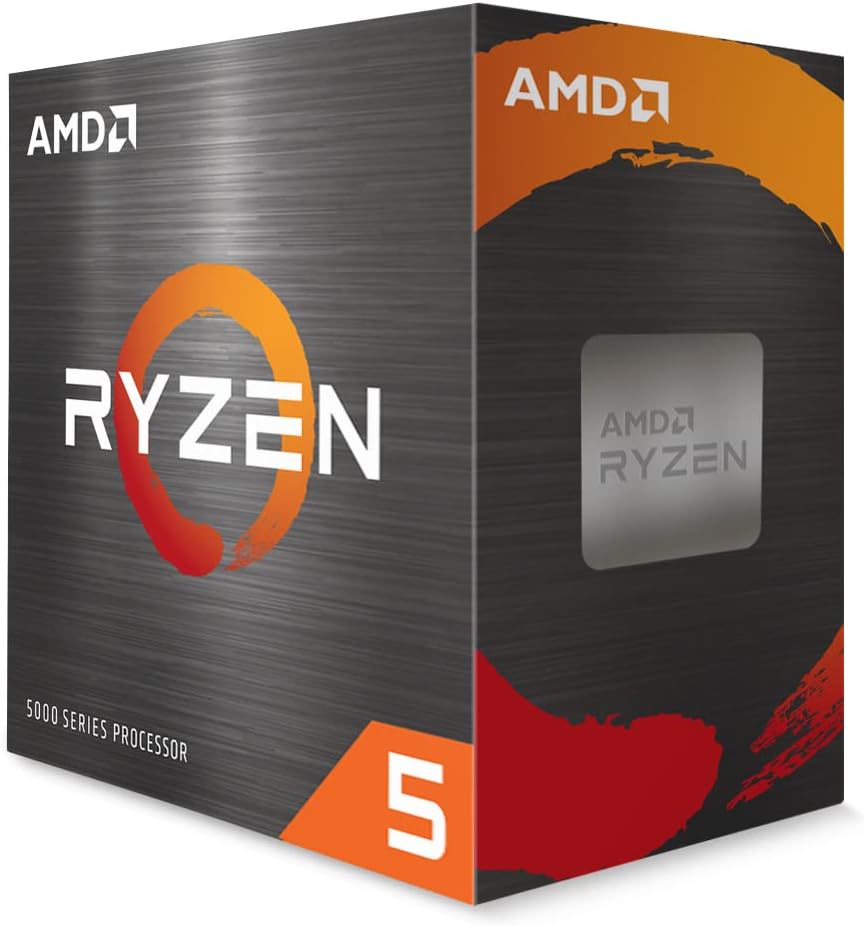
AMD Ryzen 5 5500
4.7Editor score
Six cores, 12 threads
4.2 GHz max boost
Bundled Wraith Stealth cooler
Cheap CPU guide comparing 10 affordable processors for gaming, everyday tasks, upgrades, and compatible motherboards to help you choose the right value.
A cheap CPU can deliver excellent value when it fits the rest of your computer, but the lowest-cost option is not automatically the best choice. Core count, thread count, integrated graphics, socket compatibility, memory support, and cooling requirements all influence whether a processor is useful for gaming, productivity, or general home computing.
This guide compares ten affordable processors using the supplied specifications, customer ratings, platform details, and included components. It covers basic dual-core chips, modern six-core models, entry-level APUs, renewed processors, and unlocked options while emphasizing motherboard compatibility and realistic workload fit.
Each review explains the processor's strongest features, limitations, and ideal buyer. The top picks range from a capable AM4 value pick to a versatile LGA1151 option and a higher-end AM5 choice, while market conditions and availability can change before you make a purchase.
4.7Editor score

4.2Editor score

4.8Editor score
The table below compares all ten processors by core count, platform, clock capability, memory support, graphics availability, and cooling situation, making it easier to identify the model that matches your motherboard and intended workload.




The AMD Ryzen 5 5500 combines six Zen-based cores, 12 processing threads, a 4.2 GHz maximum boost, and a 4.7 customer rating in one of the most balanced configurations in this guide. It is especially appealing for buyers who want more processing capacity than a basic dual-core CPU without moving to a much more costly modern platform.
We may earn a commission when you buy through this link, at no additional cost to you.
Its major advantage is the combination of core count and practical platform features. The processor supports DDR4-3200 memory, includes 19 MB of cache, operates on Socket AM4, and is unlocked for overclocking. A discrete graphics card is required for the gaming performance highlighted in the product information, allowing the processor to focus on general computing and CPU-heavy game workloads rather than bundled graphics.
The included AMD Wraith Stealth cooler is another meaningful advantage for a value-oriented build. It reduces the number of separate cooling components a first-time builder needs, although the processor still benefits from a properly prepared system and sensible airflow. The main limitation is platform age: AM4 is an established platform rather than the newest option, and the listed product information does not include the newer DDR5 and PCIe 5.0 capabilities found on AM5.
This is the best pick for a budget-conscious gaming system, home workstation, or general-purpose desktop using an AM4 motherboard. Verify the exact motherboard model, supported memory type, and case clearance before buying. For buyers who already own a compatible DDR4 AM4 board, the Ryzen 5 5500 offers a particularly convincing balance of processing power, upgradeability, and included hardware.
Six cores and 12 threads give this processor more room for multitasking than the dual-core alternatives in this guide. That makes it a sensible center-of-the-system option for users who browse, stream, run productivity applications, and play games at the same time.
Bundling the Wraith Stealth cooler removes the need to select that component separately. It does not guarantee silent operation, but it makes the initial installation more approachable for builders assembling a new AM4 system.
We may earn a commission when you buy through this link, at no additional cost to you.
The Intel Celeron G-5900 is a straightforward entry-level processor for basic computing, and its 4.5 rating indicates generally favorable customer reception. With two cores, two threads, a 3.4 GHz clock, and a 58-watt design, it targets users who need a functional desktop processor rather than demanding multitasking headroom.
We may earn a commission when you buy through this link, at no additional cost to you.
The key benefit is compatibility with motherboards based on the Intel 400 series chipset. Optane Memory support is also listed, and its LGA1200 platform distinguishes it from the older LGA1151 processors elsewhere in this guide. The straightforward specification set makes the chip easier to evaluate when the computer will be used for document editing, web browsing, media playback, and other routine tasks.
Two cores and two threads are the main constraint. Modern browsers, numerous background applications, and demanding software can benefit from more parallel processing capacity, so buyers should consider whether a six-core processor would provide a better long-term experience. The chipset restriction also means the motherboard cannot be selected freely from the entire LGA1200 ecosystem.
The Celeron G-5900 is most appropriate for a basic office, classroom, or secondary home computer where its two cores are enough and a discrete graphics card is unnecessary for the intended display workload. Choose it when you have a compatible Intel 400 series board, need a simple upgrade, or want an inexpensive way to handle essential tasks. For heavier multitasking or modern gaming, one of the six-core picks offers a more generous foundation.
LGA1200 support and Intel 400 series chipset compatibility make this processor an option for a focused upgrade rather than an unrestricted platform choice. Confirm the board before ordering to avoid a socket or chipset mismatch.
The two-core design is most comfortable with light productivity and everyday computing. Opening several demanding programs at once may reveal the limits of the chip's limited thread count.
We may earn a commission when you buy through this link, at no additional cost to you.
The Intel Pentium Gold G5600F stands out in this roundup with a perfect 5.0 customer rating and a straightforward two-core specification. Its 3.90 GHz clock and 4 MB smart cache make it appealing for basic desktop duties where a compact, straightforward processor is preferred over a more complex platform investment.
We may earn a commission when you buy through this link, at no additional cost to you.
This processor is listed with a boxed FC-LGA14C package, two cores, and a 3.90 GHz clock speed. Those characteristics make it a practical candidate for an entry-level build or a compatible older system. It can serve general office applications, web use, and routine household computing without introducing the higher core count of the Ryzen selections.
The trade-off is that only two cores are listed, so highly parallel applications and modern multitasking may not benefit from additional processing capacity. The older processor generation also lacks the newer platform features associated with the Ryzen 5 9600X, such as DDR5 support, Zen 5 architecture, and possible PCIe 5.0 support on selected motherboards. The motherboard must also be checked for FC-LGA14C compatibility.
This Pentium Gold model is best for a lightweight build, a secondary computer, or a user who values simplicity and strong customer feedback over maximum multitasking performance. It is less suitable for CPU-intensive gaming, advanced content creation, or a new platform intended to grow for many years. Make sure the available board and processor package match before purchase.
The G5600F focuses on a small set of clear priorities: two cores, a 3.90 GHz clock, and 4 MB of smart cache. That simplicity can be helpful for basic builds where advanced tuning is unnecessary.
Its perfect 5.0 rating is the highest listed score among the ten products. Ratings are not performance measurements, but they provide useful context when assessing the overall customer experience with the listing.
We may earn a commission when you buy through this link, at no additional cost to you.
The AMD Athlon 200GE is an entry-level AM4 processor designed around a useful combination of two cores, four processing threads, and Radeon Vega 3 integrated graphics. Its 4.4 rating gives it solid customer feedback, while the included near-silent cooler makes it especially practical for a straightforward first build.
We may earn a commission when you buy through this link, at no additional cost to you.
Integrated graphics are the defining feature. The Radeon Vega 3 graphics can support everyday visual output and light gaming without requiring a separate graphics card, helping keep the total cost of a new system focused. Four processing threads also provide more concurrency than the dual-core, dual-thread Intel Celerons in this guide, even though the physical core count remains modest.
The processor runs at 3.2 GHz, carries 5 MB of cache, and supports DDR4-2667 memory. Its AM4 socket offers an upgrade path to Ryzen, which is useful if a system built around the Athlon later needs more performance. The trade-offs are a lower memory ceiling than newer DDR5 platforms and only two physical cores for CPU-heavy workloads.
The Athlon 200GE is a good match for an inexpensive home office, media center, school computer, or entry-level gaming build where integrated graphics are desired. It can also serve as a temporary platform before a Ryzen upgrade. Choose it when a complete, straightforward AM4 foundation matters more than demanding multicore performance, and verify that your board supports DDR4-2667 memory.
Radeon Vega 3 integrated graphics make the Athlon 200GE useful for basic displays and light gaming without a discrete graphics card. This can simplify a compact or inexpensive build.
Socket AM4 compatibility and platform upgradability to Ryzen provide room to move toward a more capable processor later. The motherboard still needs to support the desired future upgrade.
We may earn a commission when you buy through this link, at no additional cost to you.
The Intel Celeron G3930 is a 7th-generation desktop processor aimed at office, home, and light-duty systems. Its 4.6 rating is among the stronger results in the guide, and the combination of LGA1151 installation and Intel HD Graphics 610 gives it a clear role as a practical upgrade for compatible older computers.
We may earn a commission when you buy through this link, at no additional cost to you.
Integrated Intel HD Graphics 610 allows the system to handle display output without relying on a discrete graphics card. The listed chipset compatibility covers Intel 200 series and Intel 1001 series motherboards, offering several possible boards for a new or refreshed legacy build. It is a particularly relevant option for someone who already owns compatible hardware and wants to avoid replacing more components than necessary.
This is an older platform with clear limits. The product information specifically notes that Intel Optane Technology support is excluded, and the seventh-generation socket is no longer the newest route for a modern system. Although the processor's 4.6 rating is encouraging, buyers should still consider the age of the platform and their likely upgrade timeline.
The G3930 is best for a compact office build, a family computer, or a replacement within a compatible LGA1151 system. It can serve browsing, document work, and routine applications more appropriately than a high-end processor would. For a new system expected to handle substantial gaming or advanced workloads, a six-core Ryzen or Core processor is the more future-facing choice.
LGA1151 compatibility lets builders reuse an existing ecosystem rather than start over. Confirm the motherboard's chipset and socket before ordering to prevent compatibility problems.
Intel HD Graphics 610 covers the basics of desktop display output. It is a sensible inclusion for productivity systems that do not need a separate graphics card.
We may earn a commission when you buy through this link, at no additional cost to you.
The Intel Core i5-6500 is a versatile four-core processor for users who want more capability than a Celeron without committing to a new platform. Although this particular listing is renewed and carries a 4.2 rating, its Turbo Boost technology, flexible memory support, and display capability make it a compelling foundation for a value-oriented legacy build.
We may earn a commission when you buy through this link, at no additional cost to you.
Compatibility with Intel 100 series motherboards gives buyers a clearly defined pool of compatible boards. Support for both DDR4 and DDR3L can make it easier to reuse compatible memory, while the listed display resolution of up to 4096×2304 adds flexibility for high-resolution monitor setups. Unlike the Athlon 200GE, the Core i5-6500 requires a separate graphics card for normal display output.
The renewed designation is the most important trade-off. Condition can vary, so buyers should review the seller's return terms, warranty information, and product description carefully. Platform age is another limitation: LGA1151 and Intel 100 series motherboards are older choices, and the processor does not provide the newest platform features found in the AM5 Ryzen 5 9600X.
This processor is ideal for a compact office build, home theater PC, or general-purpose system with a compatible 100 series board and suitable graphics. It is also a sensible way to reuse DDR3L or DDR4 memory. Select it when practicality and component compatibility outweigh the appeal of a modern platform, and make sure the motherboard supports the CPU before ordering.
Support for DDR4 and DDR3L gives the i5-6500 unusual flexibility for a legacy socket. Check the motherboard's memory rules and populate the system with a matched configuration.
A Core i5 provides a more comfortable balance for everyday computing than the basic Celeron and Pentium options. Its renewed condition still deserves careful scrutiny before checkout.
We may earn a commission when you buy through this link, at no additional cost to you.
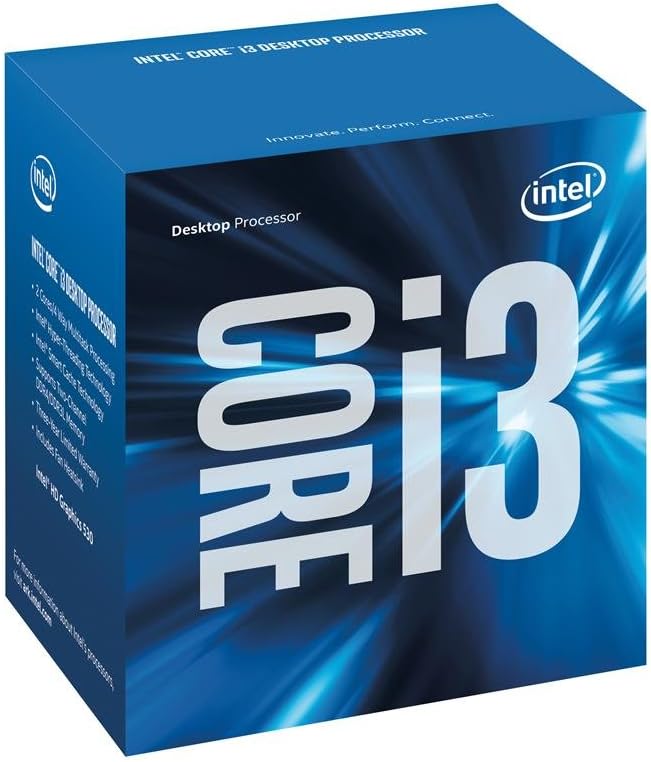
The Intel Core i3-6100 combines a 3.7 GHz clock with Turbo Boost 2.0 and Hyper-Threading technology, making it a capable basic processor for compatible LGA1151 systems. Its 4.6 rating suggests strong customer satisfaction and supports its appeal as a straightforward option for general-purpose computing.
We may earn a commission when you buy through this link, at no additional cost to you.
Hyper-Threading allows the processor to handle multiple software threads, while Turbo Boost 2.0 provides additional clock speed when workload conditions permit. Those features make the chip more flexible than a similarly positioned basic dual-core option without demanding the platform or complexity of a higher-tier processor. The boxed FC-LGA14C package also gives builders a clear processor to install in a suitable board.
The primary drawback is age. LGA1151 is an older socket, and this specific listing does not provide a broad chipset compatibility statement in the supplied specifications. Buyers must verify the exact motherboard, processor support, and memory configuration. It also does not include newer features such as DDR5 support or the architectural benefits of AMD's Zen 5 platform.
The Core i3-6100 is a good budget choice for a basic home computer, office workstation, or secondary system that needs more capability than a very simple processor. It is also a reasonable option for building around an existing compatible LGA1151 board. For a new system with long-term expansion needs, choose a modern platform, but for a controlled legacy build, this i3 remains a capable option.
A 3.7 GHz listed clock paired with Turbo Boost 2.0 makes this processor well suited to responsive general computing. The exact boost behavior depends on system configuration and workload.
Hyper-Threading technology provides additional processing threads that can help when several applications are active. It is not equivalent to having twice as many physical cores.
We may earn a commission when you buy through this link, at no additional cost to you.
The AMD Ryzen 5 9600X is the premium selection in this guide, combining six cores, 12 threads, Zen 5 architecture, and a 5.4 GHz maximum boost. Its 4.8 rating is the highest among the listed products, and the modern AM5 platform support gives it the strongest upgrade foundation of the affordable options covered.
We may earn a commission when you buy through this link, at no additional cost to you.
Performance is a central selling point, with the supplied information highlighting smooth 100-plus-FPS performance in popular games when paired appropriately. Six cores and 12 threads also create a generous foundation for multitasking, and the unlocked design allows compatible systems to explore higher clock settings. DDR5-5600 support and possible PCIe 5.0 operation on selected motherboards make this a forward-looking build choice.
The trade-offs are practical rather than fundamental. A cooler is not included, so the complete system needs a suitable thermal solution. The processor requires an AM5 motherboard and DDR5 memory, which means it cannot reuse a typical AM4 or LGA1151 platform. A capable motherboard and supporting components are therefore essential parts of the overall build.
Choose the Ryzen 5 9600X when you are constructing a new gaming-focused PC and want a modern platform rather than the lowest possible outlay. It is also appropriate for users who value processor headroom, a newer architecture, and a strong upgrade path. If a basic office computer is the goal, the Athlon 200GE or a compatible Celeron will be more restrained choices.
The listed gaming emphasis and 5.4 GHz maximum boost make this processor a strong centerpiece for a new gaming computer. A compatible graphics card and supporting platform are still needed for the intended gaming setup.
AM5 support, DDR5-5600 memory capability, and possible PCIe 5.0 support offer a more modern foundation than the older socket platforms in this guide. Select the motherboard to match the features you plan to use.
We may earn a commission when you buy through this link, at no additional cost to you.
The Intel Core i7-7700 is a capable four-core, eight-thread processor for systems using Intel 100 or 200 series chipsets. Its 4.7 rating, 4.2 GHz maximum turbo frequency, 8 MB cache, and integrated Intel UHD Graphics 630 make it one of the stronger legacy options in this guide.
We may earn a commission when you buy through this link, at no additional cost to you.
The processor operates between 3.60 GHz and 4.20 GHz, providing a useful balance for everyday computing, productivity applications, and CPU-intensive games. Intel UHD Graphics 630 supplies integrated display capability, while Optane Memory support gives compatible boards an additional storage-related avenue. Maximum memory support is listed as 64 GB, with DDR4-2133/2400 and DDR3L-1333/1600 memory types supported.
Compatibility is narrower than it may first appear: the product can be used only with motherboards based on Intel 100 or 200 series chipsets. It is also a renewed processor, so physical condition, warranty coverage, and seller protections should be reviewed. The LGA1151 platform has less expansion potential than AM5.
The Core i7-7700 is a solid choice for an upgraded home or office computer with compatible components, especially when you want a higher-tier i7 badge and integrated graphics without moving to a new platform. It is also suitable for lighter gaming when paired with suitable graphics and memory. For a completely new system, choose a modern AM5 or other current platform instead.
Four physical cores and eight threads give this processor more parallel capacity than the basic dual-core choices. That makes it a comfortable option for mixed productivity and entertainment use.
Support for several DDR4 and DDR3L configurations, up to 64 GB of memory, and UHD Graphics 630 adds practical flexibility. The board must meet the stated chipset requirements.
We may earn a commission when you buy through this link, at no additional cost to you.
The Intel Core i7-8700 delivers six cores, 12 threads, and a maximum turbo frequency of 4.6 GHz on the LGA1151 platform. With a 4.2 customer rating, it offers a strong legacy processing foundation for compatible systems and a more substantial core count than many of the lower-end chips in this guide.
We may earn a commission when you buy through this link, at no additional cost to you.
Its 12 MB cache, 64-bit instruction set, Intel SSE4.1, SSE4.2, and AVX2 extensions, and Hyper-Threading technology make it a versatile option for productivity and general-purpose computing. Intel UHD Graphics 630 handles integrated display needs, while Optane Memory support adds another feature for compatible motherboards. The listed 65-watt processor design and eight GT/s data rate also position it as a mainstream legacy chip.
The key restriction is motherboard support: the product is compatible only with Intel 300 series chipset motherboards. As a renewed product, it may also show signs of prior use, depending on the listing condition. Although its six cores and 12 threads are still useful, newer AM5 processors offer a more modern platform and additional features not present here.
The Core i7-8700 is a good candidate for a refurbished or upgraded desktop with an Intel 300 series board, particularly for users who want a six-core processor for multitasking and general performance. It can also be paired with a discrete graphics card for a more capable gaming build. For a brand-new system, however, the Ryzen 5 5500 or Ryzen 5 9600X may align more naturally with a current platform strategy.
Six cores and 12 threads provide useful parallel capacity for several applications running at once. This makes the processor more versatile than the dual-core options in the guide.
Intel 300 series compatibility provides a precise target for system builders. Verify the board before purchase, and review the renewed condition and available protections.
We may earn a commission when you buy through this link, at no additional cost to you.
The right inexpensive processor depends less on a single specification than on compatibility, workload, graphics needs, and the age of the platform. Use the following factors to narrow the field before placing an order.
Socket compatibility is the first non-negotiable check. The Ryzen 5 5500 and Athlon 200GE use Socket AM4, the Ryzen 5 9600X requires Socket AM5, and the Celeron G-5900 uses LGA1200. The remaining Intel options use LGA1151 but do not share identical chipset support. The Core i5-6500 requires an Intel 100 series board, the Core i7-7700 accepts Intel 100 or 200 series boards, and the Core i7-8700 is limited to Intel 300 series boards. Check both the socket and the stated chipset restrictions rather than assuming every LGA1151 board accepts every processor.
Core count indicates the number of physical processing units, while threads describe the simultaneous work the processor can coordinate. The six-core, 12-thread Ryzen 5 5500 and Ryzen 5 9600X provide the most parallel capacity in this group. The Core i7-8700 also offers six cores and 12 threads, and the Athlon 200GE provides two cores with four threads. The Core i7-7700 supplies four cores and eight threads, while the Core i3-6100 uses Hyper-Threading to provide additional threads. For demanding games, heavy multitasking, and content creation, more cores and threads usually create more useful headroom.
Clock speed is useful for comparing processors within a similar architecture, but it should not be treated as the only measure of performance. The Ryzen 5 9600X has a listed 5.4 GHz maximum boost, the Core i7-8700 reaches 4.6 GHz, and the Ryzen 5 5500 reaches 4.2 GHz. The Celeron G-5900 operates at 3.4 GHz, while the Athlon 200GE has a 3.2 GHz clock. Higher listed frequencies can improve responsiveness, but architecture, cache, memory, cooling, and workload also influence the result.
Integrated graphics can prevent an unnecessary component purchase in a basic computer. The Athlon 200GE includes Radeon Vega 3 Graphics, the Celeron G3930 has Intel HD Graphics 610, and both Core i7 models include Intel UHD Graphics 630. By contrast, the Ryzen 5 5500 requires a discrete graphics card for its highlighted gaming performance, and the Ryzen 5 9600X listing also does not include integrated graphics. Decide whether graphics are part of the budget and workload before choosing a processor, because the correct chip may still leave you needing another component.
Memory compatibility affects both system cost and future usability. The Ryzen 5 5500 supports DDR4-3200, the Athlon 200GE supports DDR4-2667, and the Ryzen 5 9600X supports DDR5-5600. The Core i5-6500 supports DDR4 and DDR3L, while the Core i7-7700 supports DDR4-2133/2400 and DDR3L-1333/1600 and lists up to 64 GB of memory. Match the board, processor, and installed modules, and consider capacity for your applications. A compatible processor cannot compensate for insufficient memory.
A processor without a cooler may require an additional purchase. The Ryzen 5 5500 bundles the AMD Wraith Stealth cooler, and the Athlon 200GE includes a near-silent cooler. The Ryzen 5 9600X explicitly does not include one, so a compatible thermal solution must be planned. For other listings, check the package details and current product description. A proper cooler helps the processor maintain its intended performance, while good case airflow helps remove heat from the system.
Older sockets can lower the cost of completing a build, especially when compatible motherboards and memory are already available. They also limit future expansion, however. Renewed processors can make an older high-tier model more accessible, but their condition and seller protections deserve attention. The Core i5-6500, Core i7-7700, and Core i7-8700 are renewed, while the Celeron G3930, Pentium Gold G5600F, and Core i3-6100 represent older-generation designs. Choose legacy value for a defined need, or select AM4 or AM5 when longevity matters more.
Before installation, read the motherboard manual, identify the correct socket, and verify that the processor is supported by both the socket design and chipset. Install the processor in the designated area, attach the required thermal solution, secure the retention mechanism, and connect the CPU power cable as directed by the motherboard manufacturer. A small amount of suitable thermal compound is normally needed between the processor and cooler.
After assembling the system, enter the motherboard setup utility and confirm that the processor and memory are recognized. Update the firmware when appropriate, install the operating system, and apply current chipset and graphics drivers. Enable memory profiles only if they are supported and stable. Monitor processor temperatures and system behavior under normal workloads, and avoid repeated forced shutdowns or repeated power cycling if the computer shows instability.
For long-term care, keep the computer away from excessive dust, heat, and moisture. Clean the case filters and heatsink area periodically, and confirm that fan airflow follows the case design. Do not repeatedly change clock, voltage, or memory settings without testing each adjustment. If upgrading, save important data, use an operating-system-independent method where possible, and follow the component manufacturer's guidance for electrostatic protection and connector handling.
A cheap CPU can be good enough for gaming when the title, resolution, graphics card, and settings do not place excessive demands on the processor. The Ryzen 5 5500 and Ryzen 5 9600X are the strongest gaming-oriented selections here based on their supplied specifications, but a discrete graphics card and compatible memory are important. Older dual-core options are better suited to lighter games and everyday use than demanding modern releases.
You can, but only if the processor matches the motherboard socket and chipset. LGA1151 processors in this guide have different restrictions: the Core i5-6500 requires Intel 100 series, the Core i7-7700 supports Intel 100 or 200 series, and the Core i7-8700 requires Intel 300 series. Also check memory type, processor support updates, cooler mounting requirements, and case clearance before buying.
No. The Athlon 200GE includes Radeon Vega 3 Graphics, the Celeron G3930 includes Intel HD Graphics 610, and the Core i7-7700 and Core i7-8700 include Intel UHD Graphics 630. The Ryzen 5 5500 requires a discrete graphics card for its highlighted gaming performance, and the Ryzen 5 9600X listing does not include integrated graphics. Your display and gaming needs determine the requirement.
A renewed CPU can provide strong value when the model meets your needs and the seller provides clear condition details and adequate protections. Renewed listings in this guide include the Core i5-6500, Core i7-7700, and Core i7-8700. Check the warranty, return policy, included accessories, socket compatibility, and any visible condition information before making a decision.
Cores are physical processing units within a processor, while threads are individual streams of software work the processor can coordinate. A processor with six cores and 12 threads, such as the Ryzen 5 5500 or Ryzen 5 9600X, can handle more simultaneous work than a two-core model. More threads can improve multitasking, but clock speed, architecture, memory, and software behavior remain important.
It depends on the specific package. The Ryzen 5 5500 includes an AMD Wraith Stealth cooler, and the Athlon 200GE includes a near-silent cooler. The Ryzen 5 9600X explicitly excludes a cooler, so a suitable thermal solution is needed. For every other model, check the package listing and motherboard requirements before ordering.
DDR5 suits a new AM5 build such as one centered on the Ryzen 5 9600X, which supports DDR5-5600. DDR4 remains relevant for compatible AM4 systems such as the Ryzen 5 5500 and Athlon 200GE, and it can make a new build easier if matching memory is already available. A legacy DDR3L or DDR4 system may cost less initially but will have less future expansion potential.
An older processor can be a strong choice when it satisfies the workload and allows reuse of compatible components. The Core i7-7700 and Core i7-8700 provide six or four physical cores and useful integrated graphics, while the Core i3-6100 and Celeron G3930 suit more basic systems. The key is to accept the older platform and verify every socket, chipset, memory, and cooler requirement.
The AMD Ryzen 5 5500 is the most balanced budget selection, offering six cores, 12 threads, DDR4-3200 support, an unlocked design, and an included Wraith Stealth cooler on the versatile AM4 platform. The Intel Core i5-6500 stands out as the editor's choice for buyers who can source a compatible Intel 100 series board and want flexible DDR4 or DDR3L support. For a premium modern build, the Ryzen 5 9600X offers Zen 5 architecture, DDR5-5600 support, and AM5 expansion potential.
Prioritize compatibility before any other consideration. A processor that does not match the socket, chipset, memory, or cooler will not become a better purchase by having higher clock speeds or more cores. After confirming the platform, choose based on workload: select a six-core model for modern gaming and multitasking, an integrated-graphics model for basic displays, or a dual-core option for light office and household tasks.
Finally, check the current listing, seller terms, included components, and market conditions immediately before ordering. Product details and availability can change, and renewed processors deserve particular attention. With the right board and memory, even an inexpensive processor can form the center of a capable and useful desktop, but the most economical choice is the one that meets your needs without creating avoidable compatibility costs.


