
HP Core i5 Desktop Tower
4.5Editor score
16GB DDR4 memory
Fast PCIe solid-state storage
Compact home-friendly design
Our buying guide compares the best desktop computers for home use, evaluating processors, memory, storage, display support, connectivity, upgradeability, and
A desktop computer remains one of the most versatile ways to bring work, education, communication, entertainment, and creative projects into the home. Unlike a laptop, a desktop can offer more expansion room, easier servicing, and a wider range of connections, while a compact tower can still fit neatly beneath a desk or beside a television.
We compared these ten systems using the specifications and feature details provided for each product. The guide evaluates processor capability, memory, storage, display support, wireless connectivity, port selection, upgrade potential, included accessories, operating system, physical design, and suitability for common household tasks.
Each pick reveals a different reason to choose a desktop, from a capable everyday configuration to a compact family computer or a business-oriented tower with extensive connectivity. Product availability, configurations, and prices can change, so readers should confirm the current listing and specifications before purchasing.
4.5Editor score

4.9Editor score

4.4Editor score
This side-by-side comparison highlights the processor, memory, storage, connectivity, and practical strengths of each desktop. It helps distinguish compact family systems, expandable home towers, and business-oriented configurations without relying on specifications outside the supplied product information.



The Dell Slim Desktop is an appealing all-around option for a home office, study area, or shared family workspace. Its 4.5 rating and Intel Core Ultra 5-225 processor place it in a modern performance tier, while the 512GB SSD provides a useful balance of responsiveness and capacity. The slim enclosure is especially noteworthy because it avoids the visual bulk of a full-size tower without giving up tool-less internal access.
We may earn a commission when you buy through this link, at no additional cost to you.
Display flexibility is one of its strongest attributes. Dell states that the system can connect up to four Full HD monitors through DisplayPort 1.4a and daisy chaining, or two 4K displays through HDMI 2.1 and DisplayPort. That makes the configuration useful for a main work display, a laptop-style side panel, or a more elaborate two-screen arrangement. Its Intel Core Ultra processor also includes built-in AI, which can support emerging productivity and creative features when applications are optimized for it.
The practical advantages extend beyond the specification list. A tool-less entry and removable side panel simplify access to internal components, and the listed 1 Year Onsite Service can add reassurance for home users who may not want to diagnose hardware problems themselves. The hardware TPM, built-in lock slot, and padlock loop are sensible security details. The trade-offs are that only 512GB of storage is specified, and the supplied information does not identify the memory capacity, so buyers needing particularly large files or heavy multitasking should verify the full configuration.
This desktop is best for someone who wants a modern processor, flexible monitor support, and a relatively compact footprint without giving up serviceability. It should serve a home office particularly well, especially when productivity software and multiple windows are central to daily use. It is also a sensible option for a family computer that needs to look unobtrusive in a living or work area. Compared with larger business towers, it prioritizes elegance, convenience, and efficient use of desk space.
The slim chassis makes this system easier to place beside a monitor or beneath a clean work surface. Combined with tool-less access and Dell's onsite support option, it offers a friendly combination of aesthetics and maintainability for home users.
Support for several FHD monitors or two 4K displays gives users more room for research, spreadsheets, communication windows, and media. That flexibility makes the slim design more practical for a dedicated productivity desk.
We may earn a commission when you buy through this link, at no additional cost to you.
The Dell Tower Desktop is the premium-oriented selection in this guide, combining an Intel Core Ultra 7-265 processor with 32GB of RAM and Windows 11 Home. Its 4.4 rating reflects a strong overall proposition for buyers who want more headroom than a basic family computer provides. This is a configuration aimed at demanding multitasking, serious productivity, and users who prefer a full tower they can service and expand over time.
We may earn a commission when you buy through this link, at no additional cost to you.
Intel Core Ultra 7 hardware gives the system a high ceiling for office applications, browser-heavy workflows, content creation, and demanding household tasks. The 32GB of RAM is particularly useful when several applications are open simultaneously or when working with larger files. Dell also supports up to four FHD monitors through DisplayPort and daisy chaining, or two 4K displays via HDMI 2.1 and DisplayPort, which makes the tower attractive for a sophisticated home-office setup.
The tower format provides clear advantages for long-term ownership. Tool-less entry and a removable side panel simplify component access, while the system's modern enclosure is made from recycled materials and designed with refined corners. Security features include a hardware TPM, lock slot, and padlock loop. The main limitation is physical: a tower generally takes more desk or floor space than a microtower or slim desktop. Storage details are also absent from the supplied listing, so buyers should verify capacity rather than assume it meets their needs.
This is the pick for a demanding home office, advanced student, or household user who wants premium processing power and abundant memory. It is less compelling for light browsing, basic schoolwork, or a small entertainment corner where compactness matters more than future headroom. Even so, its combination of processor class, 32GB memory, multi-monitor flexibility, serviceability, and onsite support makes it a compelling premium home desktop for users who plan to keep demanding workloads in mind.
With 32GB of RAM, the system can comfortably support substantial multitasking. It is a better fit for users who routinely move between large documents, browser sessions, media applications, and communication tools without wanting to compromise responsiveness.
Tool-less entry and a removable side panel make it easier to inspect or update internal components. For a home user who may add storage or memory later, that accessibility is a meaningful long-term advantage.
We may earn a commission when you buy through this link, at no additional cost to you.
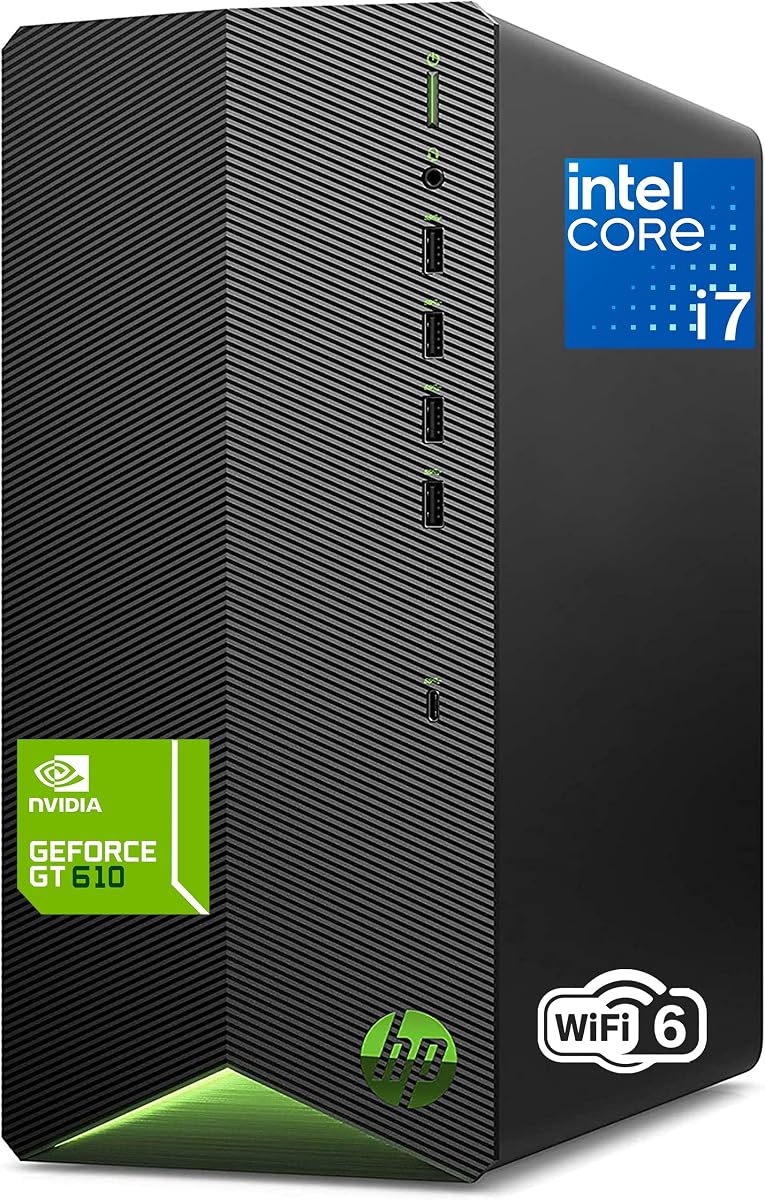
The HP 2026 Desktop Tower is a complete home and study package centered on an Intel i7-11700F eight-core processor, 16GB of DDR4 memory, and a 1TB PCIe SSD. Its 4.4 rating and bundled keyboard and mouse make it a convenient option for buyers who want the main essentials included. The generous storage capacity is especially useful for assignments, family documents, photographs, videos, and a substantial software library.
We may earn a commission when you buy through this link, at no additional cost to you.
The eight-core processor is presented as capable of handling remote work, video conferencing, spreadsheets, and multiple productivity applications. Fast solid-state storage supports quick startup and file access, while 16GB of RAM gives users enough memory for normal family multitasking. WiFi 6 and Bluetooth provide modern wireless connectivity, and the listed HDMI and RJ-45 connections cover common monitor and home-network needs. Windows 11 Home supplies a familiar interface for general users.
The main limitation concerns entertainment and gaming. The listed GeForce GT 610 is intended for casual entertainment and light gaming rather than modern demanding games or graphics-intensive creative work. The i7-11700F is also an older-generation platform, though the described specifications still appear well suited to ordinary household productivity. The listing presents the package as economical and complete, but buyers should still check current peripheral, monitor, and software compatibility before ordering.
This desktop is a strong fit for students, remote workers, and families that want a capable central computer without separately sourcing input devices. The 1TB SSD gives it more breathing room than many entry configurations, and the included accessories simplify initial setup. It is best treated as a productive family workhorse rather than a specialized gaming machine or ultra-compact media unit. For those priorities, its combination of core count, memory, storage, wireless support, and included accessories is compelling.
A 1TB PCIe SSD provides room for coursework, media archives, downloaded content, and installed applications. Solid-state storage also improves responsiveness compared with a traditional hard drive when users open files or launch applications.
The included keyboard and mouse make the package more convenient for a student or family building its first home workstation. Basic connectivity covers typical displays, wired networks, and common peripherals.
We may earn a commission when you buy through this link, at no additional cost to you.
The HP Core i5 Desktop Tower delivers a balanced set of home-computing essentials in a relatively compact enclosure. Its 4.5 rating, Intel Core i5 processor, and 16GB of DDR4 RAM make it suitable for homework, streaming, photo editing, and casual gaming. A 256GB PCIe NVMe SSD prioritizes speed, while the compact microtower measures 11.93 inches tall for easier placement in home workspaces.
We may earn a commission when you buy through this link, at no additional cost to you.
The supplied feature details also emphasize display flexibility. HDMI, DVI, and VGA outputs support multiple displays, and dedicated graphics are described as improving video playback and light gaming. Connectivity is well rounded for a home system, with USB Type-C, several high-speed USB ports, built-in Ethernet, an included WiFi adapter, and a headphone jack. That range is useful for printers, external storage, headsets, and a mix of older and newer accessories.
Windows 11 Pro adds security and parental-control features, while the included HP keyboard and mouse reduce the need for immediate accessory purchases. The trade-offs are storage capacity and memory generation. A 256GB drive leaves limited room for large game libraries, extensive photo archives, or numerous high-resolution video files, while DDR4 is no longer the newest standard. Users with substantial media collections should plan for external storage or verify whether a larger configuration is available.
This is the value pick for a shared family computer, a student's first desktop, or a quiet home office where versatility matters more than maximum performance. Its compact dimensions are especially valuable in living areas and smaller offices, while the three display outputs create options beyond the basic single-monitor setup. It should not be mistaken for a modern gaming tower, but for everyday computing, media use, and mixed household tasks, it offers one of the most practical combinations in the guide.
The microtower's 11.93-inch height makes it easier to accommodate beneath a desk or beside an entertainment unit. Its stated quiet operation also supports use in shared living spaces.
USB Type-C, multiple USB ports, Ethernet, WiFi, and legacy display outputs provide practical flexibility. This makes the system useful for users who still maintain older peripherals alongside newer accessories.
We may earn a commission when you buy through this link, at no additional cost to you.
The renewed Dell Optiplex 3060 stands out for offering 32GB of DDR4 memory and a 1TB solid-state drive in a business desktop platform. Its 4.0 rating is the lowest in this list, which makes sense for a renewed product with an older Intel Core i5-8500 processor. The hardware remains well suited to home office work, online learning, media consumption, and general multitasking.
We may earn a commission when you buy through this link, at no additional cost to you.
The large memory allocation supports numerous browser tabs, office applications, and background services without relying on a mechanical drive. Windows 11 Professional is also useful for users who value familiar business features. Dell's listing highlights 4K support, executive multitasking, media streaming, and smooth multi-tab browsing, while the 32GB of RAM provides ample working space for photo and video editing tasks.
Wireless connectivity is built in, with WiFi and Bluetooth reducing the need for adapters. The port list includes four USB 3.0 ports, four USB 2.0 ports, DisplayPort, HDMI, an audio combination jack, separate audio output, RJ-45 Ethernet, and three internal SATA connections. The principal compromise is processor age. The sixth-generation i5-8500 is not ideal for specialized modern workloads, and renewed systems can show different cosmetic or wear conditions. The listing's quality guarantee and free technical support help address that concern.
This desktop is most compelling for a value-conscious buyer who prioritizes memory, storage, connectivity, and Windows Pro over the newest processor. It can serve as an office machine, a student desktop, or a second household computer with numerous applications open. Buyers seeking gaming performance, maximum processing power, or a brand-new warranty should look elsewhere. Within renewed systems, however, its 32GB memory and 1TB SSD create a notably useful specification balance.
The 32GB RAM and 1TB SSD combination is the defining strength. It gives a home office or student enough capacity to keep many applications, files, and browser sessions active without relying on slow storage.
DisplayPort and HDMI support flexible monitor arrangements, while the mixture of USB 2.0 and USB 3.0 ports accommodates many peripherals. Built-in WiFi and Bluetooth also make networking straightforward.
We may earn a commission when you buy through this link, at no additional cost to you.
The HP ProDesk 400 G9 is a small-form-factor business desktop that brings a substantial memory and storage configuration to a compact enclosure. Its 4.4 rating is supported by a listed 32GB of RAM, a 1TB PCIe SSD, dual 4K display support, and a broad selection of ports. Windows 11 Pro and security features such as TPM 2.0 and HP Wolf Security make it particularly relevant to home offices that mirror a managed business environment.
We may earn a commission when you buy through this link, at no additional cost to you.
The supplied details identify an Intel Celeron G6900 dual-core processor with 4MB cache and 3.4 GHz clock speed, along with Intel UHD graphics. This processor is the most significant limitation because it is less suited to intensive computation than the Core i3, Core i5, Core i7, and Core Ultra alternatives in this guide. Nevertheless, the large memory and fast storage can make routine office tasks, web use, document handling, and communication feel responsive.
Connectivity is one of the system's strongest features. The listed selection includes USB Type-C, several USB Type-A connections, USB 2.0 ports, HDMI 1.4, DisplayPort 1.4, a headphone and microphone combination jack, audio output, and RJ-45 Ethernet. WiFi and a wired keyboard and mouse are also included. At 11.9 by 10.6 by 3.7 inches and under nine pounds, the small form factor can fit comfortably on a desk where a conventional tower would be cumbersome.
The best audience for this system is a budget-conscious home or small-office user who values Windows Pro, security features, abundant connections, and a compact footprint more than high-end processing power. It can work well for administrative tasks, education, browsing, and general office productivity. Heavy creative software, demanding games, and processor-heavy multitasking would favor a stronger Core-class configuration. Its appeal lies in how many business features Dell and HP-style platform functions are packed into a modest desktop.
At 3.7 inches deep, the small-form-factor chassis can reclaim valuable desk space. It is a practical option for a compact home office where a tower's footprint would be inconvenient.
DisplayPort, HDMI, USB Type-C, multiple USB-A connections, and Ethernet support varied peripherals. TPM 2.0 and HP Wolf Security add value for users who want business-oriented protections at home.
We may earn a commission when you buy through this link, at no additional cost to you.
The Dell 2026 Tower Desktop combines a 14th-generation Intel Core i3-14100 processor with 32GB of DDR5 RAM and a 1TB PCIe NVMe SSD. The resulting system is well equipped for everyday office automation, communication, schoolwork, and multi-application productivity. Its 4.4 rating reflects a particularly attractive balance of memory, modern storage, connectivity, and physical size.
We may earn a commission when you buy through this link, at no additional cost to you.
The processor provides four cores, eight threads, up to 4.7 GHz turbo speed, and 12MB of cache. While it does not reach the multi-core performance of the Core i5, Core i7, or Core Ultra models elsewhere in this guide, it is a capable everyday processor. Pairing it with 32GB of DDR5 memory gives the system enough capacity to handle office suites, many browser tabs, media playback, and communication applications with considerable headroom.
Display support includes dual 4K output through HDMI 2.1 and DisplayPort 1.4a using Intel UHD Graphics 730. The system also provides MediaTek WiFi 6, Bluetooth, USB 3.2 Gen 1 Type-C, USB-A, RJ45 Gigabit Ethernet, an SD media reader, and an audio jack. Its listed dimensions of 12.76 by 6.06 by 11.53 inches create a relatively compact tower, and an optimized thermal airflow layout is designed to support system longevity.
This desktop is best for home users who prioritize abundant memory and fast storage over flagship processor performance. It is especially attractive for administration, finance, data entry, document-heavy work, and households running several productivity applications. The 1TB NVMe drive also provides useful room for larger working files. The main trade-off is the processor's four-core design, which may be less comfortable for intensive video editing, advanced content creation, or demanding games than the higher-tier alternatives in this guide.
The combination of 32GB DDR5 memory and a 1TB NVMe drive creates a strong foundation for multitasking. It supports fast application loading, responsive file access, and ample capacity for work or school projects.
USB Type-C, HDMI 2.1, DisplayPort 1.4a, Gigabit Ethernet, WiFi 6, and Bluetooth cover current connectivity needs. The SD card reader also adds convenience for users who transfer media from cameras.
We may earn a commission when you buy through this link, at no additional cost to you.
The HP 2026 Desktop Computer is a well-rounded home-office tower built around the 12th-generation Intel Core i5-12500. Its 4.5 rating reflects a capable six-core, twelve-thread processor, 16GB of memory, a fast 512GB SSD, and extensive connectivity. The configuration is particularly well aligned with small business, home-office, student, and shared-family use.
We may earn a commission when you buy through this link, at no additional cost to you.
The processor can reach 4.6 GHz and is positioned for business applications, multitasking, remote work, research, and online learning. Storage performance should be responsive for system startup and file access, while 16GB of DDR4 RAM is sufficient for typical productivity environments. Integrated Intel UHD Graphics 770 supports routine visual workloads such as presentations, web video, and business applications, although it is not aimed at demanding modern games.
The supplied feature details emphasize eight total USB ports, HDMI, VGA, Ethernet, and WiFi 6. Windows 11 Home is preinstalled, and the package includes a wired keyboard and mouse. It also mentions lifetime web access to Office 365 for creating and sharing browser-based documents, which can be helpful for users who already use that service. The main hardware compromises are the use of DDR4 rather than newer DDR5 and the reliance on integrated graphics.
This system is a strong recommendation for a home office where balanced performance, broad connectivity, and a ready-to-use package matter. It is also appropriate for a student who regularly writes reports, participates in online classes, and handles presentation software. Families will benefit from the included peripherals and familiar Windows interface. Buyers seeking high-end gaming or advanced content creation should move to a more powerful graphics solution, but for everyday office-centered computing, this configuration is notably versatile.
Six physical cores and twelve threads give the Core i5-12500 useful capacity for document work, research, meetings, and multiple applications. It offers a comfortable middle ground for home productivity.
Eight USB ports, HDMI, VGA, Ethernet, and WiFi 6 provide room to connect printers, external drives, displays, networking equipment, and routine accessories. The included keyboard and mouse improve initial convenience.
We may earn a commission when you buy through this link, at no additional cost to you.
The Lenovo IdeaCentre Tower is one of the strongest all-round configurations here, pairing an Intel Core Ultra 5 225 processor with 16GB of DDR5 memory and a 512GB SSD. Its 4.6 rating is among the highest in the guide, and the modern platform makes it a compelling option for home users who want a current processor and wireless standard without moving to a premium business tower.
We may earn a commission when you buy through this link, at no additional cost to you.
The ten-core, ten-thread processor operates at a listed base frequency of 3.3 GHz and can boost to 4.9 GHz, with 20MB of Intel Smart Cache and 22MB of L2 cache. Those details point to solid responsiveness for office work, research, communication, web browsing, and light productivity workloads. The system supports up to 64GB of DDR5 memory and up to 4TB of PCIe M.2 solid-state storage, giving buyers clear pathways for future expansion when the base configuration is not enough.
Connectivity is comprehensive. The tower provides seven USB ports, HDMI and VGA for dual-monitor arrangements, RJ-45 Ethernet, and built-in WiFi 6E with Bluetooth 5.1. A black wired keyboard and mouse are included, while Windows 11 Home comes preinstalled in 64-bit English. The supplied details also mention Office 365 for the web, which can be useful for browser-based document work. As with the base storage, users with large media libraries may need to add capacity or use external storage.
This desktop is well suited to a modern family room, study area, or home office where the owner wants strong general performance, up-to-date wireless connectivity, and room to expand. It is particularly attractive for users of mixed applications and multiple displays. The Intel Core Ultra 5 designation and generous connectivity make it feel more future-facing than many of the business-oriented alternatives, while the bundled keyboard and mouse keep setup simple.
The ten-core Core Ultra 5 225 provides ample performance for productivity, communication, and light creative work. It also introduces a current platform foundation for users who want to avoid an older processor generation.
Support for up to 64GB of DDR5 and 4TB of PCIe M.2 storage gives the configuration meaningful upgrade potential. A household can begin with its immediate needs and expand as files and applications accumulate.
We may earn a commission when you buy through this link, at no additional cost to you.
The Dell Pro Tower Desktop earns the highest rating in the guide with a 4.9 score, modern 14th-generation processing, 16GB of DDR5 memory, and a 512GB PCIe SSD. It is the most complete choice for a home user who wants a business-oriented operating system, extensive connectivity, and a physically manageable tower. Windows 11 Pro, dual-monitor support, and a broad selection of ports make it particularly useful for work and study.
We may earn a commission when you buy through this link, at no additional cost to you.
The Intel Core i3-14100 provides four cores, eight threads, turbo speeds up to 4.7 GHz, and 12MB of cache. That is enough performance for office applications, video conferencing, content creation, and everyday productivity, especially alongside DDR5 memory and solid-state storage. Integrated Intel UHD Graphics 730 handles routine business visuals and dual-monitor configurations through DisplayPort 1.4 and HDMI 2.1 without requiring a separate graphics card for standard productivity work.
The connectivity selection is among the strongest reasons to consider this model. It includes USB-C 3.2 Gen 1, multiple USB 3.2 and USB 2.0 ports at the front and rear, a global headset jack, media card reader, and Gigabit Ethernet. Built-in MediaTek WiFi 6 and Bluetooth support modern wireless use. The physical design measures 12.76 by 6.06 by 11.53 inches and weighs 9.17 pounds, making it relatively compact for a business desktop. A 180W Bronze power supply, Kensington lock slot, and padlock loop add further practical value.
This is the overall recommendation for a home office, advanced student, or small-business user who wants a polished and flexible Windows Pro desktop. Its high rating, modern memory, dual-monitor support, and extensive port selection provide a well-balanced foundation. The four-core processor and 512GB storage are not intended for high-end gaming or massive creative projects, but they are appropriate for the broad category of productive home computing. For most buyers in that group, the feature balance is exceptionally strong.
Windows 11 Pro, physical security options, and a relatively compact tower make this desktop easy to integrate into a home office. It provides business-oriented capabilities without requiring a large workstation enclosure.
USB-C, numerous USB-A ports, dual display outputs, Ethernet, WiFi 6, Bluetooth, a headset jack, and a card reader cover most productivity peripherals. Two-monitor support also makes it well suited to side-by-side work.
We may earn a commission when you buy through this link, at no additional cost to you.
Choosing a home desktop is easier when priorities are matched to the hardware. Processor, memory, storage, display options, connectivity, physical design, and operating system each affect the experience differently, so the most important first step is deciding how the computer will be used.
The processor determines how quickly a system handles demanding applications, multitasking, web work, and background tasks. A modern Core i5 or Core Ultra 5 offers a strong balance for general home use, while Core i7 and Core Ultra 7 models provide additional headroom for intensive multitasking, content creation, and heavier productivity workflows. Core i3 configurations are also reasonable when the system is supported by adequate memory and fast storage, while the Celeron option is best reserved for lighter workloads.
For most households, look for a processor with at least four modern cores, support for multiple threads, and enough performance for the applications you actually use. A higher clock speed can improve responsiveness, but the number of cores, memory, storage type, and cooling system also influence the total experience.
RAM controls how many applications and browser tabs can remain active at once. The guide includes configurations with 16GB and 32GB, and 32GB is preferable for heavy multitasking, large office files, photo or video projects, and a computer expected to last through several software cycles. DDR5 is the newer memory standard, while DDR4 remains suitable for everyday productivity when paired with a capable processor and solid-state drive.
A useful rule is to choose 16GB for regular browsing, schoolwork, and standard office use, then consider 32GB for a shared family machine or demanding work environment. Check whether the listed capacity is fixed or configurable, and avoid assuming that a tower's maximum supported memory is already installed.
A PCIe solid-state drive improves boot time, application launching, and file access compared with a traditional hard drive. Capacity is the second part of the decision: 256GB is workable for a light user who relies on cloud storage, while 512GB or 1TB gives more room for media, downloaded applications, large project files, and family backups. The NVMe models in this guide are particularly well suited to responsive everyday use.
Think about your files before choosing capacity. Video, high-resolution photography, installed games, and large media libraries can consume storage quickly, even on a new computer. A smaller fast drive is preferable to a larger slow drive, but external storage or a later internal upgrade may be necessary if your data requirements are substantial.
The number and resolution of supported monitors can transform a home office. A single high-resolution display works well for general use, while dual displays are valuable for research, spreadsheets, communication, creative editing, and multitasking. Several models support dual 4K output, and the Dell Slim Desktop supports as many as four Full HD displays. Outputs such as HDMI, DisplayPort, VGA, and DVI determine which monitors and adapters you can use.
Check the graphics specification as well as the port count. Integrated Intel graphics are generally appropriate for productivity, media, and general application use, while the HP family tower in this guide lists GeForce GT 610 graphics for light gaming. If you are a gamer or creator, dedicated graphics and stronger overall performance may matter more than extra office-oriented ports.
A home desktop must connect to the internet, monitors, keyboards, mice, printers, speakers, headsets, storage devices, and other peripherals. At least one high-speed USB port is essential, while USB Type-C, multiple USB-A ports, an audio jack, and Ethernet make a system more adaptable. Wireless support is especially useful when running a cable to the router is inconvenient, although a wired connection remains dependable for large downloads and stable conferencing.
Look for the specific wireless standard when it matters. WiFi 6 appears across several options, while the Lenovo IdeaCentre offers WiFi 6E and the HP tower includes Bluetooth 5.1. Check Bluetooth support as well if you use wireless headphones, keyboards, mice, speakers, or mobile-device integration.
A desktop that is easy to open can be upgraded with more memory, faster or larger storage, and other components as needs change. Dell's Slim and Tower desktops emphasize tool-less entry and removable side panels, while the Optiplex and business towers support expansion in different ways. The Lenovo IdeaCentre lists high memory and storage ceilings, making future growth another reason to consider it.
Prefer systems that make the removable panel and internal layout easy to understand. Also consider the support terms: one of the Dell Slim Desktop and Tower Desktop options includes a 1 Year Onsite Service, which can be useful for home users who prefer assistance in their own space. Renewed products may have different support or warranty terms, so check those details carefully.
A full tower may offer more internal room, while a slim desktop or small-form-factor system can be easier to place on a desk, in a living area, or beneath furniture. The HP Core i5 microtower is listed at 11.93 inches tall, and the HP ProDesk 400 G9 measures only 3.7 inches deep. Other Dell and Lenovo towers use dimensions that remain relatively manageable while offering standard service access.
Consider where the computer will live, how cables will be routed, and whether additional fans, storage, or memory may be installed. A compact system is more convenient in a shared room, while a larger chassis can be easier to work with when adding components. A clear location and good ventilation are more important than choosing a size based on appearance alone.
Windows 11 Home is designed for personal use, while Windows 11 Pro adds business-oriented security, management, and remote access capabilities. Families and students will usually find Home sufficient, whereas a home office that needs centralized management, domain features, or advanced security may benefit from Pro. Windows 11 Home-Ready wording should be checked to determine what is preinstalled and whether any additional operating system is required.
Several systems include a wired keyboard and mouse, making them more convenient out of the box. The HP 2026 tower and Lenovo IdeaCentre both include these accessories, as do the HP ProDesk and some of the other listed packages. If you already own preferred peripherals, that inclusion may be less important. If you are furnishing a new student bedroom or family study area, it can prevent an additional purchase and simplify setup.
Begin by placing the computer on a stable, level surface with enough clearance around its vents. Connect the power cable, display, keyboard, mouse, and network cable if using Ethernet, then turn on the monitor and system. Windows may guide the user through account creation, privacy choices, updates, and initial configuration. Allow operating system and application updates to finish before installing important work, and create a user account that separates everyday use from shared or guest access.
For storage, keep the desktop organized into clear folders and avoid filling the system drive with unnecessary downloads. Use external storage for large media libraries and maintain at least one additional copy of irreplaceable documents. Periodic cleanup helps the system remain responsive, while restarting after major updates can clear temporary files and confirm that hardware and software are working together correctly. For a shared computer, create separate accounts and review parental-control or guest-access options in Windows 11.
Protect the system with reputable security software, enable system updates, and use a strong sign-in password. Avoid opening unexpected links, and take care when connecting unknown USB devices. For long periods of use, enable appropriate sleep or display-off settings, keep drinks away from the chassis, and dust the exterior vents periodically. Before moving the tower, shut it down, disconnect peripherals, and hold the power button briefly to discharge residual power.
Yes, 16GB is sufficient for typical web browsing, schoolwork, document editing, video calls, streaming, and moderate application use. It also works well with a fast solid-state drive and a current processor. Consider 32GB if you routinely run many browser tabs, advanced creative software, large work files, or several demanding applications at once.
A 512GB SSD generally provides much faster boot, application, and file performance, making the computer feel more responsive. A 1TB hard drive offers more capacity but slower access. The better choice depends on whether speed or capacity matters more, and cloud storage or an external drive can supplement a smaller SSD.
Many of the listed systems support multiple displays, with several offering dual 4K output through HDMI and DisplayPort. The Dell Slim Desktop also supports up to four Full HD monitors. Check the exact ports, graphics configuration, and resolution requirements before connecting multiple screens.
A slim desktop is better when desk space and appearance are priorities, while a tower may be easier to expand and can provide more room for cooling or additional components. The Dell Slim Desktop remains serviceable with tool-less access, so it does not require a trade-off between compactness and basic upgrade convenience. Consider the available ports and physical space where the computer will be used.
Windows 11 Home is intended for personal use and provides the core features most households need. Windows 11 Pro adds business-oriented security, device management, and remote access capabilities. A home office with advanced administration requirements may benefit from Pro, while many students and families will find Home more straightforward.
Renewed systems can provide strong value when they include a quality guarantee and support. They may have an older processor, previous cosmetic wear, or a different warranty than a new product. The Dell Optiplex 3060 in this guide offers substantial memory and storage, so buyers should weigh those specifications and the renewed terms against newer alternatives.
Usually not for web browsing, office applications, schoolwork, streaming, and video calls. Integrated graphics are also suitable for many light creative tasks and dual-monitor arrangements. Dedicated graphics become more important for modern demanding games, intensive 3D work, high-resolution video editing, and other specialized applications.
A 512GB SSD is a practical starting point for a family using cloud storage and moderate media collections, while 1TB is more comfortable for large photo libraries, videos, games, and downloaded files. Capacity needs can grow quickly, so check whether the system supports additional solid-state storage and consider an external drive or cloud backup for the largest files.
The Dell Pro Tower Desktop is the strongest overall choice because it combines a 4.9 rating, modern DDR5 memory, a fast solid-state drive, Windows 11 Pro, dual-monitor support, and extensive connectivity in a compact business-style enclosure. The HP Core i5 Desktop Tower is the best value-oriented option for families that need useful specifications, multiple display outputs, and a smaller footprint without the same emphasis on business security.
The Dell Tower Desktop stands apart as the premium choice, pairing an Intel Core Ultra 7 processor with 32GB of memory and flexible multi-monitor support. Buyers should prioritize the combination of processor, memory, storage, and connectivity that matches their actual workload rather than selecting solely on the highest specification. Compactness, included accessories, upgrade access, and operating system features are equally important in a shared household.
Finally, verify the current product listing before buying. Components, configurations, included accessories, support terms, and prices can change, and the same product name may appear with different specifications. Confirm processor, memory, storage, display outputs, wireless support, operating system, and warranty details so the selected desktop continues to meet your household's needs.