
TECKNET 125dB Motion Sensor Alarm
4.3Editor score
Three selectable alert volume levels
Remote operation up to 328 feet
Battery or USB-C power options
Discover the best indoor motion sensor alarm options by comparing detection range, alert volume, wireless reach, alerts, power, and installation.
Indoor motion sensor alarms offer a practical way to detect movement, announce visitors, monitor vulnerable family members, and discourage unauthorized entry without installing a complex security system. A useful model should balance reliable PIR detection, a sufficiently loud alert, flexible placement, simple controls, and dependable power options.
We compared ten indoor-focused products based on the supplied specifications, including detection distance and angle, siren output, wireless transmission range, available alert modes, receiver expandability, installation methods, caregiver-monitoring features, and power requirements. The list covers standalone remote-controlled alarms, plug-in chime systems, and multipurpose kits designed for homes, offices, shops, garages, and other indoor spaces.
Each review explains where the product stands out, where its design creates trade-offs, and the environments it suits best. The badges identify three particularly versatile picks, while the remaining entries provide useful alternatives for different priorities. Prices and seller offers can change, so confirm the current listing and specifications before purchasing.
4.3Editor score

4.5Editor score

4.1Editor score
The comparison below highlights the major differences among detection range, alert output, wireless reach, system flexibility, and installation options, making it easier to identify the most appropriate alarm for a particular room or building.

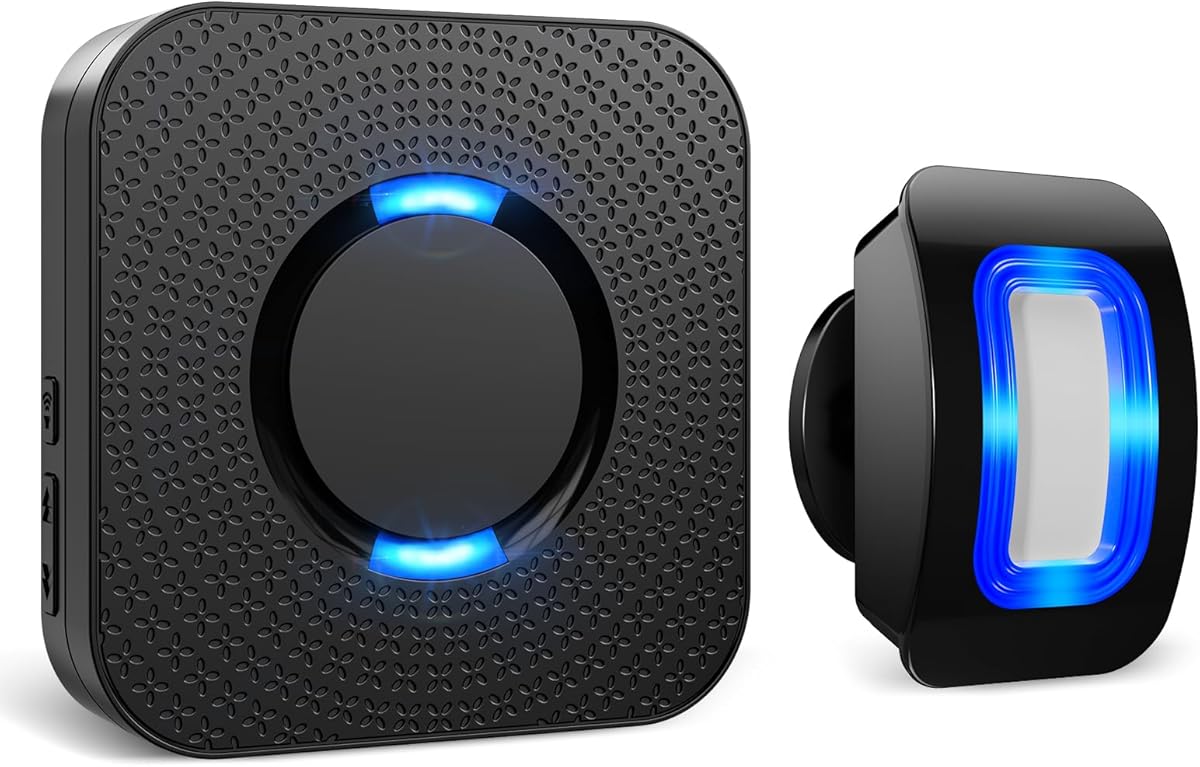


The TECKNET 125dB Loud Indoor Motion Sensor Alarm combines a standalone PIR detector, a prominent 125dB siren, a flashing strobe, and a remote control. With a 4.3 rating, it stands out for offering several genuine options within one compact unit. The detector can operate from batteries or USB-C power, making it suitable for temporary placement as well as fixed indoor monitoring.
We may earn a commission when you buy through this link, at no additional cost to you.
Its detection specification of approximately 16 to 26 feet within a 120-degree field provides useful coverage for hallways, entryways, shops, garages, and similar spaces. The detector body rotates 360 degrees so the sensing direction can be adjusted after installation. Intelligent PIR signal analysis is intended to distinguish human movement from common environmental interference, while Alarm Mode keeps the siren sounding for two minutes after activation.
The remote control is one of the most useful features because it works up to 328 feet in open areas. It can arm or disarm the unit, change between Alarm and Doorbell Chime modes, and activate the SOS function without requiring someone to walk to the sensor. Three volume settings—80dB, 100dB, and 125dB—make it possible to match the alert to the space, although the loudest setting may be unsuitable in occupied rooms or late at night.
This is a strong recommendation for someone who wants a self-contained alarm without Wi-Fi, an app, a hub, or a multi-receiver setup. Adhesive, screws, and freestanding placement offer several installation choices, and the stated indoor uses extend to storage rooms, shops, hallways, vehicle interiors, and garages. The main limitation is its single-sensor format; buyers wanting several zones should look toward an expandable receiver-based system.
AAA batteries make the alarm convenient for temporary use, while continuous USB-C power suits a fixed location near a suitable outlet or power source. The USB-C connection powers the detector but does not recharge installed batteries, a distinction worth checking before setup.
The remote lets a user control the alarm from across a room or larger indoor area without approaching the detector. Alarm, chime, arming, disarming, and SOS functions are consolidated into one accessory, reducing the need to reach a mounted unit.
We may earn a commission when you buy through this link, at no additional cost to you.
The Wireless Motion Sensor Door Chime: Business Entry Doorbell Indoor Alarm is a receiver-based system with a 4.5 rating, making it one of the strongest choices in this guide. It combines an indoor motion detector with a plug-in receiver, allowing alerts to be heard away from the point of detection. That separation is particularly useful in offices, retail spaces, homes with multiple rooms, and caregiver monitoring arrangements.
We may earn a commission when you buy through this link, at no additional cost to you.
The detector covers movement from approximately 16 to 26 feet across a 110-degree area and communicates with the receiver from as far as 500 feet. Thirty-two unique chimes include traditional doorbell sounds, alarm sounds, and longer tones. Five volume settings span the range from silent to 110dB, and the receiver's flashing LED provides a visual notification that is useful when audio is inconvenient or difficult to hear.
Expansion is the product's defining advantage. A single system can be built with as many as 20 sensors and unlimited receivers, allowing alerts from multiple entries to reach different parts of a property. The supplied package includes one receiver and one battery-operated sensor, while additional components can be added to suit the layout. Wall mounting with screws is straightforward, and the receiver avoids batteries by plugging into a standard outlet.
The trade-off is that this system is primarily designed around plug-in receivers rather than a standalone siren unit. It still reaches a maximum 110dB, which can be assertive, but it does not offer the 125dB output of several dedicated security alarms. It is nevertheless an excellent general-purpose option for visitors, customer entry, elderly movement, and basic indoor monitoring.
Supporting up to 20 sensors makes this a practical foundation for a larger home or business. Users can place detectors at separate doors, hallways, or rooms while maintaining a coordinated notification network.
The same detection system can announce a customer or visitor and monitor movement near a vulnerable person. The visual LED and silent mode add flexibility when a loud or continuous alert would be disruptive.
We may earn a commission when you buy through this link, at no additional cost to you.
The CPVAN 125dB Motion Sensor Alarm is built for people who prioritize an unmistakable alert over a subtle chime. It carries a 4.1 rating and pairs a high-output siren with a PIR detector that can sense motion up to 40 feet. The product description notes that best performance generally occurs within 10 to 26 feet, making the longer figure a maximum rather than a guarantee in every room.
We may earn a commission when you buy through this link, at no additional cost to you.
Two operating modes let users choose a loud alarm for security or a gentler chime for routine notifications. The included remote works up to 328 feet in open areas and can arm, disarm, or change modes. This makes the unit practical for a garage, storage area, shop, stairway, van, or other space where reaching the sensor after an alert would be inconvenient.
Installation can use adhesive or screws, and the detector may also sit on a table or shelf. Because it is battery operated, it is particularly versatile for temporary installations and vehicles. The package is self-contained and needs no Wi-Fi, application, or hub. CPVAN also lists an 18-month warranty and lifetime technical support, adding reassurance for buyers who want help beyond the initial setup.
The important caveat is that this is an indoor unit and is not waterproof. Its 125dB siren may also be excessive for a bedroom or quiet office, though the chime mode can provide a softer alternative. Overall, it is a compelling premium pick for a garage, shed, shop, or other area where maximum detection reach and a forceful warning are the leading requirements.
The listed 40-foot range gives the detector more potential reach than many compact alternatives. Because actual PIR performance varies, mounting height, angle, and environmental conditions should be tested before relying on the full distance.
A 125dB siren is most valuable in a garage, shed, storage area, or shop where a loud warning can discourage entry. Use chime mode or a lower output setting where sudden high-volume sound could disturb occupants.
We may earn a commission when you buy through this link, at no additional cost to you.
The Wireless Motion Sensor LED Light is a receiver-based entry alert with a 4.3 rating, 58 ringtones, and a visual LED. It is designed for people who want more choice in the notification sound than a conventional doorbell offers. The receiver can operate quietly, produce a full 110dB alarm, or display a flashing visual alert when sound is undesirable.
We may earn a commission when you buy through this link, at no additional cost to you.
The detector senses movement over approximately 13 to 16.5 feet and transmits the signal to the receiver from up to 500 feet away. Five volume levels allow the same system to serve as a subtle house chime and a stronger entry alarm. The flashing LED gives the product value in offices and shops where workers may be wearing headphones or occupied with noisy tasks.
Installation is straightforward: the sensor uses two included AAA batteries, while the receiver plugs into a standard outlet. Each receiver can work with as many as 20 motion sensors, and the transmitter and receiver quantities can be configured to suit the property. The supplied instructions also describe a process for changing the receiver's selected ringtone.
Its main limitation is the relatively short PIR range compared with several standalone alarms in the guide. It also depends on batteries in each detector, meaning regular testing is important. Even so, it is a good choice for customers who value tone variety, long receiver reach, visual alerts, and multi-point coverage more than long-distance motion detection.
The 58-ringtone selection makes the system adaptable to quiet homes, offices, retail counters, and busy warehouses. A familiar doorbell sound may be less disruptive, while an alarm tone can provide a stronger warning.
The receiver's flashing indicator is helpful when a person cannot readily hear the chime. Silent operation combined with the LED preserves awareness without adding constant audible disruption.
We may earn a commission when you buy through this link, at no additional cost to you.
The Motion Sensor Alarm with 11-Language support is designed to serve both welcoming visitors and warning of movement. Its 4.2 rating reflects a versatile design centered on three modes: a friendly welcome chime, a loud anti-theft siren, and a no-repeat mode. The language feature is particularly relevant to shops, offices, warehouses, and homes where different visitors may benefit from a spoken or localized notification.
We may earn a commission when you buy through this link, at no additional cost to you.
The PIR detector senses human movement up to 26 feet and is described as filtering pets and airflow to reduce irrelevant alerts. Four volume levels move from a quiet office chime to a louder storefront warning. The unit can run from batteries or USB 5V power, and a low-battery voice reminder helps reduce the chance of an unnoticed power failure.
A remote control simplifies setup and daily operation. According to the product data, the sensor can be mounted and paired with the remote in under two minutes without wiring or drilling. From the remote, users can adjust volume, switch modes, and arm or disarm the alarm. This makes the product particularly approachable for temporary placement or quick changes in business environments.
Compared with receiver-based multi-sensor systems, this model is a more focused standalone device. It does not offer the ability to coordinate 20 detectors through one receiver, and four volume settings are fewer than many competing systems. For a single entrance, office, or shop where language, quick setup, and three operating modes matter most, however, it remains a distinctive and convenient option.
A dedicated welcome function distinguishes ordinary visitors from security events. Switching to a loud siren when needed provides flexibility without replacing the entire unit.
The tool-free mounting approach and remote pairing process reduce installation time. This is useful for renters, temporary displays, pop-up events, or spaces where permanent drilling is undesirable.
We may earn a commission when you buy through this link, at no additional cost to you.
The Wireless Caregiver Pager is a 4.5-rated system created for monitoring movement in the home, particularly around elderly people, dementia patients, and children. The included plug-in receiver and motion sensor can notify a caregiver when movement is detected, allowing the caregiver to remain elsewhere in the home while still receiving an alert.
We may earn a commission when you buy through this link, at no additional cost to you.
The detector covers a 16.4-foot range across a 110-degree angle. It transmits to paired receivers from up to 260 feet in an open area, and the description states that signal can carry 10 to 40 meters through walls or doors. Users are advised to test whether the coverage suits the intended room before fixing the detector permanently. An adjustable mounting bracket provides some control over placement.
Notifications combine sound and a flashing LED. There are 58 ringtones and five volume settings ranging up to 110dB, including the option of a silent visual mode. The sensor can operate on batteries or with a USB cable, while the receiver plugs directly into an outlet. Each receiver can pair with up to 20 transmitters, and each transmitter can pair with up to 20 receivers.
Although it also works as an entry alert for homes and businesses, its clearest purpose is caregiver awareness. The product is an alert rather than a diagnosis or guaranteed fall-prevention system, and users still need to establish safe routines and respond appropriately. Within that scope, it offers a strong combination of visual and audible notifications, flexible placement, and multi-device pairing.
The system's focus on monitoring a room rather than merely announcing a visitor makes it useful for families supporting someone who may need assistance. Placement should be tested to confirm that the room and exit route are covered as intended.
A caregiver can choose a ringtone, adjust the volume, or rely on the flashing LED. This flexibility is helpful when the caregiver is listening to music, working in another room, or has difficulty hearing conventional alerts.
We may earn a commission when you buy through this link, at no additional cost to you.
The Electric Doorbells Motion Alarm is a bundled indoor system with four motion detectors, two alarm receivers, and mounting screws. Its 4.2 rating makes it an attractive option for buyers who want coverage at several points without selecting each component separately. The system can function as a doorbell, garage alert, intruder warning, child or elderly-care alarm, or general motion notification.
We may earn a commission when you buy through this link, at no additional cost to you.
The detector has an infrared distance of approximately 20 feet, while the receiver can receive the signal from as far as 300 feet. Thirty-eight ringtones and three volume levels allow the alerts to be customized. Low, medium, and high settings cover everything from a quiet indoor notice to a stronger warning, while silent mode relies only on the receiver's LED light.
Because the package contains multiple detectors and two receivers, it can divide a property into separate zones. One receiver might monitor a front entrance while another watches a hallway, garage, or room. This makes the kit suitable for a larger home or small commercial space, although the final placement should avoid wind exposure and obstructions that could trigger the detector.
The most significant practical drawback is that AAA batteries for the four detectors are not included. The product is also not waterproof and should be protected from rain. Even with those caveats, the multi-unit package is more immediately comprehensive than the single-sensor products, offering a balanced way to establish indoor alerts across several areas.
Four detectors and two receivers provide a practical foundation for covering multiple rooms or entrances. The included mounting hardware simplifies assembly, though batteries must be supplied separately.
The same receiver can serve as a soft chime or a stronger warning depending on the volume setting. Silent LED mode adds a non-disruptive option for quiet indoor environments.
We may earn a commission when you buy through this link, at no additional cost to you.
The Wireless Motion Sensor Alarm Indoor is a 4.3-rated business entry system with 35 selectable sounds, five volume levels, and a 500-foot transmission range. It is designed for locations such as stores, offices, warehouses, corridors, and garages, where a sensor at an entrance should send its notification to a receiver positioned elsewhere.
We may earn a commission when you buy through this link, at no additional cost to you.
Its detection coverage is more adjustable than that of many competitors. A 360-degree rotatable base supports detection angles from 30 to 110 degrees, and the stated distance range is 4 to 8 meters. This allows an installer to narrow the monitored zone near a doorway or use a wider field for an open sales area. The overall detection specification is listed as 13 to 26 feet.
Thirty-two regular tones and three alarm ringtones cover both welcoming and security-oriented needs. Volume adjustment includes mute, while the receiver can support up to 20 motion sensors. Unique or shared tones can be assigned to different detectors, helping users identify which zone triggered an alert. The sensor mounts with adhesive or screws, and the receiver uses a plug-and-play outlet connection.
The main trade-off is the stated four-meter distance, which is shorter than the maximum detection figures offered by several dedicated alarms in this guide. Its much longer 500-foot range applies between the sensor and receiver, not to the motion-detection zone itself. Even so, the adjustable angle, zoned tones, and expandability make this a strong fit for businesses that need to distinguish multiple entrances.
The adjustable base allows a narrow 30-degree field for a doorway or a broad 110-degree field for an open area. This flexibility can reduce irrelevant movement alerts when compared with a fixed wide-angle sensor.
Unique tones for separate sensors help staff know where activity occurred. A shared tone can also be used when a general alert across several locations is more useful than precise zone identification.
We may earn a commission when you buy through this link, at no additional cost to you.
The Luckydeer 125dB Motion Alarm is a compact standalone detector with a 4.2 rating, a 328-foot remote, and a high-output siren. It is designed for indoor spaces such as a bedroom, kitchen, shed, garage, shop, or boat, and can also be used to discourage children or pets from entering an unwanted area.
We may earn a commission when you buy through this link, at no additional cost to you.
The PIR detector covers 16 to 26 feet and uses intelligent analysis intended to distinguish human movement from interference signals. Its 125dB siren provides the forceful output expected from a security alarm, while Doorbell mode offers a less intense alternative. The remote can arm, disarm, change modes, and trigger an immediate SOS alarm through its integrated panic button.
Installation is designed to be quick. The package includes three AA batteries, double-sided tape, two screws, a remote, and an instruction manual. Adhesive mounting can reportedly be completed in about 30 seconds, although users should read the manual carefully and test the detector before relying on it for security. A one-year warranty is listed for product defects, with customer support described as responding within 12 hours.
The product's simplicity is its main advantage, but it also limits flexibility. Only two volume levels are offered, and there is no receiver-based expansion for multiple sensors. Nevertheless, the combination of alarm and chime modes, a remote panic button, and a 125dB siren makes it a capable single-location option for people who do not need networked alerts.
Because the unit operates without a hub or app, it can be deployed quickly in a room, garage, or vehicle. The remote provides convenient control without requiring a wired wall switch.
Doorbell mode allows the detector to serve as a general movement or visitor alert. It may also act as a caregiver pager or a pet and child movement monitor, depending on the location and alert-volume setting.
We may earn a commission when you buy through this link, at no additional cost to you.
The METAK Wireless Motion Alarm Indoor combines a PIR detector with a plug-in receiver and carries a 4.5 rating. It is a balanced all-purpose system for homes and businesses, offering more expansion capability than a single standalone alarm while remaining easier to introduce than a large bundled kit. The stated sensor coverage reaches 26 feet across a 110-degree angle.
We may earn a commission when you buy through this link, at no additional cost to you.
The receiver can communicate with the detector from up to 500 feet away, allowing the sensor to guard an entry while the receiver remains in a room where its sound can be heard. Thirty-two selectable ringtones and five volume settings ranging up to 110dB make the system useful for both doorbell-style notices and more assertive alerts. The detector's LED also supports visual feedback.
A single receiver supports up to 20 motion sensors, which is valuable for monitoring multiple doorways, hallways, garages, mailboxes, or pet areas. The detector runs on AAA batteries for flexible placement or accepts Micro USB power for continuous operation. This combination of wireless reach, expandability, and flexible power makes the system a particularly strong general recommendation.
It is not the loudest model available: its maximum output is 110dB rather than 125dB. The receiver also depends on a standard wall outlet, and each detector requires battery attention when it is not connected to USB power. Even with these limitations, the balance of features, straightforward installation, strong rating, and scalable design makes this one of the most versatile indoor motion alarm systems in the guide.
The receiver can coordinate as many as 20 sensors, allowing a single system to grow from one entrance into a broader property-wide alert network. This makes it more future-oriented than a single-detector alarm.
AAA batteries allow a detector to be moved or used where an outlet is inconvenient. Micro USB power offers a continuous alternative for fixed positions where stable operation is a priority.
We may earn a commission when you buy through this link, at no additional cost to you.
The right indoor motion sensor alarm depends on the space, the type of movement you want to detect, the distance between sensor and receiver, and how much control you need over the alert. These factors help separate a simple standalone siren from a customizable, multi-zone notification system.
Detection distance describes how far the PIR sensor can register movement, while the field of view shows the width of the monitored area. The products in this guide range from approximately 13 to 16.5 feet, through 16 to 26 feet, to a maximum of 40 feet for the CPVAN model. These figures are best treated as potential coverage rather than guarantees because installation height, angle, room layout, and obstacles can affect performance.
A wide field is useful in an open hallway, shop, or storage area, while a narrower or adjustable field can help in a doorway or room where unrelated movement is common. Test the intended space before fixing the detector permanently. Choose enough reach to cover the exit path without wasting effort on areas that do not need monitoring.
Maximum alarm output ranges from 110dB in most receiver systems to 125dB in the standalone TECKNET, CPVAN, and Luckydeer alarms. A higher output can be more noticeable and potentially more effective for deterring entry, but it may be excessively loud in a bedroom, office, or occupied retail floor. Products with multiple volume levels or a mute function offer a better balance.
For routine visitor notifications, consider tone selection and chime options rather than siren output alone. Systems with 32, 35, 38, or 58 ringtones allow users to select a sound that suits the environment. The METAK, Luckydeer, and TECKNET also provide remote or mode controls, making it easier to change the alert when the space or situation changes.
The communication range between a sensor and receiver determines whether a detector at a door can alert someone in another room or across a larger property. Products in this guide offer receiver ranges from 260 to 500 feet, while remote-controlled standalone alarms generally list a remote range of 328 feet. These two figures describe different functions and should not be compared as equivalent.
A 500-foot system offers more placement flexibility for a home, shop, warehouse, or office with several separated zones. Open-area ratings are also ideal conditions, so walls, doors, and floor levels can reduce practical range. Install the receiver where staff or family members spend most of their time, then confirm that the sensor reaches it through the intended building materials.
Receiver-based systems can be more attractive than standalone detectors when monitoring more than one entrance. The METAK and business chime model support up to 20 sensors, while the Wireless Motion Sensor LED Light system also supports 20. The caregiver pager allows each receiver to pair with up to 20 transmitters, and the Electric Doorbells kit arrives with four sensors and two receivers.
Expansion should be considered alongside tone assignment. Some systems let different sensors play unique tones, making it easier to identify a location. Others use a shared alert for every zone. Buyers who expect to add sensors later should confirm both the receiver capacity and whether additional detectors must be purchased separately.
Standalone alarms place the siren and detector in the same compact unit, making them suitable for a single garage, room, shop, van, or storage area. Remote control provides convenient arming without a network. Receiver systems separate the detector from the alert unit, allowing the sound to travel to a more convenient location and making multi-sensor expansion easier.
Choose a standalone unit when one loud, immediate warning is the goal and nearby placement is possible. Choose a receiver system when you want to hear alerts from another room, distinguish multiple zones, or build a broader notification network. Caregivers may also prefer a receiver system because it keeps the alarm away from the person being monitored.
Battery-powered detectors are easy to relocate and suit temporary installations, while continuous power is better for fixed locations. The TECKNET supports AAA batteries or USB-C, the METAK accepts AAA batteries or Micro USB, and the Caregiver Pager supports batteries or USB. The business chime and LED-light systems use a plug-in receiver, while their detectors run on batteries.
Adhesive mounting is convenient for smooth surfaces and quick setup, while screws are preferable for permanent or uneven installations. Several products can also stand on a shelf or table. Check the surface, viewing angle, and power location before installation, and test the unit afterward. None of the indoor models should be assumed to be weatherproof.
An indoor motion alarm can announce an arrival, warn of movement in a restricted room, or help a caregiver monitor a home. The Caregiver Pager is the most explicitly focused on elder, dementia, and child monitoring, while several other products support similar entry-alert use. Visual LED indicators are especially helpful when a household member has hearing difficulty or is in an environment where sound is easily missed.
A motion alarm is an assistive notification device, not a substitute for professional care, fall detection, or direct supervision. Position the detector to cover the intended movement route, establish a response plan, and test alerts regularly. The no-repeat mode on the 11-language product may help limit repeated notifications in high-traffic areas.
PIR sensing can produce unwanted alerts when installation is poor. Avoid pointing the detector toward strong airflow, moving objects, or an exterior opening where wind can enter. The TECKNET and Luckydeer specifically describe intelligent analysis intended to separate human movement from interference, while the 11-language model states that it filters pets and airflow. These features can help, but placement remains decisive.
Verify range by walking through the intended coverage area at different times and from different angles. Keep the area immediately in front of the sensor clear of obstructions. Do not expect motion to be detected through walls, windows, or glass doors, and treat stated maximum distances as upper limits rather than guaranteed coverage.
Begin by identifying the purpose of the alarm: visitor notification, intruder deterrence, caregiver awareness, or general room monitoring. Mount the detector where it can see the relevant approach without pointing toward an unreliable source of movement. For receiver-based models, place the receiver where alerts can be heard or seen, then pair it with the sensor according to the product instructions.
Power the system using the specified battery type or approved continuous-power connection. Test the sensor before tightening screws or applying adhesive, and walk through the intended detection area to confirm adequate coverage. If the unit includes a remote, test arming, disarming, mode changes, volume controls, and any SOS or panic function while you are close enough to observe the result.
For ongoing care, test the alert periodically and replace batteries on a schedule appropriate to the usage level. Keep the PIR lens clean and the detection path unobstructed. Check receiver connections, mounting adhesive, and sensor alignment, especially after moving furniture or changing the room layout. Do not expose indoor-only units to rain or moisture, and seek manufacturer guidance if a unit behaves inconsistently.
A loud standalone model is generally well suited to a garage because it places the siren near the detected movement. The CPVAN offers up to 40 feet of stated detection, while the TECKNET and Luckydeer provide 125dB output and remote controls. Consider the size of the space, the level of ambient noise, and whether a receiver-based system would make the alert easier to hear.
Every model featured in this guide is presented as operating without a Wi-Fi connection or required mobile application. Standalone alarms use their own siren and remote controls, while receiver systems transmit through their dedicated wireless connection. This makes them practical for locations where network access is unavailable or unnecessary.
Several models can be expanded significantly. The METAK, Wireless Motion Sensor Door Chime, Wireless Motion Sensor LED Light, and Wireless Motion Sensor Alarm each support up to 20 motion sensors. The caregiver pager also allows one receiver to pair with up to 20 transmitters. Check compatibility and package contents before ordering additional detectors.
They can provide useful movement notifications, but they should complement rather than replace supervision or professional care. The Wireless Caregiver Pager is specifically designed for caregiver monitoring and offers audible and visual alerts. Position the sensor carefully, test the response procedure, and confirm that the notification can be heard or seen wherever the caregiver will be.
A chime mode provides a gentler notification that is suitable for ordinary visitors or routine movement. Alarm mode uses a louder or more attention-grabbing sound for security situations. Several products include both modes, allowing the same detector to serve different purposes depending on the time, location, and level of risk.
The featured products list detection distances ranging from approximately 13 to 16.5 feet up to a maximum of 40 feet. Actual performance can be shorter depending on mounting height, sensor angle, room conditions, and obstructions. Test the detector in its intended position before relying on a particular range.
No reliable detection should be expected through walls, windows, or glass doors. PIR sensors generally need a direct view of the monitored area. Install the detector within the relevant room or entry zone rather than attempting to position it behind a barrier.
Mount the detector away from strong airflow, moving curtains, pets, vehicles, and direct sunlight or other changing heat sources. Keep its detection path clear and use the narrowest practical angle. Several products include intelligent PIR analysis or pet filtering, but careful placement remains the most reliable way to avoid irrelevant triggers.
The METAK Wireless Motion Alarm is a versatile all-around choice, combining a 4.5 rating, 500-foot receiver range, flexible power, and room for 20 sensors. The TECKNET is a strong budget-oriented standalone pick with a 125dB siren, three volume levels, and a remote, while the CPVAN stands out for extended detection reach and forceful alerts in larger indoor areas.
Prioritize the feature that matters most: choose a receiver system for multiple zones and remote listening, a standalone alarm for a loud warning near the detector, or a caregiver-focused model for in-home awareness. Also compare detection angle, power requirements, visual alerts, tone selection, and mounting conditions. A lower maximum sound level may be more appropriate in an occupied room than the loudest possible siren.
Before purchasing, confirm that the listed accessories, power sources, and wireless functions match your intended setup. Read the instructions, verify mounting restrictions, and test the detector in its final position. Prices and seller details can change, so check the current listing before making a final purchasing decision.