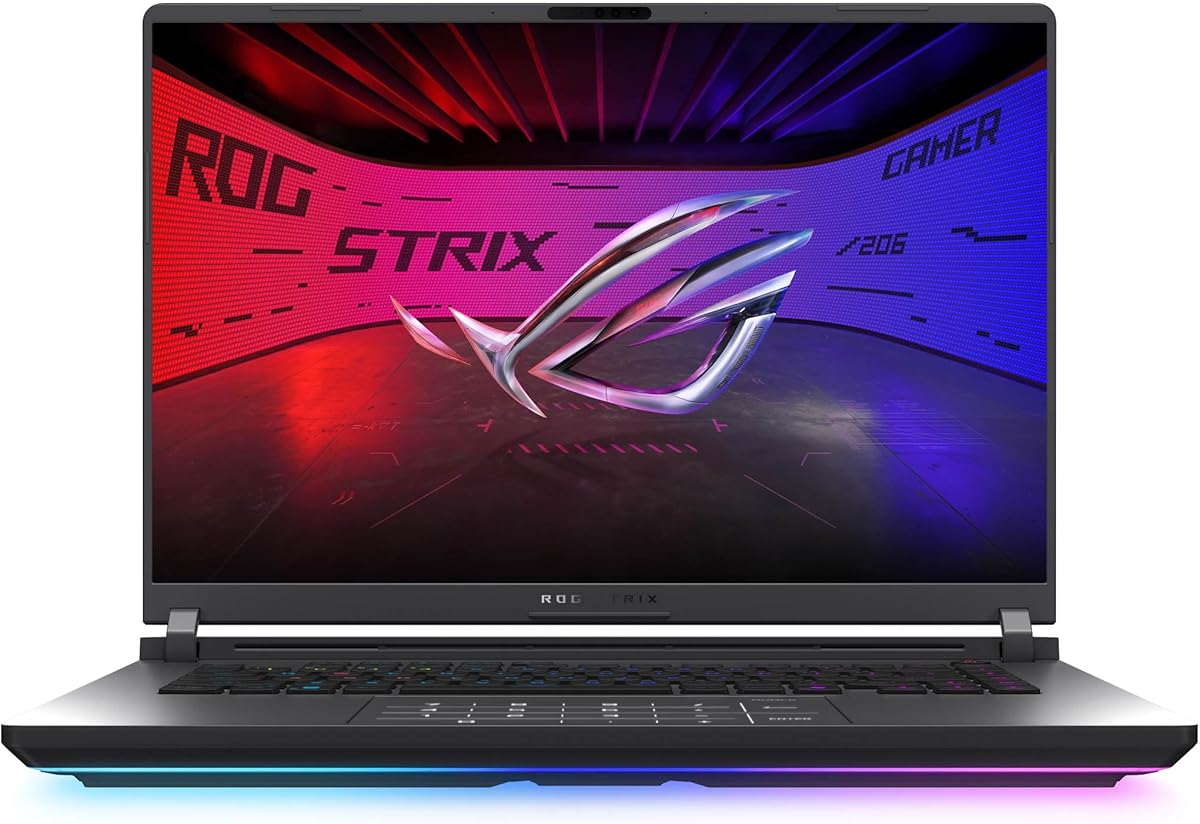
ASUS ROG Strix G16 RTX 5070 Ti
4.3Editor score
RTX 5070 Ti graphics
2.5K 240Hz Nebula display
32GB DDR5 system memory
A capable flight simulator laptop should do more than run a game at an acceptable frame rate. Smooth frame delivery, a responsive display, effective cooling, and support for realistic flight controls all shape the experience, whether you are practicing a takeoff, navigating a cross-country route, or managing a complex airliner procedure.
This guide compares ten products selected for different roles within a flight simulation setup. The list includes high-performance gaming laptops, a more general-purpose notebook, flight simulator software, yokes, joysticks, and rudder pedals. Hardware specifications, platform compatibility, control features, and practical versatility guide the recommendations.
Each selection is presented in the supplied product order, with detailed notes explaining who benefits most from each option and where the compromises lie. Product availability and prices can change over time, so readers should verify current listings, compatibility, and configuration details before making a purchase.
4.3Editor score

4.4Editor score

4.2Editor score
As an Amazon Associate we earn from qualifying purchases.
This comparison covers the complete recommended flight simulation setup, balancing notebook performance, software options, and physical flight controls by capability and intended use.




The ASUS ROG Strix G16 with RTX 5060 earns a 4.4 rating and stands out as the most balanced high-performance recommendation in this guide. It combines an Intel Core i7 14650HX processor, NVIDIA RTX 5060 Laptop GPU, 16GB of DDR5-5600 memory, and a 1TB PCIe Gen 4 SSD. That foundation gives flight simulator users the dedicated graphics and processing power needed for demanding virtual environments without making the configuration unnecessarily elaborate.
We may earn a commission when you buy through this link, at no additional cost to you.
Its 16-inch FHD+ 16:10 display operates at 165Hz with a 3ms response time. The high refresh rate is particularly useful when a simulator translates head movement or control input into faster visual movement on screen. The supplied ACR film is designed to improve contrast and reduce glare, which can help maintain visual clarity during long sessions. An end-to-end vapor chamber, tri-fan cooling, and Conductonaut extreme liquid metal on the chipset also support sustained performance.
The main compromise is the 16GB memory configuration. Many contemporary flight simulator installations, utilities, browsers, and background applications can compete for that capacity, and 32GB would offer additional breathing room for demanding setups or heavy multitasking. The FHD+ panel is also less expansive than higher-resolution alternatives, although its 165Hz refresh rate gives it a meaningful performance advantage over many conventional office notebooks.
This configuration is best for a pilot who wants strong frame rates, a fast display, and a capable general-purpose gaming laptop without stepping up to the most demanding hardware tier. It is also a logical option for a portable simulator setup that will regularly use a USB yoke, joystick, or pedal set. For most enthusiast users, the RTX 5060 G16 offers the most attractive balance of capability in this list.
The 165Hz FHD+ panel can make camera movement and rapidly changing views feel more immediate than a conventional 60Hz laptop panel. Its 3ms specification also complements the high-refresh hardware, making the display a particularly strong feature for simulator use.
A vapor chamber, three fans, and chipset liquid metal form the core of the cooling design. These features help the notebook manage heat during sustained gameplay, which is important when a simulator is running for long periods beside other demanding applications.
We may earn a commission when you buy through this link, at no additional cost to you.
The RTX 5070 Ti version of the ASUS ROG Strix G16 carries a 4.3 rating and is the premium option for demanding flight simulation setups. Its Intel Core Ultra 9 275HX processor and NVIDIA GeForce RTX 5070 Ti Laptop GPU provide a substantial upgrade path over entry-level systems. With 32GB of DDR5-5600 memory, it is also better equipped to handle simulator software, browser tools, voice communication, and other applications at the same time.
We may earn a commission when you buy through this link, at no additional cost to you.
The 16-inch ROG Nebula display raises the visual standard with a 2.5K resolution, 240Hz refresh rate, and 3ms response time. That combination is ideal for a high-end setup where the virtual cockpit can occupy most of the display. It also offers more visual workspace than a standard FHD panel, which can be useful for interface layouts, exterior views, and detailed scenery. ACR film is included to improve contrast and reduce glare.
This laptop is not necessary for basic training or a keyboard-and-mouse simulator experience. Its advantages become more meaningful when flying detailed aircraft, exploring large virtual landscapes, using high-resolution visual settings, or combining simulation with VR. The more powerful hardware also creates greater heat and power requirements, making the system less restrained than a basic notebook.
The premium recommendation is best suited to enthusiasts who want the strongest portable specification in the roundup, especially those planning a dedicated VR-capable or high-fidelity setup. The 32GB memory provides a more comfortable margin for modern multitasking, while the 240Hz 2.5K display is the standout feature. Choose this model when visual quality and maximum performance matter more than economy.
The RTX 5070 Ti and 2.5K panel provide the headroom needed for detailed scenery, high visual settings, and expansive cockpit views. Together, they make the configuration especially appealing for users who want their laptop to serve as a high-fidelity flight simulator station.
The 32GB DDR5 configuration leaves more room for simulators, streaming applications, browser windows, and communication tools. It is a particularly sensible feature for users whose simulator session is also their work, study, or content-creation environment.
We may earn a commission when you buy through this link, at no additional cost to you.
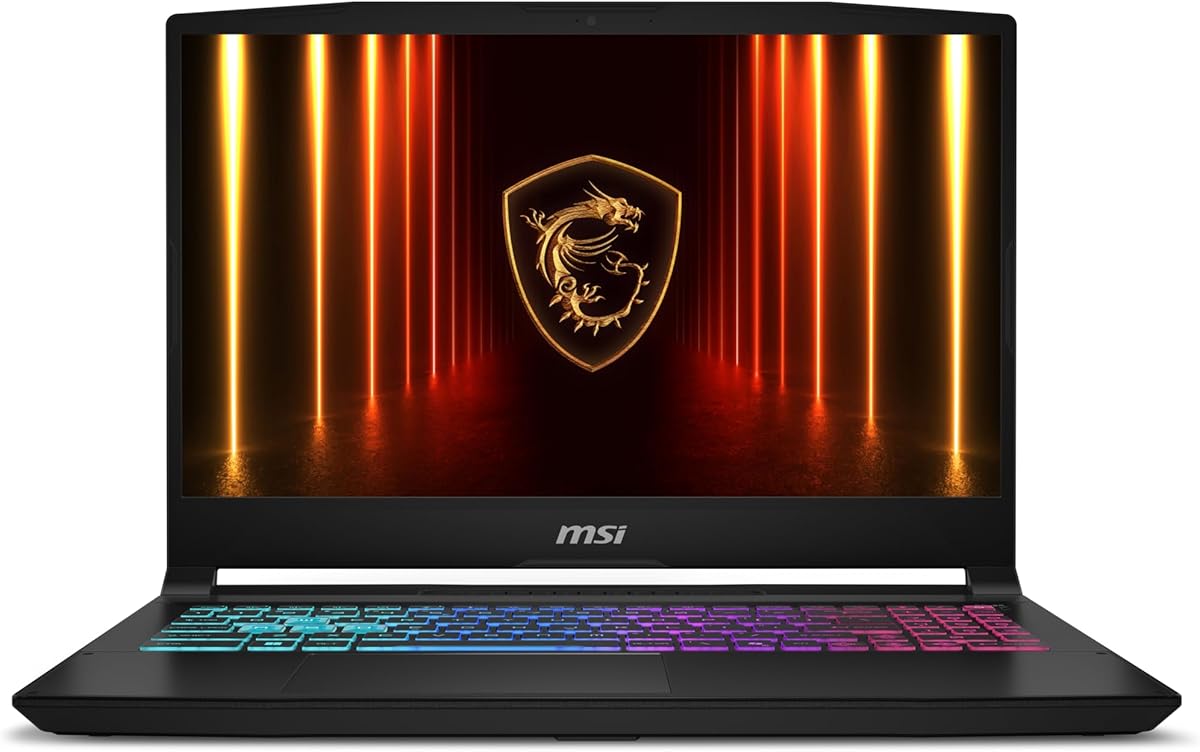
The MSI Katana 15 HX has a 4.0 rating and brings high-end components to a 15.6-inch form factor. Its Intel Core i9-14900HX uses a 24-core hybrid architecture, while the NVIDIA GeForce RTX 5070 supports ray tracing and DLSS 4. These specifications make it a strong candidate for users who need capable simulation performance without moving to a larger 16-inch notebook.
We may earn a commission when you buy through this link, at no additional cost to you.
The QHD 165Hz display offers a useful middle ground between resolution and refresh rate. It provides more visible detail than FHD while maintaining a high refresh rate for fluid movement. The panel is also listed with 100% DCI-P3 color coverage, which benefits the presentation of detailed virtual landscapes and cockpit graphics. A four-zone RGB keyboard and highlighted WASD keys add familiar gaming-laptop touches.
Its 32GB of DDR5 memory and 1TB NVMe SSD are generous for modern simulator multitasking. The extensive connectivity is also useful for flight control hardware: USB-C Gen 2, HDMI, multiple USB-A ports, and RJ45 make it easier to connect a yoke, throttle, pedal set, network link, and display without relying on a single adapter. A potential drawback is the 15.6-inch screen, which offers less workspace than the 16-inch ASUS alternatives.
This Katana configuration is best for a user who values processor and graphics performance but prefers a smaller gaming chassis. It is a strong option for competitive flight simulation, detailed aircraft, and multitasking with numerous peripheral devices. The 165Hz QHD+ display and broad port selection give it a particularly useful balance for a portable rig.
The 24-core i9 HX processor can divide its resources between the simulator and background tasks. That makes the configuration attractive for users who keep multiplayer tools, browser resources, and recording software open alongside a demanding aircraft.
Multiple USB-A connections, USB-C Gen 2, HDMI, and RJ45 simplify the attachment of flight controls, headsets, external storage, and networking equipment. A broad port selection can reduce reliance on docks when moving between home and travel setups.
We may earn a commission when you buy through this link, at no additional cost to you.
The NIMO 17.3-inch laptop has a 4.2 rating and represents the most budget-conscious hardware selection in the guide. Its AMD Ryzen 5 6600H processor is a 45W part with six cores, twelve threads, and boost speeds up to 4.5GHz. The notebook also includes 32GB of DDR5 memory, a 1TB SSD, and a large anti-glare FHD IPS display.
We may earn a commission when you buy through this link, at no additional cost to you.
Those everyday specifications are useful for running lighter simulators, learning flight procedures, and handling productivity tasks at the same time. Dual SO-DIMM slots allow the memory to be upgraded to 64GB, while the M.2 2280 storage design supports expansion up to 4TB. The built-in fingerprint reader, physical webcam shutter, backlit keyboard, and 180-degree hinge add convenience for travel and everyday use.
The principal limitation is the Radeon 660M RDNA 2 integrated graphics. It can provide smooth FHD streaming, casual gaming, photo editing, and general applications, but it is not the logical choice for a demanding high-fidelity flight simulator with advanced visual settings. Users should pair it with a simulator that can scale its graphics demands or avoid the most demanding installations.
The NIMO is best for a student, traveler, or casual pilot who wants a large screen and generous memory without paying for a dedicated gaming GPU. Its 100W USB-C charging can add convenience during travel, although a full simulator session with external controls will still require access to dependable power. It is a strong budget entry, not a replacement for a high-end flight simulation laptop.
The 17.3-inch anti-glare IPS display provides ample room for side-by-side reference material, chart-like resources, and simulator interfaces. The size is useful for new pilots who want to keep flight information visible without constantly resizing windows.
Memory can be expanded to 64GB, and the M.2 2280 SSD can be increased to 4TB. These upgrade paths make the laptop more adaptable as the user accumulates simulator software, reference files, recordings, or other large applications.
We may earn a commission when you buy through this link, at no additional cost to you.
REALFLIGHT Evolution RC earns a 4.4 rating and serves a very specific purpose within a flight simulator setup. It combines simulation software with the InterLink DX controller, reducing the number of separate purchases required for a radio-controlled aircraft experience. The product supports air and helicopter simulators, VR headsets, and online multiplayer options.
We may earn a commission when you buy through this link, at no additional cost to you.
Its aircraft library includes more than a dozen recent ultra micro, sport, scale, EDF, and trainer models from E-flite, HobbyZone, and Hangar 9, along with multiple Blade helicopters. The package also includes more than 100 additional aircraft and dozens of 3D fields and PhotoFields. The PhotoField environment is based on Triple Tree Aerodrome, including the Joe Nall course and other event areas.
The interface is designed to reduce dependence on a mouse or keyboard when using the included controller. New models and fields are released quarterly through individual purchases, content packs, or yearly season passes. That approach gives users a substantial starting library while preserving optional avenues for expansion.
This is the right recommendation for someone interested in radio-controlled aircraft practice rather than a conventional commercial-airliner workflow. Its dedicated controller, broad model selection, and VR support make it especially useful for hobby pilots. It should not be selected on the assumption that it replicates the systems and procedures of a full commercial flight simulator.
Including the InterLink DX controller makes the package more approachable than buying software and hardware separately. Users can connect the supplied controller and focus on learning the included aircraft and environments.
Trainers, sport aircraft, scale models, EDF aircraft, ultra micros, and helicopters provide considerable variety. Multiple flying fields and quarterly releases also give users reasons to return to the simulator as the content library develops.
We may earn a commission when you buy through this link, at no additional cost to you.
The Logitech G Pro Flight Yoke System has a 4.3 rating and offers a complete physical-control package for PC flight simulation. The set includes a realistic yoke, a four-position throttle quadrant, cables, and two desk clamps. It is designed for users who want more authentic control input than a keyboard, mouse, or basic stick can provide.
We may earn a commission when you buy through this link, at no additional cost to you.
The yoke has a stainless steel shaft and offers smooth, accurate aircraft control. A POV hat, 14 buttons, and a three-position mode switch provide at least 54 programmable functions. Those controls can be mapped to switches, gauges, radios, engines, and other virtual aircraft systems. The included quadrant places throttle control directly beside the yoke, which can make the setup more cohesive and immersive.
Mounting is handled by a two-position desk clamp, allowing the yoke to be secured on compatible desks. Compatibility is listed for Windows 11, 10, 8.1, and 7. The supplied information also identifies Microsoft Flight Simulator, FSX, X-Plane 10, and Prepar3D as supported software when the optional configuration software is downloaded.
This system is best for a pilot who wants a complete yoke-and-throttle arrangement and values programmable controls. It is less ideal for someone with a very small desk, a simulator setup incompatible with the listed software, or a preference for a movable standalone controller. Within desktop yoke systems, however, it provides a balanced and approachable package.
The yoke design mirrors the left-right movement of a conventional aircraft control column. This makes it useful for practicing turns and coordinated maneuvers while building a more natural control motion than repeated keyboard input.
At least 54 programmable controls place frequently used aircraft functions within reach. For complex aircraft, that access can be more valuable than adding a higher-resolution display or simply increasing general graphics capacity.
We may earn a commission when you buy through this link, at no additional cost to you.
The Thrustmaster T-Flight Stick X has a 4.2 rating and combines a joystick, throttle, and twist rudder in one desktop unit. Its immediate USB recognition and zero-driver setup are convenient for users who want to move quickly from unpacking the controller to configuring it inside a simulator.
We may earn a commission when you buy through this link, at no additional cost to you.
Stick resistance is adjustable, allowing the feel to be tuned to the user's preference. A weighted base helps the unit remain planted during aggressive inputs, while the ergonomic integrated throttle makes speed control accessible without a separate quadrant. The rotating handle supplies rudder control and locks into position, reducing the need to acquire another peripheral for basic directional input.
Twelve reprogrammable buttons, a dedicated mapping button, and a preset button with internal memory support multiple aircraft profiles. This is useful for pilots who switch between planes with different switch layouts. The tradeoff is that all flight functions remain tied to a stick-centered arrangement, which some users may find less natural than a dedicated yoke.
The T-Flight Stick X is best for desktop users seeking a complete and stable all-in-one flight control at a moderate level of complexity. It works particularly well for learning basic maneuvers, flying smaller aircraft, or consolidating a joystick, throttle, and rudder into one footprint. Users interested in precise two-axis yoke movement should compare it with the Logitech yoke system.
The integrated throttle and twisting rudder reduce the number of separate devices required for fundamental aircraft control. That simplifies a new flight simulation setup and leaves more desk space for the keyboard or other accessories.
Adjustable resistance lets the user choose how freely the stick moves. A weighted base adds stability, so the control can remain planted when applying larger movements during aggressive maneuvers.
We may earn a commission when you buy through this link, at no additional cost to you.
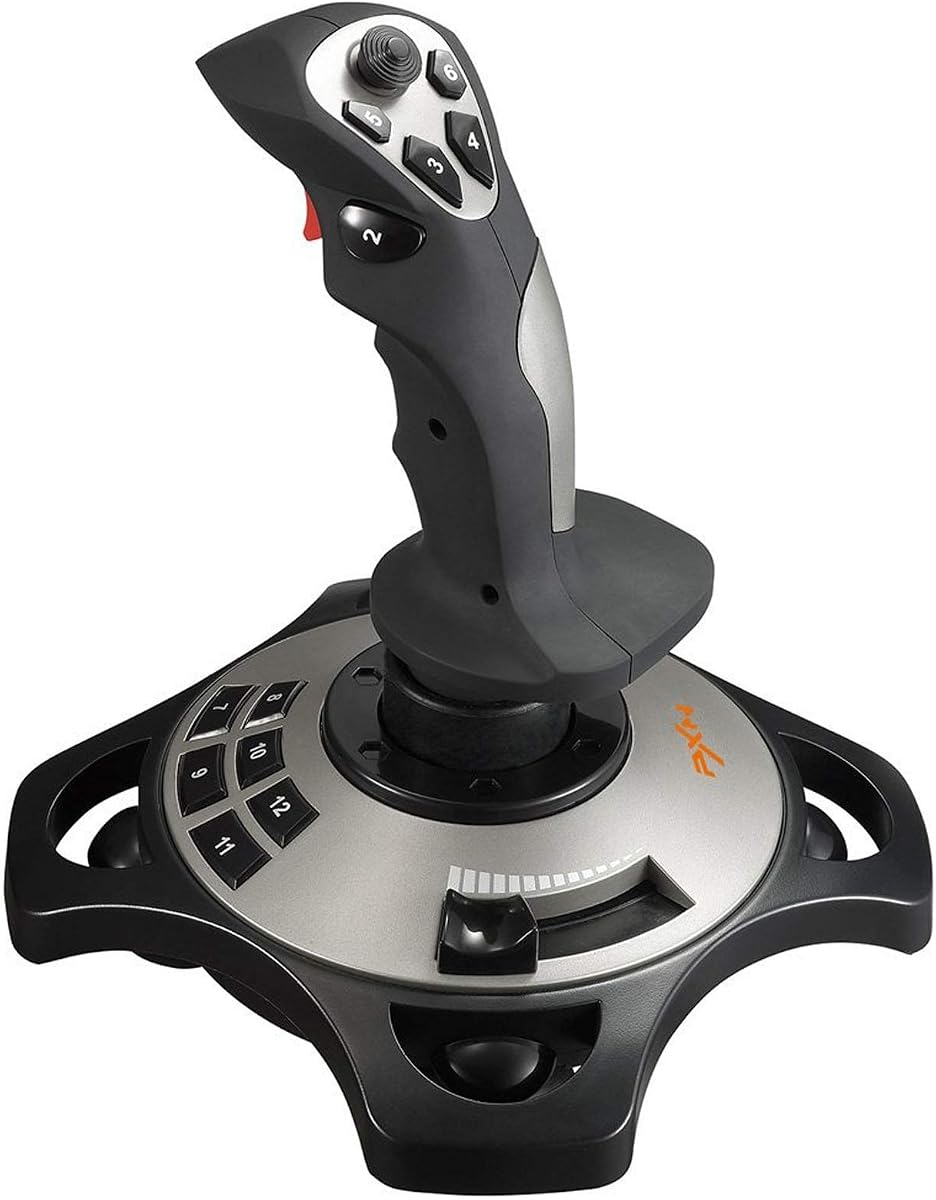
The PXN 2113PRO has a 3.6 rating and offers an accessible way to add physical flight input to a compatible Windows PC. It supports four axes, an eight-way hat switch, twelve programmable buttons, and a rapid-fire trigger. The supplied information lists compatibility with Microsoft Flight Simulator, X-Plane 10, World of Warplanes, War Thunder, World of Tanks, and Assault Horizon.
We may earn a commission when you buy through this link, at no additional cost to you.
A vibration switch is located on the bottom of the controller, and the manufacturer recommends setting the driver strength to at least 50% if vibration is difficult to perceive. Custom adjustment and keyboard mapping are supported through advanced software. Microsoft Flight Simulator users are given detailed instructions for selecting generic USB joystick mode and validating individual assignments.
The controller uses four suction cups to remain fixed on a smooth tabletop, and its one-handed layout places throttle control within the grip. Force feedback is not supported, however, and the device is restricted to PC and Windows 7 through Windows 11. It does not support Mac, Apple devices, PlayStation, Xbox, or Nintendo systems, which sharply narrows its audience.
The PXN 2113PRO is best for a budget-conscious PC user who wants more tactile control than a keyboard without investing in a full cockpit setup. Its four-axis movement and programmable buttons are useful for learning, while the suction base keeps it simple to position. The lower rating and limited feedback make it less suitable for users seeking premium realism.
The controller can be used directly with a compatible Windows system, while optional driver software provides further adjustment and mapping. This makes it accessible for first-time flight simulator users who want a simple setup process.
Four axes, an eight-way hat, twelve programmable buttons, and a trigger place many aircraft functions under one hand. The compact shape can also preserve desk space compared with separate stick and throttle units.
We may earn a commission when you buy through this link, at no additional cost to you.
The Thrustmaster TFRP Precision Flight Sim Rudder Pedals have a 4.4 rating and add realistic directional control to a simulator setup. They are compatible with PC, PS5, and Xbox Series X|S, offering a broader platform choice than many PC-only flight controls. Their core function is straightforward: provide smooth rudder input through the user's feet.
We may earn a commission when you buy through this link, at no additional cost to you.
The self-centering rudder axis is designed to return toward a neutral position after movement. This behavior supports the repeated corrections required during coordinated turns and can make the input feel more natural than a side-mounted control. The advanced S.M.A.R.T. rail sliding system uses four aluminum rails for smooth, low-friction motion and added rigidity.
Ergonomic construction, sturdy materials, and secure mounting help the pedals remain stable during extended flights. The main practical requirement is floor space. A pedal unit that cannot be positioned naturally under the desk may be less comfortable than expected, so users should consider their seating arrangement and simulator layout before choosing it.
The TFRP is best for a pilot who already understands a keyboard-and-mouse or stick setup and wants to improve directional realism. It is an excellent complementary purchase for the Thrustmaster T-Flight Stick X or Logitech yoke, but it is not a standalone package with a stick, yoke, or throttle. Its cross-platform support also makes it useful beyond a Windows-only arrangement.
Foot-operated rudder control supports the cross-control coordination used to maintain a steady turn. A self-centering action helps the pedals return to neutral, which is useful when the user's attention is focused on instruments or scenery.
The four-rail aluminum system is intended to deliver consistent, friction-free movement. Secure mounting and sturdy construction help the unit stay in position, improving comfort and predictability during longer simulator sessions.
We may earn a commission when you buy through this link, at no additional cost to you.
Microsoft Flight Simulator 2004: A Century of Flight has a 4.4 rating and represents a classic option for PC flight simulation. It offers worldwide scenery with three-dimensional terrain and automatically generated buildings and vegetation. The global environment provides a broad setting for practicing navigation, touring different regions, or enjoying the scenery of early commercial aviation simulation.
We may earn a commission when you buy through this link, at no additional cost to you.
Its dynamic weather system is based on atmospheric physics and includes three-dimensional clouds that form and dissipate. Interactive air traffic control adds traffic around airports worldwide, making the world feel more active than an isolated practice environment. The software also supports one or more players over a local area network or the internet.
Multi-monitor use receives explicit attention through improved support for 3D hardware acceleration in multiple windows and across multiple displays. That is a meaningful historical advantage for pilots who wanted a wide cockpit or exterior view. Conversely, the software belongs to an older generation and should not be expected to deliver the visual features, modern input handling, or virtual-reality support associated with current releases.
The best reason to choose it is nostalgia, access to an established classic experience, or an interest in its particular weather and scenery systems. It can still provide a satisfying PC flight simulation, but modern users should verify that the current simulator software and hardware they want will meet their expectations.
The weather system models atmospheric behavior and uses three-dimensional clouds that form and dissipate. This adds variation and visual depth to flights, particularly when navigating through changing conditions across a large virtual world.
Worldwide terrain, generated scenery, and air traffic around airports make this more than a small training field. Multiplayer support adds another layer, allowing simulated flights to involve more than one participant.
We may earn a commission when you buy through this link, at no additional cost to you.
The best flight simulator laptop balances graphics, processor performance, memory, display quality, cooling, and peripheral support. The right balance depends on whether the priority is realistic visuals, portable use, learning, competitive flying, or a full home cockpit.
A dedicated NVIDIA GPU is the most important consideration for a high-fidelity PC flight simulator. The RTX 5060, RTX 5070, and RTX 5070 Ti configurations in this guide provide substantially more graphics capability than the Radeon 660M integrated solution in the NIMO notebook. Dedicated graphics are especially useful for detailed scenery, complex aircraft, high resolutions, and virtual-reality experiences, all of which place greater demands on the display pipeline.
The simulator competes with the operating system, audio utilities, communications tools, browsers, and recording software. The Intel Core i7 14650HX, Core Ultra 9 275HX, and Core i9-14900HX provide strong multi-core performance, while the Ryzen 5 6600H is intended to balance cost and everyday productivity. A faster processor can improve responsiveness when several demanding applications remain active at the same time.
Memory determines how comfortably a simulator can coexist with other applications. The 16GB ROG configuration is usable, but the 32GB models provide more room for modern multitasking. Storage should also accommodate the simulator, scenery, aircraft, utilities, and recordings. The laptops in this guide include 1TB SSDs, and the NIMO supports storage expansion up to 4TB through an M.2 2280 design.
Resolution affects the amount of cockpit detail visible, while refresh rate influences motion smoothness. The ASUS 240Hz 2.5K Nebula display is the most premium visual option, the MSI combines QHD resolution with 165Hz, and the first ROG offers FHD+ at 165Hz. For basic learning, resolution may matter more; for fast-moving views and VR-oriented hardware, refresh rate becomes increasingly valuable.
Flight sessions can last for hours, making thermal management essential. The two ROG Strix G16 models use ROG Intelligent Cooling with an end-to-end vapor chamber, tri-fan design, and Conductonaut extreme liquid metal on the chipset. The MSI Katana uses Cooler Boost 5 with dual fans and a five-heat-pipe share-pipe design. Whichever laptop is chosen, allowing airflow around its vents is critical during sustained workloads.
The best simulator hardware should match the type of flying you intend to practice. The Logitech system provides a yoke and throttle, the Thrustmaster T-Flight Stick X combines a stick with throttle and twist rudder, the PXN offers a compact four-axis option, and the TFRP adds dedicated foot-operated rudder control. Check operating-system requirements, simulator support, mounting needs, and available desk or floor space before purchasing.
A flight simulator laptop may need to function at home, at a club, or while traveling. Wi-Fi 7 appears on the two ROG configurations, while the MSI includes Wi-Fi 6E and the NIMO includes Wi-Fi 5. The NIMO's 100W USB-C charging provides a compact travel option. Full-size gaming laptops, cooling systems, and high-refresh screens can affect portability, so the balance between mobility and capability remains important.
A complete setup involves more than a laptop and a controller. The guide includes REALFLIGHT Evolution RC, Microsoft Flight Simulator 2004, and several flight controls, but they are not all interchangeable. Confirm that the software works with the operating system, that its control mappings match the chosen hardware, and that the laptop has sufficient graphics, memory, and storage for the intended simulator.
Begin by installing the simulator, graphics driver, and any required control software, then connect the flight hardware before launching. Windows should recognize the controller, and the simulator should be set to joystick or yoke mode rather than keyboard and mouse. Assign axes deliberately, test the full range of motion, and save a separate profile for each aircraft or simulator. This prevents a newly installed yoke, stick, or pedal set from producing unexpected inputs during the first flight.
Create a stable operating environment. Keep the laptop on a hard surface with its intake and exhaust vents unobstructed, and reserve enough desk room for the chosen controller. A joystick requires a stable base, a yoke needs secure desk clamps, and rudder pedals require suitable floor placement. Keep drinks and other liquids away from the equipment, route cables where they will not interfere with foot movement, and use a surge protector or properly grounded outlet for a full desktop installation.
Treat memory, storage, and firmware maintenance as ongoing parts of the experience. Keep the operating system and application software current, leave free SSD space, and avoid filling the drive completely with large downloads. Clean the vents and cooling openings periodically, particularly after transporting the laptop in a bag. For long sessions, monitor temperatures and frame behavior, save frequently, and back up simulator profiles and custom settings so a software update or hardware change does not erase a carefully configured setup.
It depends on the simulator and desired visual quality. A capable general-purpose laptop with integrated graphics may handle learning, basic aircraft, and lower settings, as illustrated by the NIMO 17.3-inch model. A gaming laptop with a dedicated GPU is preferable for high-fidelity visuals, complex scenery, demanding aircraft, and virtual reality. Always check the simulator's published requirements and test with the settings you actually intend to use.
At least 16GB permits a typical simulator and several background applications, while 32GB offers a more comfortable margin. The second ROG configuration and MSI Katana include 32GB, and the NIMO also includes 32GB with an upgrade path to 64GB. Consider 32GB when running browsers, streaming tools, voice chat, recording software, multiple simulators, or large VR applications.
It can be, particularly when the simulator uses VR or the user makes frequent head and camera movements. The 240Hz ROG Nebula display provides the highest refresh rate in this guide, while the 165Hz ASUS and MSI alternatives are also well suited to fluid motion. Resolution remains important for reading cockpit instruments, so the ideal choice balances both rather than considering refresh rate in isolation.
Begin with the control layout that matches the type of aircraft you want to fly. A yoke is intuitive for two-axis commercial-style control, a joystick works well for smaller aircraft and military or RC-style experiences, and rudder pedals add realistic directional input. The Logitech system includes a yoke and throttle, the Thrustmaster stick integrates throttle and rudder control, and the TFRP is best added to an existing setup.
Most modern flight controls connect through USB, but compatibility still matters. The Logitech yoke supports listed Windows versions, while the PXN 2113PRO is restricted to Windows PCs and does not support Mac, Apple, PlayStation, Xbox, or Nintendo platforms. The TFRP supports PC, PS5, and Xbox Series X|S. Check both the operating system and the specific simulator before purchasing.
A 16GB system can be sufficient for a focused session, particularly with a standalone simulator and limited background applications. However, 32GB gives modern Windows installations, browsers, Discord or other communication tools, recording utilities, and simulator plugins more breathing room. It is a useful upgrade for users who multitask heavily or maintain a larger aircraft and scenery library.
Connect the hardware first, select the appropriate joystick or yoke mode, and assign axes one at a time. Test whether each movement produces the expected response, including rudder, throttle, and lever controls. Create separate profiles for different aircraft, save them outside the simulator when possible, and avoid assigning several critical functions to controls that are difficult to reach during a busy phase of flight.
Dedicated rudder pedals can make directional control and coordinated turns feel substantially more realistic, especially as simulator proficiency grows. The Thrustmaster TFRP uses a self-centering mechanism and aluminum rails for smooth movement. They are best added after confirming that the desk, chair, and floor layout can accommodate a stable pedal position without interfering with the user's seating.
The ASUS ROG Strix G16 with RTX 5060 is the strongest overall recommendation because it combines dedicated graphics, a fast 165Hz display, modern memory and storage, and sophisticated cooling without occupying the premium tier. The RTX 5070 Ti ROG is the choice for users who want the highest visual specification, while the NIMO 17.3-inch notebook offers the most budget-conscious route into PC flight simulation with generous memory and a large display.
Prioritize the experience you want to create. Strong dedicated graphics and a high-refresh display matter for demanding visual settings, VR, and detailed scenery, while 32GB of memory is advantageous when the simulator runs beside communication, browser, and recording tools. For controls, choose between a yoke, integrated stick, compact joystick, and dedicated rudder pedals according to the aircraft you intend to fly and the space available on your desk and floor.
Product listings, specifications, compatibility details, and prices change over time. Before ordering, confirm the current configuration of the selected laptop, verify that the simulator and flight controls support its operating system, and check that all required cables and mounting hardware are included. Taking those steps will produce a more dependable setup than focusing on one isolated specification.
