
Panasonic LEICA DG SUMMILUX 9mm F1.7 ASPH
4.7Editor score
Ultra-wide video perspective
Minimal focus breathing
Smooth aperture control
Explore the best Mft Lens for Video options, comparing Micro Four Thirds lenses for autofocus, stabilization, bokeh, zoom range, and video handling.
Micro Four Thirds lenses offer an effective balance of image quality, portability, and specialized features for mirrorless video creators. A strong MFT lens should deliver smooth focusing, controlled transitions, effective stabilization, and enough aperture or focal-length flexibility for the footage you plan to shoot.
The lenses in this guide were compared using their stated specifications and video-oriented features, including autofocus behavior, aperture range, optical stabilization, focus distance, zoom coverage, and close-focusing capability. The list covers prime and zoom lenses from Panasonic, OM SYSTEM, Sigma, and TTARTISAN.
Each review explains where a particular lens fits best, from compact everyday setups to wide-angle, telephoto, and fast-aperture specialty options. Ratings reflect the supplied customer feedback, while availability and prices can change, so readers should confirm current listings before buying.
4.7Editor score
4.8Editor score

4.6Editor score
The comparison covers the focal range, maximum aperture, stabilization, focusing behavior, and intended video role of each Micro Four Thirds option, making it easier to match a lens to a specific production workflow.




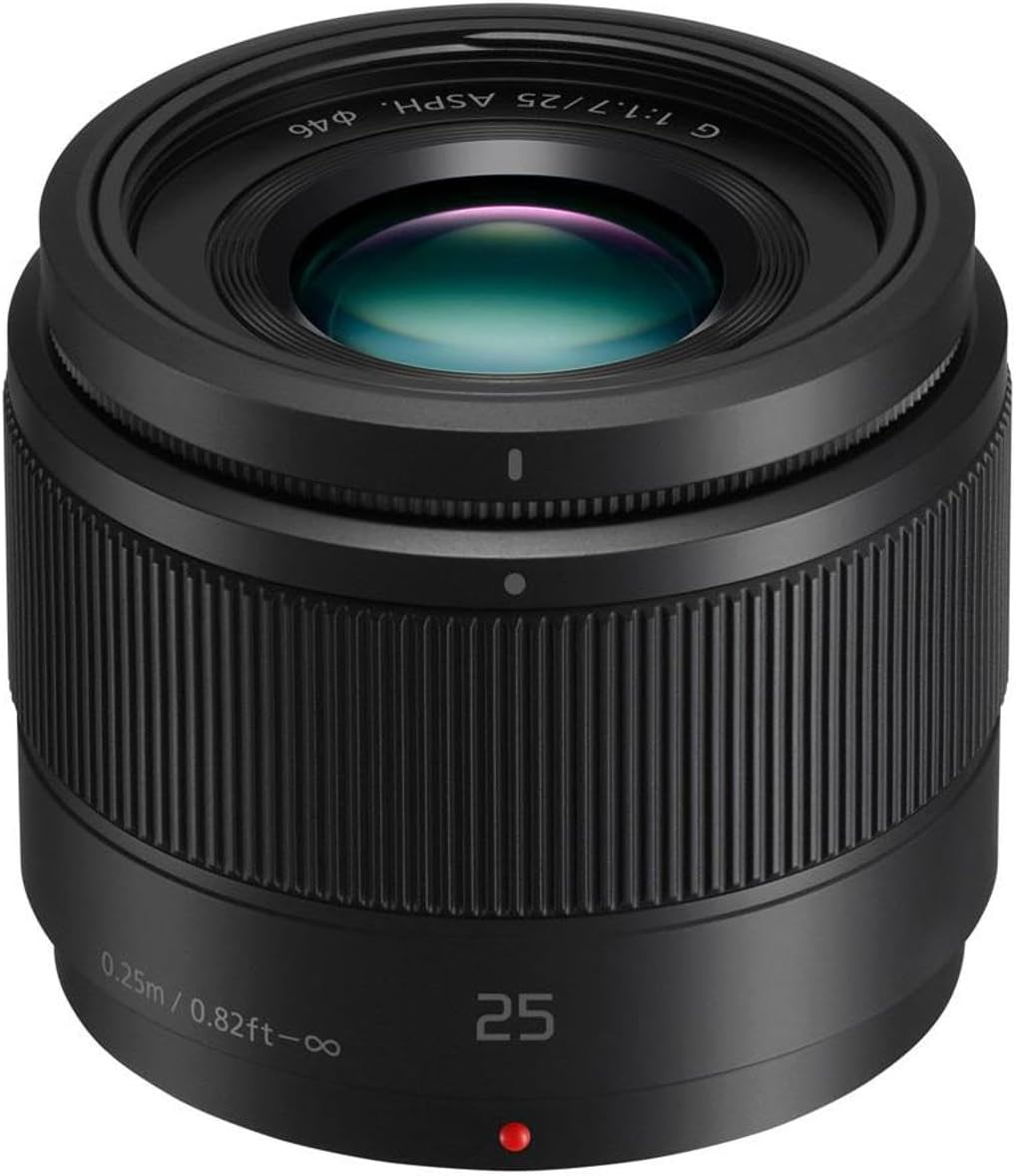
The Panasonic LUMIX G 25mm F1.7 is a compelling all-around MFT lens for video, earning a supplied rating of 4.8. Its 25mm focal length produces a 35mm-equivalent view of approximately 50mm, giving creators a natural perspective suited to interviews, vlogging, b-roll, street scenes, and everyday storytelling.
We may earn a commission when you buy through this link, at no additional cost to you.
The large F1.7 aperture is the central attraction. It supports shallow depth of field and attractive background separation while also providing a useful amount of light for indoor recording or low-light scenes. At only 125g and 2.05 inches long, the lens is easy to carry and unobtrusive during mobile production.
Its hybrid design includes quiet, smooth fast-action stepping-motor focusing for both photographs and HD video. That makes it a practical choice for creators who want dependable focus movement without carrying a much larger cinema-oriented setup. The tradeoff is that it is a fixed 25mm lens, so substantial reframing requires the camera to move.
This is an especially strong recommendation for video makers who want one compact prime capable of handling natural-looking compositions, low-light work, and softly rendered backgrounds. It is less suitable for projects that require instant wide-to-telephoto changes, but for a natural documentary or online-video look, it remains a particularly balanced choice.
The 50mm-equivalent field of view feels familiar without being excessively narrow, making it useful for presenter-led footage, conversational scenes, product demonstrations, and environmental b-roll. It offers enough context to place a subject in its surroundings while remaining tighter than a typical ultra-wide view.
The F1.7 maximum aperture helps produce the attractive bokeh highlighted in the product information. It also gives creators more exposure latitude in dim locations, although stabilized footage, controlled lighting, or a suitable camera ISO may still be necessary depending on the scene.
We may earn a commission when you buy through this link, at no additional cost to you.
The Panasonic LEICA DG SUMMILUX 9mm F1.7 is the premium specialty choice in this guide, with a supplied rating of 4.7. Its 9mm ultra-wide design is intended for videographers who want a dramatic field of view, immersive interiors, creative transitions, close environmental shots, and an unusual perspective.
We may earn a commission when you buy through this link, at no additional cost to you.
Video-specific features include minimal focus breathing and smooth aperture control, both valuable during narrative work or controlled focus pulls. The exceptionally short 0.095-meter focusing distance and 0.25x magnification ratio also make it possible to work very close to a subject and place fine detail against a blurred background.
Its F1.7 aperture provides generous light-gathering ability and supports the smooth bokeh emphasized by Panasonic. The rugged, compact design includes dust-, splash-, and freeze-resistant construction, while the LEICA branding signals Panasonic's stated commitment to stringent optical and performance standards.
This lens is a specialist purchase rather than a universal one. The ultra-wide view can exaggerate perspective near the frame edges, and the focal length is fixed. Videographers who deliberately want expansive compositions and exceptional close-focusing depth will appreciate it more than creators seeking a conventional documentary lens.
Minimal focus breathing means the framing is less likely to shift noticeably while focus changes. That makes the lens especially attractive for close subjects, visual transitions, and scenes in which a stable field of view matters.
The 0.095-meter minimum focusing distance and 0.25x magnification ratio extend the lens beyond ordinary wide-angle use. They support intimate product shots, textural details, and compositions that use strong foreground and background separation.
We may earn a commission when you buy through this link, at no additional cost to you.
The OM SYSTEM M.Zuiko 40-150mm F4.0-5.6 R is the most budget-conscious way to obtain a flexible zoom for Micro Four Thirds video. Its supplied rating is 4.6, and the 3.75x range takes the user from 40mm to 150mm, equivalent to approximately 80mm through 300mm on a full-frame camera.
We may earn a commission when you buy through this link, at no additional cost to you.
A major advantage for video is the nearly silent autofocus, explicitly noted as compatible with movies and stills. This reduces distracting mechanical noise during recordings. The lens also supports a range of subjects, with the supplied information identifying portraits and sports as especially suitable applications.
The limitation is its F4.0-5.6 maximum aperture, which is less capable of producing extremely shallow depth of field or gathering light than the F1.4, F1.7, and F1.8 options in this guide. Its macro focus range also begins at 90 centimeters, making it less suitable for intimate close-ups.
For creators who need one economical lens for interviews, events, travel, sports, and general b-roll, this zoom is a strong fit. It is best for projects in which framing flexibility and quiet operation matter more than maximum low-light performance or cinematic background blur.
The broad 40-150mm range lets a videographer move from conversational framing to tighter shots without changing lenses. That convenience can be especially valuable when recording live events, where rapid lens swaps would be impractical.
The nearly silent autofocus system is a meaningful video advantage over lenses with noisier focusing mechanisms. It helps keep attention on dialogue and action rather than on mechanical sounds, particularly in quiet interiors.
We may earn a commission when you buy through this link, at no additional cost to you.
The OM SYSTEM M.Zuiko 45mm F1.8 is a bright portrait prime for Micro Four Thirds cameras, carrying a supplied rating of 4.7. Its 45mm focal length provides a classic portrait perspective, while the maximum F1.8 aperture supports defocused backgrounds and improved exposure in dim environments.
We may earn a commission when you buy through this link, at no additional cost to you.
The lens reaches a minimum focusing distance of 0.20 meters, allowing creators to frame tighter details and head-and-shoulder compositions without sacrificing working distance. Its rounded seven-blade diaphragm is designed to contribute to pleasing out-of-focus rendering, an important visual quality for interviews and narrative videos.
The quiet movie-still-compatible drive is another useful video feature. The supplied information does not list optical stabilization, so the lens will not replace a stabilized option for static-camera movement or long handheld shots. It also has a fixed focal length and therefore cannot provide optical zoom flexibility.
This is a compelling choice for portrait-led content, interviews, short films, and online videos that benefit from a bright aperture and smooth background. It may be less appropriate for wide environmental coverage or solo handheld production where stabilization is a top priority.
The F1.8 aperture gives the lens a useful balance of background separation and light-gathering ability. It can help subjects stand out while still retaining enough environmental detail to make interviews and narrative scenes feel connected to their locations.
The seven rounded diaphragm blades are intended to shape highlights in out-of-focus areas. The result can be especially noticeable in scenes with bright practical lights, reflective surfaces, or illuminated backgrounds behind the subject.
We may earn a commission when you buy through this link, at no additional cost to you.
The Panasonic LUMIX G X Vario 14-42mm is a practical starter zoom for creators who want broad framing options without carrying multiple lenses. Its supplied rating is 4.4, and its focal range corresponds to approximately 28mm through 84mm in 35mm-equivalent terms.
We may earn a commission when you buy through this link, at no additional cost to you.
Power zoom is particularly relevant to video because it allows framing changes without turning the lens barrel directly. On a compatible camera, this can support smoother and more controlled adjustments. Power O.I.S. also helps compensate for small movements in low-lit situations, making the lens more practical for handheld work.
The F3.5-5.6 aperture is the main compromise. It is useful for daylight and well-lit interiors, but it will not match the background separation or light-gathering capability of the fast primes reviewed here. The 14-42mm range also ends short of the more useful telephoto coverage offered by longer Micro Four Thirds zooms.
This lens is a sensible option for travel, vlogging, event coverage, and general-purpose shooting where one compact zoom must handle many subjects. It is less ideal for cinematic shallow-focus work or projects that need to isolate distant subjects without moving the camera.
Electronic zoom control can make incremental composition changes more consistent than manual barrel adjustments. The feature is especially valuable for solo creators who need to widen or tighten the frame while keeping their attention on the scene.
Integrated Power O.I.S. helps suppress small camera movements in low-light conditions. It does not eliminate all visible shake, particularly during larger movements, but it can make handheld recordings look more controlled.
We may earn a commission when you buy through this link, at no additional cost to you.
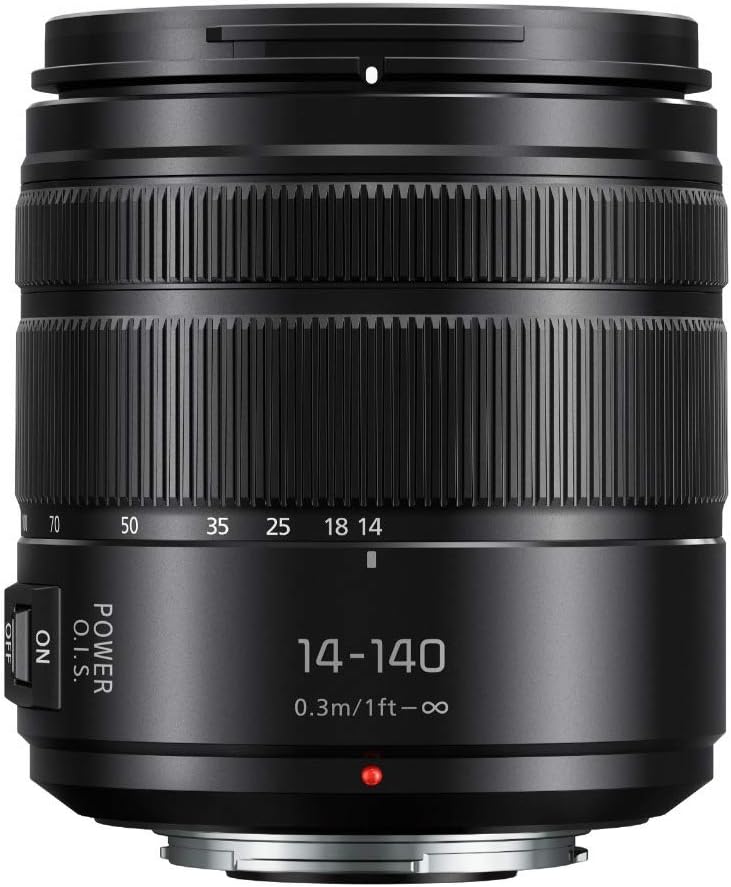
The Panasonic LUMIX G Vario 14-140mm is a broad-range travel and event zoom with a supplied rating of 4.6. Its 10x range covers everything from wide environmental compositions to distant subjects, making it a dependable one-lens option for documentary, travel, and live-event video.
We may earn a commission when you buy through this link, at no additional cost to you.
The upgraded design retains a compact profile while adding durable dust- and splash-resistant construction for field use. Power O.I.S. compensates for small, fast movements in low-light conditions, and the 14-element, 12-group optical arrangement includes three aspherical and two extra-low-dispersion elements intended to control distortion and chromatic aberration.
As with most broad-range zooms, the F3.5-5.6 maximum aperture requires more light than a fast prime. That limits extreme background separation and may force higher ISO settings in dark locations. Its greater physical size can also feel less discreet than a small prime or compact standard zoom.
The lens is a strong match for creators covering events, wildlife, travel, sports, or documentary work who want to frame rapidly without changing lenses. For cinematic close-ups with very shallow depth of field, a fast prime would be a better companion.
The 14-140mm range is long enough to isolate distant action while remaining wide enough for establishing shots. That combination reduces interruptions during live production and makes the lens well suited to unpredictable environments.
Aspherical and extra-low-dispersion elements help manage common optical issues across the zoom range. Combined with the stated splash- and dust-resistant construction, the lens appears designed for creators who regularly work outside controlled studio environments.
We may earn a commission when you buy through this link, at no additional cost to you.
The Sigma 56mm F1.4 DC DN is a fast portrait-oriented prime for Micro Four Thirds systems, earning a supplied rating of 4.7. Its 56mm focal length produces a tight, flattering perspective, while the very bright F1.4 aperture is ideal for strong background separation and low-light exposure.
We may earn a commission when you buy through this link, at no additional cost to you.
Sigma describes the autofocus as smooth and quiet, directly addressing two common concerns in video recording. When paired with a camera that provides face recognition or eye autofocus, the lens can maintain focus on a subject's face or eye as the person moves, provided the camera and body configuration support those functions.
The compact, lightweight design helps offset the fast aperture. There is no listed optical stabilization, however, so a camera with effective stabilization or a stabilized support system is important for smooth handheld footage. The fixed 56mm focal length also means that apparent zooming must be created through camera movement or cropping.
This lens is ideal for interviews, portraits, short narrative pieces, and low-light production. It is a less natural fit for expansive establishing shots or fast-moving solo shooting where a wider lens would provide more flexibility.
The F1.4 aperture provides a pronounced brightness advantage over standard kit zooms. It also allows creators to separate a person from the environment, creating a more intimate visual style for interviews, performance footage, and short films.
Smooth, quiet focusing is especially valuable during dialogue or observational recordings. Camera-based face and eye detection can add further confidence when a subject moves, although those features depend on the body and its available autofocus modes.
We may earn a commission when you buy through this link, at no additional cost to you.
The TTARTISAN 23mm F1.4 has the highest supplied rating in this group at 4.9 and offers a distinctive manual-focus approach to Micro Four Thirds video. Its 23mm focal length is described as equivalent to a 35mm full-frame lens, providing a wide but familiar field of view.
We may earn a commission when you buy through this link, at no additional cost to you.
The F1.4 aperture supports low-light shooting and beautiful background bokeh, while the 10-blade diaphragm helps shape out-of-focus highlights. Its optical construction uses six groups and eight elements, including one extra-low-dispersion and three high-refractive-index elements intended to reduce chromatic aberration and spherical distortion.
The defining tradeoff is manual focus. The tactile, clicky aperture ring provides precise control, and the lens can focus as close as 20 centimeters, but a videographer must develop a consistent focusing technique. The supplied information also does not list optical stabilization, making camera support important.
For filmmakers who enjoy deliberate manual operation, want a distinctive vintage-style setup, or require a bright wide prime, this lens is a compelling tool. It is less convenient for run-and-gun events, fast-moving subjects, and solo creators who depend on reliable automatic tracking.
The natural 62-degree field of view supports street scenes, travel footage, interiors, portraits, and environmental stories. It offers enough width to establish context without the extreme distortion often associated with ultra-wide lenses.
A clicky aperture ring allows deliberate exposure adjustments, and manual focus can support cinematic focus pulls when practiced. The tactile design also gives the lens a distinctive character that many video makers may enjoy.
We may earn a commission when you buy through this link, at no additional cost to you.
The Panasonic LUMIX G Vario 45-150mm is a telephoto zoom for creators who need to reach distant subjects without changing lenses. Its supplied rating is 4.5, and the 45-150mm range corresponds to approximately 90-300mm in 35mm-equivalent terms.
We may earn a commission when you buy through this link, at no additional cost to you.
For video, the inner-focus system and stepping motor deliver smooth, near-silent focusing suitable for recording. Mega O.I.S. helps suppress blur from small hand movements in low-light situations, making the lens more practical for static or distant subjects. The seven-blade aperture also helps produce attractive smooth areas in defocused backgrounds.
The F4.0-5.6 maximum aperture is the central limitation. Because the opening narrows toward the long end of the range, creators may need more light or a higher ISO when filming indoors or in dim conditions. The 90mm-equivalent starting point is also too tight for many wide environmental shots.
This lens is well suited to events, performances, wildlife, sports, presentations, and observational documentaries. It is a useful complement to a wider standard lens, allowing a creator to cover everything from establishing views to distant details when carrying two lenses is practical.
A 300mm-equivalent maximum focal length is useful when the subject cannot be approached. It allows tighter framing of performers, athletes, speakers, and wildlife while preserving the ability to adjust composition within a medium zoom range.
Near-silent stepping-motor focusing helps avoid audible distractions, while Mega O.I.S. improves the feasibility of handheld telephoto recording. Together, they support a more practical field workflow than would be possible with an unstabilized equivalent.
We may earn a commission when you buy through this link, at no additional cost to you.
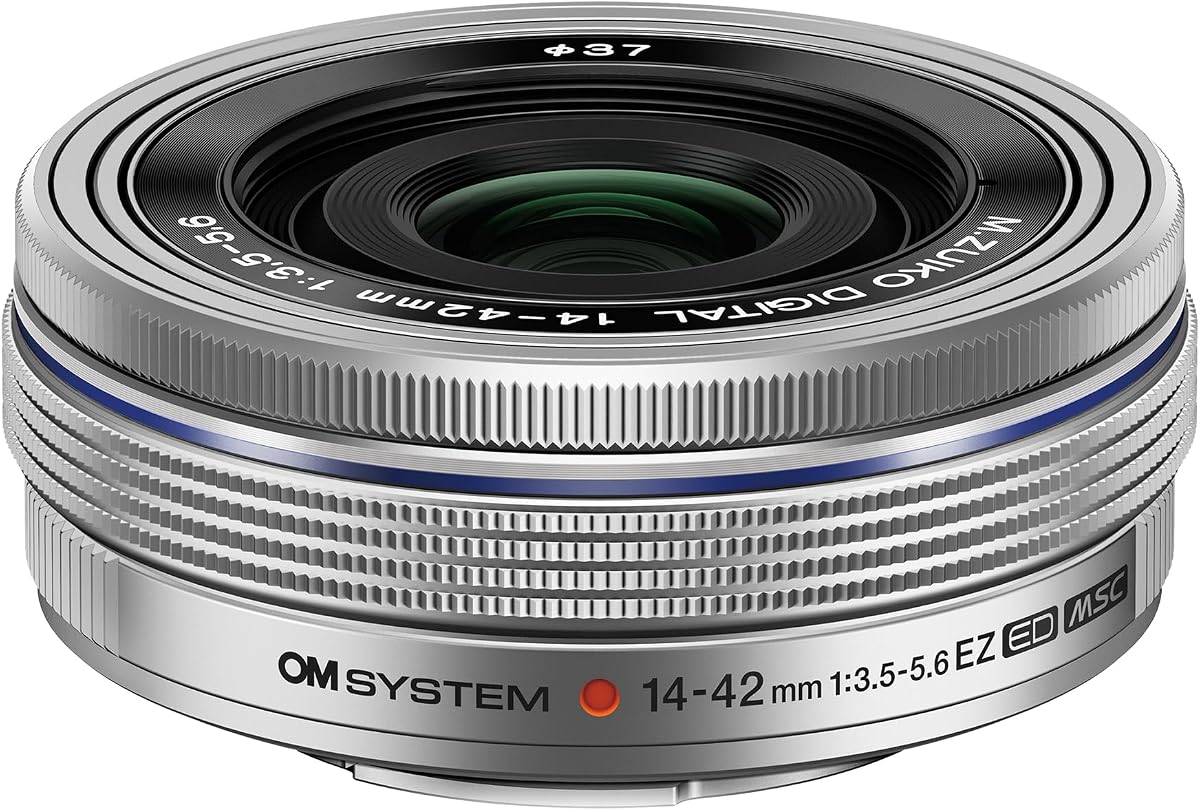
The OM SYSTEM M.Zuiko 14-42mm EZ is a compact standard zoom designed for convenient everyday video. Its supplied rating is 4.4, and the 3x range offers enough flexibility to move between environmental framing and a conventional portrait perspective without carrying multiple lenses.
We may earn a commission when you buy through this link, at no additional cost to you.
Its defining video-oriented feature is the electric zoom. Instead of relying entirely on the lens barrel, a creator can use electronic zoom controls on a compatible camera or remote setup. Wireless zoom control adds another layer of convenience, particularly for remote or carefully framed compositions.
The fully rotating focus ring supports quick manual adjustments and can make the lens easier to use in particular shooting configurations. Its F3.5-5.6 aperture, however, is relatively modest, so low-light footage will depend more heavily on camera performance, ISO, and stabilization than footage made with a fast prime.
This zoom is a good fit for beginners, travel creators, and anyone prioritizing portability and simple framing changes over maximum optical performance. It may not be the ideal lens for highly cinematic backgrounds, distant wildlife, or low-light documentary work.
Electric zoom lets a videographer adjust the frame from supported camera controls rather than turning the lens manually. This can be especially useful for solo operators who need smooth, repeatable framing adjustments.
The compact 3x zoom covers a useful standard range while remaining easier to carry than a long telephoto kit. It is a practical companion for travel diaries, events, vlogs, and general-purpose footage.
We may earn a commission when you buy through this link, at no additional cost to you.
The right MFT video lens depends on the kind of footage you make, the camera's capabilities, and how much you value portability versus maximum aperture and optical flexibility.
Focal length determines how much of a scene the lens can include and how tightly it can frame a distant subject. On a Micro Four Thirds camera, the crop factor is approximately two, so a 14mm lens offers a view similar to a 28mm full-frame lens, while 25mm behaves like a 50mm lens and 56mm resembles a 112mm lens. Video creators should think in terms of their desired composition rather than the lens label alone.
Wide lenses suit interiors, establishing shots, handheld vlogging, and immersive perspectives. Standard primes such as the Panasonic 25mm are more natural for interviews and everyday narratives. Long lenses are better for events, wildlife, sports, performances, and detail shots. If your work changes between wide and tight framing, a zoom can prevent interrupted takes.
The maximum aperture controls how much light can reach the sensor and influences how much of the scene appears sharp. Fast lenses such as the Sigma 56mm F1.4, Panasonic 25mm F1.7, and OM SYSTEM 45mm F1.8 are useful for low-light work and strong subject isolation. Standard zooms with F3.5-5.6 ranges require more light but can provide greater depth of field and more convenient framing across a changing scene.
Choose a fast aperture when background separation, reflective highlights, or low-light exposure are important. Choose a smaller maximum aperture when subject visibility, exposure consistency, and a simple all-in-one zoom take priority. Always consider how the aperture changes across the zoom range, since a lens may be brightest at one end and stop down at the other.
Smooth and quiet autofocus can be as important as accurate focus. Mechanical movement heard in a recording is difficult to remove later, especially during dialogue. The Panasonic 25mm uses quiet stepping-motor focusing, the OM SYSTEM 40-150mm is described as nearly silent, and the Sigma 56mm has smooth, quiet autofocus. These characteristics can help keep attention on the subject.
Manual-focus lenses require a different skill set. The TTARTISAN 23mm F1.4 gives the videographer complete focus control and can support deliberate focus pulls, but it is less convenient when subjects move unpredictably. Check the camera's supported focus modes as well, because features such as face detection, eye autofocus, and electronic zoom controls depend on body compatibility.
Optical stabilization helps reduce the appearance of small camera movements, which is especially important at slow shutter speeds and with longer focal lengths. The Panasonic 14-42mm, 14-140mm, and 45-150mm include listed optical stabilization systems. Lenses without stabilization may still produce smooth footage if the camera body offers effective stabilization or if the lens is used on a tripod, gimbal, or other support.
Stabilization does not create a perfectly locked frame during walking, running, or large handheld movements. For active solo production, stabilization in the lens should be considered alongside the camera body's stabilization, stabilization mode, and the smoothness of the autofocus system. A stabilized lens can still be valuable for stationary interviews, slow pans, and distant handheld shots.
A zoom lens gives a videographer flexibility to reframe without physically moving toward or away from the subject. That is valuable for interviews, events, live performances, and travel. The OM SYSTEM 40-150mm and Panasonic 14-140mm cover broad ranges, while the OM SYSTEM 14-42mm and Panasonic 14-42mm are more compact everyday options.
Power and electric zoom features can make changes smoother and more repeatable. The Panasonic 14-42mm and OM SYSTEM 14-42mm EZ provide electronic or power zoom control, while the OM SYSTEM 14-42mm EZ also lists wireless zoom control. Check which cameras and accessories support these functions before relying on remote operation.
Minimum focus distance determines how close the lens can be to its subject, while maximum reproduction ratio reveals how large the subject can appear relative to the sensor. The Panasonic 9mm reaches 0.095 meters and offers 0.25x magnification, making it particularly strong for close, wide-angle detail shots. The TTARTISAN 23mm can focus as close as 20 centimeters.
These capabilities can be useful for product videos, textural close-ups, food footage, and intimate portrait compositions. A conventional zoom with a 90-centimeter macro range may be less suitable for these tasks. Consider the entire focal range, since close-focusing performance and magnification can vary as the zoom setting changes.
A lens that is compact and light is easier to carry through a full production day, especially when a camera is already supported by a grip, battery, or monitor. Fast primes can remain manageable, but large apertures and long zooms may become noticeable after extended use. The Panasonic 25mm is notably compact at 125g and 2.05 inches long.
For outdoor or field work, inspect the stated durability features. The Panasonic 9mm and 14-140mm include dust-, splash-, and freeze-resistant construction, while the 9mm is also described as rugged. A sealed lens is not a guarantee against damage from immersion, so appropriate storage, careful mounting, and protection from severe weather remain essential.
Every lens in this guide uses the Micro Four Thirds mount, but features do not always transfer equally across camera bodies. Electronic zoom, wireless zoom control, face detection, eye autofocus, stabilization, and menu-based adjustments can depend on the camera model. The TTARTISAN listing includes an extensive compatibility list, but users should still verify their exact body and firmware.
Also consider crop modes, focus limitations, and any firmware requirements. A lens can mount mechanically and still behave differently when a camera uses electronic cropping, restricted autofocus areas, or a disabled stabilization function. Confirming compatibility before purchasing can prevent avoidable frustration and improve confidence in the lens's advertised features.
Start by mounting the lens cleanly and confirming that the camera recognizes it. Remove dust from both the lens mount and camera opening, align the marks, and turn the barrel until it locks. Before recording, set the desired frame rate, shutter speed, aperture, ISO, focus mode, and stabilization behavior for the camera and lens combination.
Plan focus and movement before pressing record. For autofocus lenses, establish the subject's position within the supported focus area and use face or eye detection when appropriate. For manual-focus models, practice reaching the exact focus point and pulling smoothly between distances. On zoom lenses, make small, controlled framing changes and avoid rapid movements that cause visible image movement.
After filming, clean the front and rear elements with a soft lens cloth and lens-cleaning fluid applied to the cloth rather than directly to the glass. Cap the lens, store it in a dry padded compartment away from direct heat, and avoid leaving it mounted in extreme conditions. Check for fungus, haze, scratches, sticky controls, or unusual focus behavior before the next production.
Yes. Micro Four Thirds lenses offer a strong combination of portability, effective focal lengths, and specialized video features. The best choice depends on whether you need a bright prime, a versatile zoom, stabilization, manual focus, or an ultra-wide perspective. A compatible camera body and your preferred shooting style matter as much as the lens specification alone.
There is no single ideal focal length for every project. A 14-20mm-class view suits interiors, vlogging, and establishing shots, while a 23-25mm prime gives a more natural documentary perspective. A 45-56mm lens is useful for portraits and distant subjects. On Micro Four Thirds, multiply focal length by approximately two to estimate the full-frame-equivalent view.
It is highly useful, especially with telephoto lenses or slow shutter speeds. Optical stabilization can reduce small movements that would otherwise look shaky, although it cannot replace stabilization for walking or large camera moves. Some of the reviewed zooms include stabilization, while cameras may also offer their own stabilization features.
Neither approach is universally better. Autofocus is faster and more convenient for moving subjects, while manual focus gives deliberate control and can support cinematic focus pulls. The TTARTISAN 23mm F1.4 is a manual-focus option, whereas several primes and zooms in the guide provide quiet automatic focusing for video.
A fast prime can make it easier to gather light and blur the background, but it is not automatically the best lens. Maximum aperture, sensor size, distance, lens design, and the desired depth of field all influence the result. A standard zoom may be more appropriate when quick reframing and consistent exposure are more important than shallow focus.
The lenses use the Micro Four Thirds mount and are broadly compatible with compatible MFT cameras. However, electronic zoom, wireless zoom, face detection, eye autofocus, and stabilization operation can vary by body. Check the camera manufacturer's compatibility information and the lens listing before assuming every advanced feature will work.
A zoom is convenient when coverage changes quickly, during events, travel, and documentary work, or when carrying only one lens. A prime often provides a simpler design, a bright maximum aperture, and a distinctive focal perspective for interviews or narrative footage. Many creators pair a standard zoom with a fast specialty prime.
Choose the 40-150mm when portrait framing, events, sports, and distant subjects matter more than a wide establishing view. Choose the 14-140mm when a creator needs to move from wide environmental shots to telephoto coverage with one lens. Both provide useful zoom flexibility, but their starting points serve very different production needs.
The Panasonic LUMIX G 25mm F1.7 is the strongest all-around recommendation because it combines a natural 50mm-equivalent perspective, a bright aperture, compact construction, and smooth video-oriented focusing. The premium Panasonic 9mm F1.7 is ideal for creators seeking an ultra-wide, close-focusing specialist, while the OM SYSTEM 40-150mm offers the most economical way to gain telephoto flexibility.
Before choosing, prioritize the type of footage you make. Fast primes suit portraits, interviews, and low-light work; broad-range zooms suit events, travel, sports, and documentary production; manual-focus models reward practiced operation. Also verify stabilization, electronic zoom, autofocus, and wireless control compatibility with your exact camera body.
Lens availability and prices change over time, so check the current product listing and seller information before purchasing. Review the focal range, maximum aperture, stabilization, mount compatibility, and intended recording conditions to ensure the lens supports your production style rather than simply offering attractive headline specifications.
