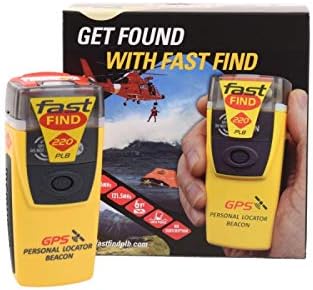
McMurdo FastFind 220
4.5Editor score
Simple three-step activation
Compact emergency beacon
Global operational capability
US registration programming
Subscription-free distress alerting
Compare 10 Personal Locator GPS Beacon options for emergency signaling, location accuracy, battery life, portability, and registration needs before buying.
A personal locator GPS beacon is a compact emergency device designed to transmit a distress alert and your position when conventional cellular or radio coverage is unavailable. The right model should combine dependable satellite communication, intuitive activation, visible signaling, useful mounting options, and a long service life.
This guide compares ten personal locator GPS beacons and satellite communicators using the supplied specifications, including supported positioning systems, emergency alert technology, battery claims, physical design, visual signals, waterproofing, and registration considerations. It also distinguishes conventional distress beacons from a two-way satellite communicator with expanded messaging features.
Each review identifies the strongest use case for its product, while the comparison table and buying guide show how the options differ. The ACR ResQLink View RLS leads through its return-link confirmation, the McMurdo FastFind 220 stands out for compactness, and the Garmin inReach Mini 3 Plus offers broader communication. Product availability and pricing can change, so check current listings before purchasing.
4.5Editor score

4.8Editor score

4.5Editor score
This side-by-side comparison highlights the principal differences among registration-only PLBs, RLS-equipped ACR models, survival-kit bundles, and a two-way satellite communicator. Use it to compare alert confirmation, positioning, visibility, durability, and communication capabilities before deciding which format fits your trips.



The ACR ResQLink View RLS combines the focused emergency design of a personal locator beacon with a useful confirmation feature: its Return Link Service tells the owner when Search and Rescue has received the distress signal. It carries a 4.8 rating and stands out in this group through the combination of a digital display, return-link functionality, visible and infrared strobes, and support for GPS, Galileo GNSS, and MEOSAR.
We may earn a commission when you buy through this link, at no additional cost to you.
The display helps make the device easier to understand in an emergency, particularly when the user can review its status before a full activation. The supplied specifications also emphasize a five-year battery life and more than 28 hours of operational life, while the built-in buoyancy and multifunction clip system make it suitable for marine and land-based adventures. No subscription is required for its core rescue function.
Its main trade-off is that it is more feature-oriented than a basic beacon, which can make initial setup and registration more involved. The return-link system also serves a different purpose than two-way messaging: it confirms receipt but does not turn the unit into a general communications device. Prospective buyers should still register the beacon and familiarize themselves with the controls before relying on it in remote terrain.
This is the strongest all-around choice for travelers who want a dedicated emergency beacon with clear confirmation and broad satellite compatibility. Choose it if your priority is a visual interface, robust distress signaling, and the reassurance of knowing that the emergency alert has been received without committing to a subscription-based communicator.
Return Link Service distinguishes this model from basic personal locator beacons because the owner receives confirmation that Search and Rescue has received the distress signal. That reduces uncertainty after activation while preserving a focused emergency-only design.
Built-in buoyancy, a multifunction clip, and both visible and infrared strobes improve usefulness across boating, hiking, camping, climbing, and other outdoor activities. The positioning support combines GPS with Galileo GNSS and MEOSAR compatibility.
We may earn a commission when you buy through this link, at no additional cost to you.
The McMurdo FastFind 220 is a straightforward personal locator beacon aimed at users who want a dedicated emergency device without a display or extensive communication features. Its 4.5 rating reflects a practical balance of simplicity, portability, and satellite rescue capability, making it a sensible budget-oriented option among the ten products reviewed.
We may earn a commission when you buy through this link, at no additional cost to you.
Activation is designed to be intuitive: deploy the antenna, pull the anti-tamper seal, and press the ON button. The beacon can function around the world, although this particular version is programmed for registration with the US country code. That distinction is important for international travelers because the initial emergency contact will be the US Search and Rescue authority with which it is registered.
The FastFind 220 does not offer the return-link reassurance, visual screen, or broad messaging functions found in some higher-feature alternatives. It is also a serious emergency device rather than a recreational tracker, and false alerts can endanger lives while disrupting rescue services. Users should understand that registering the unit and using it only for grave and imminent danger are central parts of responsible ownership.
This beacon is best for hikers, boaters, and international travelers seeking a simple unit that can be carried easily and activated under pressure. Choose it when a focused satellite SOS beacon is enough, but verify the programming and registration requirements for your country before taking it on a trip.
The antenna, anti-tamper seal, and ON button provide a short activation sequence that can be learned before an emergency. Simple controls are particularly valuable when a user is injured, cold, exhausted, or otherwise unable to manage a complex interface.
A PLB must be registered so responders know the owner and can use the supplied contact details and travel information. International buyers should confirm that the US-programmed version matches their home registry before relying on it abroad.
We may earn a commission when you buy through this link, at no additional cost to you.
The ACR ResQLink View PLB425 is a compact, buoyant GPS personal locator beacon with a 4.6 rating. It sends a 406 MHz emergency distress signal containing GPS position through the COSPAS-SARSAT system and pairs it with a 121.5 MHz homing signal. That combination makes it a strong fit for hikers, boaters, campers, climbers, and RV travelers who need a dedicated SOS device.
We may earn a commission when you buy through this link, at no additional cost to you.
Its supplied specification list highlights a broad set of wearable mounting choices, including a belt clip, oral inflation tube clip, straps, and lanyards. That flexibility is useful because the best way to carry a beacon depends on the activity. A hiker may prefer a belt clip, while a person on the water may use an inflation tube attachment to keep the device with them if they fall overboard.
The PLB425 also includes bright LED and infrared strobes for visual detection in different conditions. Optional 406Link functionality allows pre-canned self-tests and GPS test messages to contacts by SMS or email, but this testing feature requires the separate subscription. Core rescue operation does not require a subscription, and the alerting path goes directly to Search and Rescue agencies worldwide.
Compared with the ACR View RLS, the PLB425 does not provide return-link confirmation, making the RLS more reassuring for people who want to know that the alert was received. Nevertheless, the PLB425 is a well-rounded beacon for travelers who value buoyancy, flexible attachments, and direct global distress coverage.
Belt, lanyard, strap, and inflation-tube clips let users match the beacon to different activities. Keeping the device attached to clothing or safety gear improves the chance that it remains accessible and with the user when an emergency occurs.
The 406 MHz signal carries the distress alert and GPS location to Search and Rescue, while the 121.5 MHz homing signal assists aircraft with locating the beacon. This layered signaling approach supports both dispatching responders and helping them close in on the location.
We may earn a commission when you buy through this link, at no additional cost to you.
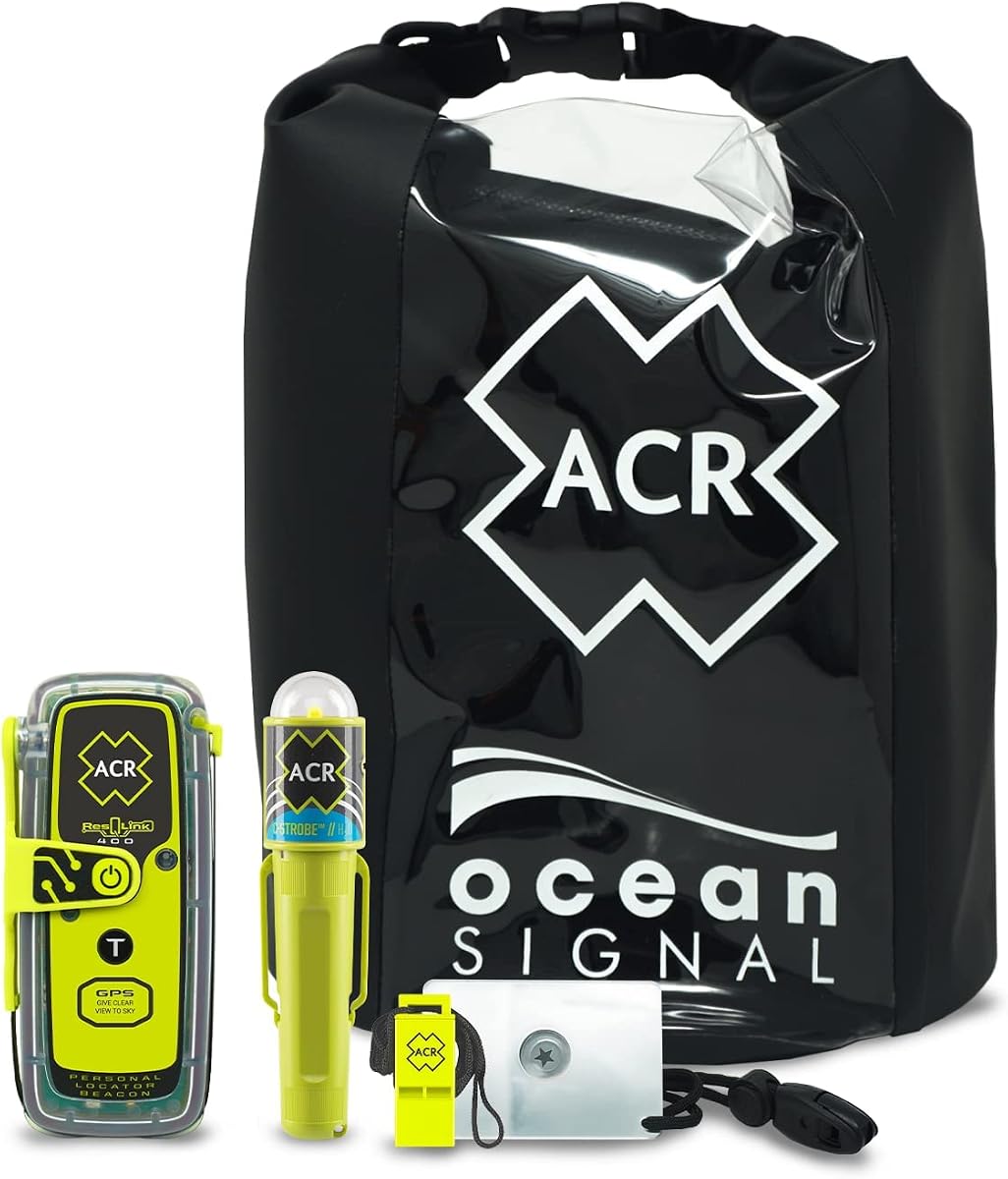
The ACR ResQLink 400 Survival Kit combines a GPS personal locator beacon with several close-range signaling and protection tools. Its 4.7 rating makes it one of the strongest listings in this comparison, while the bundle format appeals to hikers, campers, paddlers, and drivers who want more than a single emergency device packed for remote travel.
We may earn a commission when you buy through this link, at no additional cost to you.
The centerpiece provides GPS tracking, a bright strobe, and rapid distress signaling. Around it, the C-Strobe H2O offers waterproof, high-visibility LED signaling, the Res-Q Whistle produces a loud and clear sound, and the Signal Mirror can reflect sunlight over distance. A RapidDitch Drybag keeps the equipment protected from wet conditions and provides organized storage for essentials.
These added tools do not replace a satellite beacon. A whistle can help nearby rescuers hear you, while a mirror or rescue light can improve visibility, but neither provides location data or dispatch assistance. The GPS beacon remains the most important element for travelers who may be far from other people, and the supporting items are most valuable when someone reaches the scene or when responders need an additional visual reference.
This kit suits buyers who want a ready-made emergency package rather than assembling individual survival accessories. It is a compelling choice for hiking and camping kits because it pairs the distress beacon with useful signaling tools and a waterproof carrier. Keep the beacon accessible rather than burying it inside the bag, and test the separate accessories before relying on them.
The whistle, rescue light, signal mirror, and drybag create several layers of signaling and protection. These tools can support a person who is close to others, while the GPS beacon remains the central tool for summoning distant rescue support.
The waterproof C-Strobe H2O and RapidDitch Drybag address two common outdoor concerns: visibility in poor weather and protection of equipment from water. Packed together, they make the kit easy to organize for trips where conditions can change quickly.
We may earn a commission when you buy through this link, at no additional cost to you.
The Ocean Signal rescueME PLB1 is designed for people who need emergency satellite signaling without the weight or complexity of a larger device. It has a 4.6 rating, weighs four ounces, and is described as 30 percent smaller than the maker's next-smallest beacon. Its strongest qualities are one-handed operation, easy attachment, and a claimed seven-year battery life.
We may earn a commission when you buy through this link, at no additional cost to you.
A 66-channel GPS receiver supports positioning, while a one-candela high-intensity strobe improves visibility after activation. The device offers more than 24 hours of operational life and is waterproof to 49 feet. For marine users, that level of water resistance and the included mounting clip are particularly useful because the beacon can remain attached to a lifejacket.
The tradeoff is that the PLB1 does not provide a digital display, return-link confirmation, or two-way conversation with rescuers. It remains an emergency beacon rather than a daily satellite communicator. False-alert prevention is also essential for any registered PLB because unnecessary dispatches can divert resources from genuine emergencies.
Choose the rescueME PLB1 when portability is the deciding factor. It is a particularly compelling option for sailors, paddlers, hikers, and travelers who prefer to carry less weight. Learn the activation sequence in advance, register the unit correctly, and keep it attached to a suitable lifejacket or clothing system where it will remain accessible.
At four ounces and with a compact housing, the PLB1 is easier to justify carrying continuously than many larger beacons. The small size matters because emergency equipment is most valuable when it is already present on the person rather than left in a vehicle or storage compartment.
Waterproofing to 49 feet and a lifejacket-friendly mounting clip suit marine use. The high-intensity strobe adds another visual layer when rescuers are near the user, complementing the satellite alert and GPS positioning.
We may earn a commission when you buy through this link, at no additional cost to you.
The ACR ResQLink 400 is a focused, subscription-free satellite SOS beacon that carries a 4.7 rating. It combines a 406 MHz distress signal with GPS and Galileo GNSS positioning and compatibility with the COSPAS-SARSAT and MEOSAR satellite systems. For buyers who want dependable emergency alerting without a recurring communication service, its feature set is notably complete.
We may earn a commission when you buy through this link, at no additional cost to you.
Visibility is handled by both an LED strobe and an infrared strobe, improving the chance that rescuers can detect the unit in low-light or nighttime conditions. The model also has a 4.7 rating among users, which supports its position as a proven general-purpose choice for hiking, boating, camping, climbing, and other activities where cellular service cannot be relied upon.
Its limitations are concentrated in communication and feedback features. There is no digital display, no return-link confirmation, and no two-way messaging. The device is therefore best viewed as a rescue beacon rather than a tool for sending routine updates. Users must still complete the legally required registration and understand that intentional misuse can trigger unnecessary and potentially dangerous rescue responses.
This ResQLink 400 is an excellent choice for users who prioritize satellite standards, dual positioning systems, and a simple operating model. It is also attractive because the core emergency service does not depend on a subscription. Choose it over a communicator when your goal is reliable SOS activation and location rather than conversation or ongoing check-ins.
Support for COSPAS-SARSAT and MEOSAR gives the beacon access to international satellite-assisted rescue infrastructure. This makes it well suited to travelers who cross regions and want a standardized emergency device.
The combination of an LED strobe and infrared strobe supports detection in different environmental conditions. These lights are particularly valuable once responders reach the general area and need a visible target.
We may earn a commission when you buy through this link, at no additional cost to you.
The ACR ResQLink View Survival Kit combines a visual-display GPS personal locator beacon with a coordinated set of emergency accessories. Its 4.7 rating reflects a favorable customer reception, and the package is well suited to users who want a ready-to-pack safety setup instead of assembling individual rescue tools.
We may earn a commission when you buy through this link, at no additional cost to you.
The beacon supplies GPS tracking, a bright strobe, and fast rescue signaling, while its visual display provides information that is difficult to obtain from a screen-free model. The included C-Strobe H2O provides waterproof LED visibility, the Res-Q Whistle produces a loud signal, and the Signal Mirror offers a lightweight method for reflecting sunlight toward distant rescuers.
A RapidDitch Drybag completes the package by keeping the gear dry and accessible. This is especially relevant for paddling, coastal hiking, camping, and motorboating, where spray, rain, and wet gear can otherwise undermine equipment readiness. The accessories are useful backup layers, but the satellite beacon remains the feature that can contact a rescue organization when cellular coverage is absent.
Choose this kit when you value both a display-equipped beacon and conventional survival signaling equipment. It is a strong option for families building camping or hiking kits, particularly if the included light, whistle, mirror, and drybag reduce the need to source those items separately. Confirm that the kit's beacon is registered to the intended owner before every trip.
The display makes status information easier for the user to review than on a screen-free model. It is a useful distinction for travelers who want more device feedback without moving to a full satellite communicator.
The rescue light, whistle, and mirror cover visual and audible signaling needs. The drybag organizes and protects the complete set, making the kit practical for wet-weather and mixed outdoor trips.
We may earn a commission when you buy through this link, at no additional cost to you.
The ACR ResQLink 410 RLS offers the same core reassurance as the View RLS—confirmation that Search and Rescue received the distress alert—while emphasizing a small, buoyant, lightweight design. It has a 4.5 rating and is a strong premium choice for people who prioritize return-link functionality without needing a screen or a full messaging device.
We may earn a commission when you buy through this link, at no additional cost to you.
Its specifications list no subscription requirement, a five-year battery life, more than 24 hours of operating life, and compatibility with GPS, Galileo GNSS, and MEOSAR. Built-in buoyancy makes it suitable for water-based use, while visible and infrared strobes help rescuers identify the unit under challenging lighting conditions. A multifunction clip system supports several attachment methods.
As with the View RLS, the return-link feature should not be confused with two-way communication. It indicates receipt of the emergency signal but does not create a conversation with responders. The lack of a display also means the unit is less informative during routine checks, although it may offer a simpler overall form factor for users focused on emergency activation.
This model is well suited to serious hikers, climbers, boaters, and international travelers who want confirmation that their alert reached the rescue network. Its premium status rests on the RLS capability and broad compatibility, not on messaging or entertainment functions. Register it correctly, carry it where it will remain accessible, and test the device according to the manufacturer's instructions.
The Return Link Service confirms that Search and Rescue has received the emergency distress signal. For users who may be injured and unable to assume that a transmission was received, that confirmation adds a meaningful layer of reassurance.
A small, lightweight housing with built-in buoyancy and a multifunction clip is easy to integrate into clothing, packs, or marine safety gear. The result is a specialized emergency beacon that remains focused rather than adding communication functions.
We may earn a commission when you buy through this link, at no additional cost to you.
The display-free ACR ResQLink 400 listing offers a minimal version of the well-known ResQLink 400 design, identified in the supplied information as model 2921. Its 4.8 rating is the highest among the listed customer ratings, which makes it an attractive option for buyers who prefer a focused beacon without a screen or secondary controls.
We may earn a commission when you buy through this link, at no additional cost to you.
The listing emphasizes GPS distress tracking, expert advice, authorized-dealer status, and seller coverage for return shipping when an item arrives damaged or defective. It also provides a recognizable configuration for buyers who have already researched the ResQLink 400 platform. As a no-display device, its purpose is simple: activate an emergency alert and transmit a position rather than provide routine communications.
The absence of a display reduces feedback about device status and does not offer the return-link confirmation found in RLS-equipped models. A buyer who values explicit confirmation of receipt may prefer a different product. Buyers should also recognize that the supplied listing has less technical detail than several other entries, so the manufacturer's instructions and the device's own documentation should guide use and testing.
This model is best for experienced outdoor users who want a no-nonsense emergency beacon and do not need a screen. Its strong customer rating and authorized-dealer positioning add confidence, but registration remains essential. Confirm the model details, register the unit, and carry it consistently on trips where satellite rescue capability is necessary.
Removing the display creates a beacon focused on activation and GPS distress transmission. That simplicity can appeal to users who want fewer features and less interface complexity in a life-safety device.
The listing identifies an authorized dealer and states that the seller covers return shipping for damaged or defective items. It also notes that expert advice is available, providing support beyond the physical device.
We may earn a commission when you buy through this link, at no additional cost to you.
The Garmin inReach Mini 3 Plus is not a conventional registration-only PLB; it is a compact two-way satellite communicator with interactive emergency coordination, messaging, tracking, and app integration. Its 4.7 rating and broad feature set make it the most versatile product in this guide for travelers who want a communication tool before, during, and after an emergency.
We may earn a commission when you buy through this link, at no additional cost to you.
The device operates through the Iridium satellite network and supports texts, voice messages, and group messages. When paired with a compatible smartphone, it can also capture and send photos through the Garmin Messenger app. Interactive SOS sends the user's location to Garmin Response, a staffed emergency coordination center that receives location information and maintains two-way communication during a crisis.
The color touchscreen is scratch resistant, and the IP67-rated housing is designed to handle impact, severe weather, and demanding terrain. Its internal rechargeable battery can run for up to 350 hours with ten-minute tracking intervals or up to 95 hours in performance messaging mode. LiveTrack, weather forecasts, trip planning, preset messages, and hands-free voice commands expand its usefulness beyond emergencies.
This is the best pick for expedition travelers, field professionals, and families who want routine check-ins and detailed remote communication rather than a one-purpose distress beacon. The tradeoff is charging dependence and the need for an appropriate service plan for the communicator's full functionality. It is also larger and more complex than the smallest dedicated PLBs, so buyers should consider whether those capabilities justify the added setup.
Two-way messages, group communication, voice notes, location sharing, and app-based media enable useful contact before an emergency develops. This makes the device especially suitable for multi-day travel, fieldwork, and trips where companions need regular updates.
Unlike a one-way distress beacon, the Garmin can maintain two-way communication with a staffed emergency coordination center after an SOS alert. Sharing the location and receiving updates can provide responders and travelers with a more coordinated response.
We may earn a commission when you buy through this link, at no additional cost to you.
The right personal locator GPS beacon depends on where it will be carried, how much communication you need, and which emergency features bring the greatest reassurance. Compare satellite protocols, registration, activation method, battery management, mounting, visibility, and environmental durability before choosing.
A dedicated personal locator beacon focuses on transmitting a distress alert, position information, and a homing signal. It is generally simpler and can remain ready for years without frequent charging, making it well suited to backpacking, climbing, boating, and other trips where an emergency may be the only reason the device is used. A satellite communicator adds routine messaging, tracking, group updates, and interactive emergency coordination, which is valuable for expeditions and work away from cellular coverage but introduces more complexity and service requirements.
Choose a dedicated PLB for simple emergency readiness. Choose a communicator when you need to contact people regularly or coordinate an incident in detail.
PLBs generally must be registered so authorities know the owner, emergency contacts, and relevant travel information. The McMurdo FastFind 220 listing in this guide is programmed for US registration even though it can function worldwide, and a different regional listing or reprogramming option may be required for another country. International travelers should also confirm which Search and Rescue authority will receive the initial alert and keep the registration details current.
Verify registration for the country where the beacon is registered before departure. Accurate registration can reduce delays when responders begin an operation.
The listed models use satellite-assisted emergency infrastructure such as COSPAS-SARSAT and MEOSAR, while the Garmin uses the Iridium network for two-way communication. Within the ACR range, support for GPS and Galileo GNSS can improve positioning options. These standards are especially relevant for travelers crossing borders because international rescue coverage depends on compatible satellite and ground infrastructure.
Look for broadly supported distress networks and multiple positioning constellations. Confirm that the device is configured for the region and registration authority you need.
Return Link Service provides confirmation that Search and Rescue has received the distress signal. The ACR ResQLink View RLS and ResQLink 410 RLS offer this feature, which can be valuable for an injured user who cannot independently confirm whether the transmission succeeded. A visual display, visible strobe, or infrared strobe provides a different kind of feedback, showing or communicating the unit's status rather than proving receipt of an alert.
Choose return-link confirmation if reassurance after activation is important. A display is useful for status checks, but neither feature substitutes for registration.
Battery expectations differ sharply between disposable-cell PLBs and rechargeable satellite communicators. The McMurdo, Ocean Signal, and ACR products in this guide list multi-year battery lives and extended emergency operating periods. The Garmin uses an internal rechargeable battery with claimed runtimes that vary greatly according to tracking and messaging modes. Battery life is important because a beacon that is not ready when needed cannot help, even if its satellite capabilities are excellent.
For a dedicated PLB, review both shelf life and emergency operating time. For a rechargeable communicator, establish a reliable charging routine and carry a power reserve on longer trips.
A beacon that is comfortable to carry is more likely to remain attached during the activities for which it is needed. The Ocean Signal rescueME PLB1 weighs four ounces and includes a lifejacket-oriented mounting clip, while the ACR products include multifunction or activity-specific clips. Survival kits add bulk but consolidate useful accessories in one organized package. The Garmin is compact for a touchscreen communicator, though it still has more controls and functions than a dedicated PLB.
Try attachment options with your normal clothing, backpack, or safety gear. Choose a model you will actually carry and can activate without searching through multiple layers.
A satellite alert does not remove the need to help rescuers see the user or beacon once they arrive. Visible LED strobes are common across the ACR products, while the rescueME PLB1 includes a one-candela high-intensity strobe and is waterproof to 49 feet. The ACR View RLS and ResQLink 410 RLS also provide infrared strobes and built-in buoyancy. The Garmin uses an IP67-rated housing and a scratch-resistant color touchscreen for demanding conditions.
Match durability to the environment: water exposure, impact, cold, heat, and dust all matter. Prioritize buoyancy and robust attachments for marine trips and strong visual signals for nighttime rescue.
A dedicated PLB is designed for infrequent emergency use, so its subscription-free operating model and long battery standby may be ideal. A two-way communicator is valuable for daily coordination, weather, route information, group messages, and location sharing, but it requires more interaction and ongoing power management. Overbuying a complex communicator for occasional emergency coverage can add unnecessary cost and complexity, while choosing only a PLB may leave travelers without a way to communicate routine updates.
Match the device to the full role you expect it to play. Safety-only use favors a dedicated beacon, while remote work, family trips, and expeditions often justify broader communication.
Register the beacon before relying on it for any trip, and make sure the registration accurately reflects the owner's identity, emergency contacts, and relevant travel details. Confirm that the unit is programmed for the correct country or region, particularly when purchasing an international model or a version designed for one national registry. Never rely on a generic, unregistered emergency device because responders may lack the information needed to begin a coordinated search.
Before every trip, review the activation procedure, locate the antenna, attachment, controls, and signaling light. Use the manufacturer's self-test function or recommended test method where available. For models with optional testing-message services, use the correct service rather than sending an accidental distress alert. Keep the device on your person, inside a pocket, or attached to suitable safety gear, and do not leave it locked inside a vehicle or stored in luggage.
For maintenance, follow the battery-storage and replacement instructions supplied with the model, inspect clips and straps regularly, and keep contacts clean and dry. Recharge the Garmin's internal battery on a predictable schedule, and carry a backup power source for longer trips. After use, verify that the unit is still working, update any travel information in the registration, and promptly address low battery, damage, or water exposure before the next adventure.
A personal locator beacon is designed primarily to send an emergency distress alert and position information to Search and Rescue. A satellite communicator also supports routine two-way messages, tracking, weather, and other app-based tools while still offering interactive emergency coordination. A dedicated PLB is usually simpler for emergency-only use, while a communicator is better for travelers who need consistent contact.
The ACR and Ocean Signal beacons listed here state that their core emergency operation does not require a subscription. The ACR 406Link testing option does require a separate subscription, and the Garmin inReach Mini 3 Plus requires an appropriate service plan for its full two-way communication functions. Always check the current requirements of the exact model and listing before purchasing.
Registration links the device to its owner and gives rescue authorities information about emergency contacts and possibly intended travel plans. Without accurate details, responders may need more time to identify the person and determine where to search. Registration is legally required in many countries, so it should be completed and reviewed before the beacon is taken into the field.
The McMurdo FastFind 220 in this guide can function worldwide, but this listing is programmed for US registration and its initial emergency contact would be the corresponding US Search and Rescue authority. Travelers should verify whether a regional version is more appropriate. The listing also notes that another FastFind 220 configuration includes reprogramming for registration outside the United States.
A return-link service confirms that Search and Rescue has received the distress signal. This can reassure an owner that the alert did not go unnoticed, even when the user is injured and cannot make a follow-up transmission. It does not provide the same functionality as two-way messaging, because the beacon does not serve as a general conversation platform.
A personal locator beacon is highly relevant for boating because cellular coverage is inconsistent on many waterways and a person separated from a vessel may have no ordinary communication method. Choose a securely mounted, buoyant model with a strong strobe, such as the Ocean Signal rescueME PLB1 or one of the buoyant ACR models. Attach it to the person or lifejacket rather than only leaving it inside the boat.
Test the device according to the manufacturer's schedule and instructions, especially before a long trip. Use a designated self-test or test-message function when available, and never activate a live distress alert merely to check the unit. A test should confirm that the device powers up, the battery is healthy, and the GPS or other positioning function behaves as intended.
It depends on the type of travel and the communication role you need. A dedicated PLB excels as simple, long-lived emergency equipment, while the Garmin inReach Mini 3 Plus supports messages, group updates, location sharing, weather, and interactive SOS coordination. Travelers who expect regular contact away from cellular coverage may value the communicator more, even though it requires charging and a suitable service plan.
The ACR ResQLink View RLS is the strongest overall choice because it combines dedicated SOS signaling with return-link confirmation, broad positioning support, visible and infrared strobes, and a long stated battery life. The McMurdo FastFind 220 offers a simpler, lower-cost route into personal locator beacon ownership, while the ACR ResQLink 410 RLS delivers premium return-link functionality in a small buoyant design.
Prioritize the operating model that matches your real needs. Choose a registration-only PLB when your requirements are emergency alerting and GPS position in remote areas. Choose the Garmin inReach Mini 3 Plus when regular satellite messages, tracking, app integration, and two-way emergency coordination justify the additional charging and service considerations. For all models, correct registration, reliable attachment, realistic testing, and battery care are essential.
Before making a final purchase, check current product availability and pricing, confirm the exact model and regional programming, and review the manufacturer's latest registration and operating instructions. Emergency devices earn their value through preparation, so include yours in every kit and make sure the people traveling with you know where it is kept and how its distress function works.