
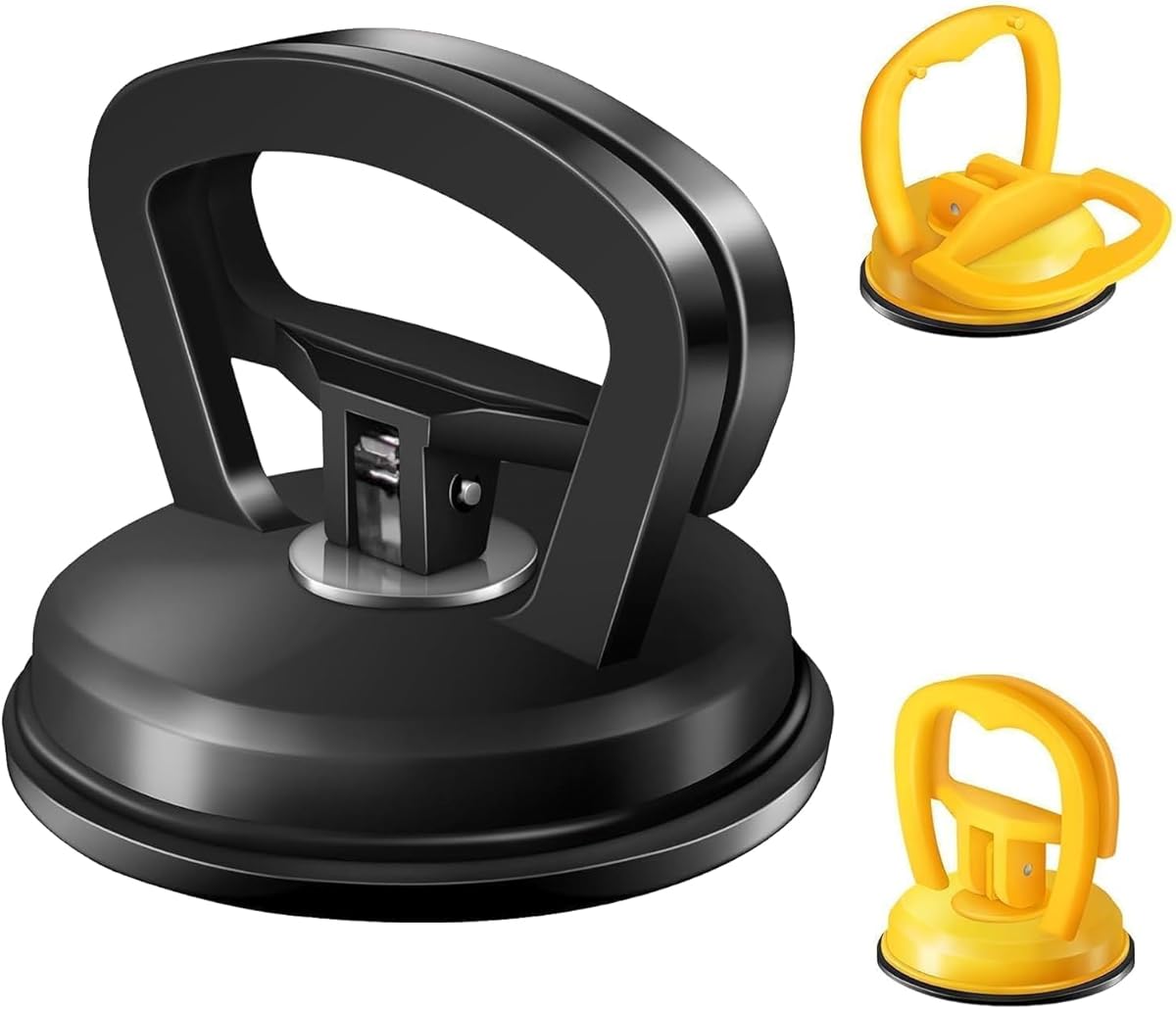
Car Dent Puller 3-Pack Black
5.0Editor score
Large and small cups
Compact storage box
Glue-free operation
Suitable for tight areas
Our guide compares 10 tape for removing dents options, covering suction pullers, glue tabs, dent lifters, kits, and repair methods to help you choose.
Tape for removing dents can be a misleading shopping term because many highly rated products are actually suction pullers, glue-backed tabs, dent lifters, or complete paintless dent repair kits. A useful tool must create controlled pulling force, grip the damaged area securely, and avoid cracking paint or leaving stubborn residue on the panel.
We compared ten options according to the information supplied for each product, focusing on repair method, included components, material, application range, and stated limitations. The list covers compact suction tools, aluminum pull tabs, glue sticks, bridge lifters, T-bar systems, and a decal eraser wheel so readers can compare approaches rather than just package sizes.
Each review explains what distinguishes the product, where it fits best, and which compromises to consider before buying. Ratings reflect the supplied marketplace feedback and should be considered alongside dent type, panel shape, and the user's comfort level. As with all automotive supplies, availability and current prices can change without notice.
5.0Editor score
4.4Editor score

3.4Editor score
The comparison below highlights the main repair methods, component counts, and practical considerations associated with each option. Together, the products span simple suction devices, adhesive pull systems, complete professional-style kits, and a decal removal tool.


This 3-pack is a straightforward suction-based dent puller that earns its place as the most broadly approachable option in the guide. It combines one large puller with two smaller tools, and the supplied 4.4 rating suggests generally positive customer feedback. Its main appeal is that it removes the need to heat adhesive tabs, clean away glue, or interpret the product as a complicated professional repair system.
We may earn a commission when you buy through this link, at no additional cost to you.
The construction is described as durable natural rubber supported by a solid metal core, while the smooth spring-lock handle is intended to keep tension consistent during a pull. The large model is listed with maximum horizontal suction of 110 pounds and maximum vertical suction of 77 pounds. Although those figures should not be treated as guaranteed performance on every panel, they illustrate why this is considered a strong suction option for shallow and moderate depressions.
The smaller pullers are useful when the larger cup will not fit or when a concentrated pull is preferable. A broader cup distributes force over more of the panel, while a smaller cup can focus on a localized low spot. This flexibility is important because dents rarely present as perfectly circular depressions, and a tool that seals poorly around a character line may produce little movement even if the underlying metal has room to flex.
This is a good choice for a first-time buyer who wants a compact repair option without a separate glue gun. It is less suitable for sharp creases, deep folds, corners, or panels with compromised paint. The product instructions also recommend working on a clean, smooth surface and heating the dent with hot water before attempting to pull it, so results depend on correct preparation and realistic expectations.
The main benefit is speed and simplicity. There is no adhesive to melt, attach, or remove, making this puller convenient for a dent noticed in a driveway or parking area. Wipe the surface, check that the cup diameter is smaller than the depressed area, and pull with a controlled motion.
Having a large and two smaller pullers makes it easier to match the tool to the shape of the damage. The large tool covers broad areas, while the compact sizes are more practical around handles, tighter panel sections, and smaller dimples.
We may earn a commission when you buy through this link, at no additional cost to you.
This 45-piece paintless dent repair system is built for users who want more than a single pulling device. It combines a hot glue gun, ten glue sticks, a plastic bridge puller, a golden dent lifter, five pry tools, and a broad selection of pull tabs. Its 4.0 rating reflects a middle-ground customer reception, but the variety makes it useful for comparing several common PDR techniques in one package.
We may earn a commission when you buy through this link, at no additional cost to you.
The adjustable lifter can change both height and width, and the arched bridge design is intended to reduce the chance of additional damage during leverage. The supplied information also notes five tab sizes on the bridge and 16 size options available through the dent lifter. This range helps users select a tab that sits within the low point rather than bridging onto intact, raised metal.
As a glue-based method, the kit involves more steps than a suction puller. The user must melt adhesive, attach a tab, allow it to cool and bond, position the puller, and then remove the tab and any remaining adhesive. That additional process makes the kit better suited to someone willing to learn the technique and comfortable handling a heated glue gun.
The kit is a reasonable choice for cars, motorcycles, trucks, refrigerators, and washing machines, provided the damaged surface is metal and the dent is not located on a corner or crease. Its biggest limitation is that the tool cannot reverse paint damage, and pulling too aggressively or at a poor angle can worsen the deformation. The included prism tools and adjustable pullers offer control, but technique remains essential.
The combination of pullers, tabs, glue, and pry tools gives a beginner several ways to approach a dent. That variety can help users understand whether a suction, bridge, or tab-based method is best for a particular panel before investing in more specialized equipment.
The range of tab dimensions is one of the kit's most useful features. A tab that fits fully inside the deepest section of a dent can pull more directly than a larger tab that bridges across surrounding high points.
We may earn a commission when you buy through this link, at no additional cost to you.
The Dent Fix DENDF-705D is not a conventional dent puller. It is an offset-style decal eraser wheel with a 4.6 rating, one of the strongest customer ratings in this guide. Its value to a dent-repair search is that it addresses a related paint-finishing problem: removing unwanted decals, lettering, or adhesive residue without using a sharp blade against the body surface.
We may earn a commission when you buy through this link, at no additional cost to you.
The product's offset configuration is the defining feature. Rather than presenting a simple straight wheel, the tool places the working end away from the user's hand, which can improve visibility and access when working on a vehicle panel. The universal fit designation suggests that buyers should not need to match it to a particular make or model.
Its primary limitation is equally important: this product will not reshape metal. A dent puller creates leverage or suction to move the panel, whereas an eraser wheel rubs against the surface. Although both can appear in the same broader automotive restoration toolkit, their purposes should not be confused or marketed as interchangeable.
Choose this product when the priority is decal removal or finishing rather than dent correction. It is not the right tool for a creased door, hail-dimpled roof, or low spot in sheet metal. For shoppers looking specifically for a dent-removal device, a suction cup or glue-tab system will be more relevant, but this wheel can still be a useful companion for cleaning up a repair area.
The offset wheel design helps position the working surface without placing the hand directly over the contact area. That makes it easier to inspect the decal as it is removed and to keep the tool moving consistently across the panel.
In a broader body-care workflow, an eraser wheel is more useful after larger dent work has been completed. It addresses surface decoration and residue while a puller addresses the shape of the metal underneath.
We may earn a commission when you buy through this link, at no additional cost to you.
This paintless dent repair kit combines a gold-colored bridge puller with 18 pull tabs in different sizes. Its supplied rating is 5.0, making it one of the strongest-rated choices in the list, and the arched bridge design emphasizes controlled leverage. It is particularly attractive to users who want the pulling accuracy associated with tab-based PDR without purchasing a very large collection of tools.
We may earn a commission when you buy through this link, at no additional cost to you.
The puller has adjustable height and a rotating knob, allowing its position to adapt to different dent contours. A non-slip handle and reinforced pivot point are intended to support steady force, while the soft rubber base helps protect factory paint. The tabs are made from engineering plastic and are described as compatible with the included gold puller as well as standard T-bars and slide hammers.
The basic procedure is conventional for a PDR tab system. Hot melt adhesive is applied to a tab, the tab is pressed into the dent, and the puller lifts the metal after the adhesive cools. The supplied information specifies a hot glue gun and glue sticks as required accessories, so this kit should not be considered ready to use without them. Alcohol can be used to remove remaining adhesive after the pull.
This is an excellent fit for metal car, truck, and motorcycle panels, as well as other smooth metal surfaces, but the manufacturer explicitly warns against using it on plastic bumpers or trim. Its 5.0 rating should be read as marketplace feedback rather than a guarantee for every dent. Even excellent tools can pull a panel incorrectly, so users should inspect the attachment point and increase force gradually rather than rushing the repair.
The arched bridge and adjustable height give the user more ways to align the pull with a depression. That control is valuable when the deepest point is offset from the center of a dent or when surrounding body lines affect the direction of force.
The tabs can work with the supplied bridge puller or with common T-bar and slide-hammer setups. This interoperability makes them useful even for owners who already own a separate pulling frame but still need suitable adhesive tabs.
We may earn a commission when you buy through this link, at no additional cost to you.
These yellow glue sticks are a specialized consumable rather than a complete dent-removal device. They are made for hot glue guns and PDR pull tabs, and the package contains ten 11-millimeter sticks. With a 4.4 rating, they offer a useful way to replenish a tab-based repair setup without replacing the puller or other accessories.
We may earn a commission when you buy through this link, at no additional cost to you.
The product information highlights a best melt time of approximately five to eight minutes when used with a 100-watt glue gun and a cooling or working time of about two minutes for car dent repair. The sticks are described as having stronger viscosity and being suitable for relatively harder automotive parts where a softer adhesive may not hold the tab securely.
They are standard size and compatible with standard glue guns, making them convenient for owners of common kit-based systems. However, buyers should confirm that their gun accepts 11-millimeter sticks and that its heating and trigger operation suits the slower melting time. The listed timing provides a useful starting point, although ambient temperature and the size of the applied bead can alter the working window.
This pack makes the most sense for someone who already owns a reliable puller, glue gun, and collection of tabs. It cannot pull a dent by itself, and using adhesive that is too hot or applying an excessive bead can make cleanup more difficult. The practical advantage is consistency: having purpose-made sticks can produce a repeatable bond while keeping a dent-repair kit ready for future hail marks, shopping-cart dings, and minor parking-lot impacts.
Purpose-specific adhesive can be more dependable than general-purpose glue when bonding a pull tab. The strong viscosity is intended to keep the tab attached while force is applied to the metal underneath.
Glue sticks are consumables, so a backup pack helps prevent an otherwise complete kit from becoming unusable. It also allows users to experiment with bead size and cooling time without worrying about using their last stick.
We may earn a commission when you buy through this link, at no additional cost to you.
This 140-piece kit is the most comprehensive option in the guide, combining a slide-hammer T-bar, bridge puller, dent lifter, three suction cups, a hot-melt glue gun, rubber hammer, tap-down pen, ten glue sticks, and 100 pull tabs. That breadth makes it look attractive for a workshop or a user who expects to handle many different dent types, although its 3.4 rating is the lowest among the listed products.
We may earn a commission when you buy through this link, at no additional cost to you.
The tool selection reflects a sensible hierarchy of pulling methods. The T-bar is assigned to large dents, the bridge puller to medium dents, the dent lifter to smaller depressions, and the tabs to different shapes and sizes. Soft rubber on the bottoms of the bridge and lifter is intended to protect original paint, while the supplied instructions describe alcohol and a rubber scraper for removing adhesive residue.
The kit is most useful for an adult DIY user or automotive professional who wants specialized equipment in a single purchase. It includes a broad assortment rather than a single-purpose tool, which can reduce the need to source components separately. The tradeoff is complexity: more parts mean more setup decisions, more storage requirements, and more opportunity for a beginner to choose an inappropriate method.
Its safety guidance is one of the stronger parts of the supplied information. Users are told to read the complete manual, avoid components with cracks, bends, burrs, or sharp edges, and keep fingers and bystanders away from impact and pinch areas. The tool is not intended for corners or creases. Despite the extensive feature set, the moderate rating suggests buyers should assess the package carefully and prioritize the components they will actually use.
The inclusion of suction, bridge, lifter, and T-bar tools means the package can address more than one category of deformation. Users can select the method based on dent width, depth, panel curvature, and the amount of controlled force required.
The rubber hammer, tap-down pen, glue gun, suction cups, and large tab assortment make this feel more like a compact repair station than a simple puller. Those extras are most valuable for users who expect repeated repairs or already understand basic PDR workflow.
We may earn a commission when you buy through this link, at no additional cost to you.
This compact black 3-pack includes one 4.5-inch suction puller and two 2.2-inch pullers, all stored in a small box. Its 5.0 rating makes it one of the most highly rated products in the comparison, while the simple suction approach gives it strong appeal as an approachable first tool. It also gives the three-piece configuration more size flexibility than a single-cup design.
We may earn a commission when you buy through this link, at no additional cost to you.
The pullers use an ABS housing, natural rubber pad, and metal core. A smooth spring-lock handle is designed to provide a firm grip and consistent tension. The small cups are particularly useful for tight or curved areas, while the larger cup is intended for broader low spots. The whole set is only about 4.9 by 4.7 by 4.3 inches in its stated storage case, making it easy to keep in a vehicle.
No glue, heat, or chemicals are required, which simplifies both the repair and the cleanup. The process is to clean and dry the panel, separate or position the handle as directed, press the cup firmly onto a smooth section of the dent, lock the handle, and pull. Multiple attempts and slight angle adjustments can help bring a shallow dent toward the original panel shape.
The main limitation is that suction methods cannot reach into sharp creases, deep structural creases, or areas where the damaged section is narrower than the cup. The instructions specifically advise checking that the depression is larger than the cup diameter. This is a strong pick for minor hail marks, shallow door dings, and smooth metal panels, provided the buyer accepts that some complex damage needs professional body repair.
The small storage case makes the kit easy to carry in a trunk, backpack, or glove compartment. That portability is particularly useful for addressing shallow damage soon after it happens rather than letting the panel remain out of shape.
Because no adhesive is involved, there is no curing period or residue-removal stage. The user can evaluate the seal and pull the panel immediately, making the tool useful for quick, iterative corrections.
We may earn a commission when you buy through this link, at no additional cost to you.
This set contains eight aluminum pull tabs in different sizes for paintless dent repair. The 4.5 rating indicates favorable user feedback, and the variety makes it a practical companion for a wide assortment of shallow dents. The tabs are described as compatible with most glue-puller systems, including slide hammers, dent lifters, and other PDR hand tools.
We may earn a commission when you buy through this link, at no additional cost to you.
Aluminum gives the tabs a rigid, reusable construction. Their varied diameters and shapes allow a user to match the attachment point more closely to the geometry of a dent. This can be especially useful for hail damage, shallow impact marks, and low spots on cars, SUVs, trucks, and four-wheel-drive vehicles, where selecting a tab that fits entirely within the depression may improve leverage.
These are not a self-contained puller system. A compatible pulling tool, hot glue gun, and suitable adhesive are still needed, and buyers should ensure that the chosen tool can hold the tabs securely. The described benefits also depend on proper preparation: the panel should be clean, the tab should bond fully, and the pulling direction should follow the panel's natural shape rather than adding new distortion.
The set is best for users who already own a PDR frame or for those building a kit gradually. It offers a more durable and reusable alternative to consuming many disposable tabs, provided the tabs are cleaned properly after each use. It will not handle sharp creases by itself, and it is not a substitute for assessing paint damage or severe structural deformation.
Eight sizes make it easier to place the puller over the center of a depression rather than across raised metal. A centered attachment gives the lever a clearer path for lifting the low point and can reduce the need for aggressive force.
The rigid aluminum construction is designed for repeated use when handled correctly. Users can clean released tabs and retain them for future repairs, reducing the number of consumables needed for an ongoing dent-repair setup.
We may earn a commission when you buy through this link, at no additional cost to you.
This streamlined 28-piece kit is designed for beginners who may feel overwhelmed by very large component collections. It includes a T-bar puller, 18 pull tabs, a small hot-melt glue gun, five glue sticks, a plastic shovel, an empty bottle, and a cleaning cloth. Its 3.7 rating is modest, but the focused contents make it easier to understand and organize than a larger multi-tool package.
We may earn a commission when you buy through this link, at no additional cost to you.
The central repair method uses a glue-backed tab attached to the dent and then lifted with the T-bar. The instructions give a straightforward sequence: clean the area, apply heated glue to a tab, attach it, wait approximately two minutes, and pull upward. Once the dent has been raised, alcohol and the plastic shovel can be used to lift residue from the surface.
The included bottle and cloth support cleanup, while the range of 18 tabs offers some flexibility for different dent shapes. The T-bar is especially suitable for pulling through a controlled mechanical advantage and can be effective when a suction cup does not seal against a curved or textured panel. The product information identifies cars, refrigerators, motorcycles, and washing machines as possible applications where metal surfaces are involved.
This kit is a sensible option for someone who wants the core parts of a tab-based system without a larger collection of specialized tools. Its limitation is that it offers only one main pulling configuration, so it may offer less flexibility than packages containing bridge lifters, suction cups, and multiple pullers. As with every glue-tab method, careful preparation and gradual force are important for protecting the original paint.
The package focuses on the pieces needed for a complete pull-tab workflow. That makes it easier for a beginner to identify the glue gun, tabs, T-bar, and cleanup items without sorting through numerous unfamiliar accessories.
A T-bar can provide leverage without relying on the instant seal created by a suction cup. That makes it useful for shallow metal depressions where a properly attached tab can transmit a steady upward pull to the low point.
We may earn a commission when you buy through this link, at no additional cost to you.
This 3-pack combines a large black suction disc with two smaller orange discs, and its supplied 5.0 rating places it among the top-rated choices. The large disc is described as 4.5 inches, while the smaller orange cups are 2 inches, creating a useful split between broad panel distortions and localized dimples.
We may earn a commission when you buy through this link, at no additional cost to you.
The large cup is intended for relatively flat or gently curved panels, while the smaller cups offer focused traction in narrow areas near handles, mirrors, and character lines. A push-and-pull action creates the repair: center the cup over the low point, press until the seal holds, and draw back evenly. The ability to adjust the angle without reapplying heat or glue makes the set convenient for iterative work.
Soft molded rubber rims are intended to conform to contours without producing swirl marks, and the tools require no air compressor or electrical outlet. The same pulling principle can assist with lifting glass, tiles, stainless steel sinks, aluminum cladding, cabinets, and other smooth objects. The product therefore has value as both a dent tool and a general lifting helper.
Suction works best where the damaged section is clean, smooth, and larger than the cup diameter. Deep folds, sharp creases, textured paint, and damaged clear coats can prevent a reliable seal or increase the risk of marking the surface. The product's lightweight, cord-free design makes it easy to carry, but realistic dent correction still requires patience and repeated assessment rather than forceful pulling.
The black and orange cups provide two different approaches without changing the basic tool concept. The larger disc distributes force across a wider area, while the smaller cups concentrate traction around tight features.
The same controlled suction can serve as a lifting handle for smooth household and renovation surfaces. This makes the set more versatile, although careful surface preparation remains necessary to prevent slips or cosmetic marks.
We may earn a commission when you buy through this link, at no additional cost to you.
The most useful starting point is the repair method, not the package size. True adhesive tape, suction devices, glue-backed pull tabs, and mechanical lifters solve different problems, so buyers should match the tool to the dent and then consider control, surface compatibility, and cleanup requirements.
Choose a method that matches the amount of instruction and equipment you are willing to manage. For the fastest, simplest process, look for a suction puller. For more precise access to low points, consider a pull-tab kit with a compatible lifter or T-bar.
Read the stated dimensions and compare them with the dent before use. If the damaged area is narrower than the cup, the tool is unlikely to work as intended.
Avoid starting on a crease, edge, or visibly cracked finish. If the panel is deeply folded, professional body repair may produce a safer and more complete result.
List the tools you already own before choosing a bundle. Prioritize the puller that matches your usual dent type, then add consumables and accessories that support the workflow.
Check the product's material restrictions and test on a hidden or less visible section when appropriate. Never assume that a tool marketed for one surface is safe on every vehicle panel.
Prefer adjustable tools with multiple contact or attachment options. They make it easier to change direction and repeat the pull as the panel gradually moves closer to its original shape.
Suction methods provide the fastest cleanup, while adhesive systems require more preparation. Choose based on how often you expect to use the tool and how much workshop space you have.
Use ratings as supporting evidence, not as the only criterion. A lower-rated comprehensive kit may still suit a workshop, while a highly rated compact tool may not handle the specific geometry of your damage.
Start by inspecting the panel and identifying the deepest point. Clean and dry the surface thoroughly, then make sure the finish is not cracked or deeply creased. For a suction puller, select a cup smaller than the depressed area, press it down evenly until the seal holds, and pull in a slow, controlled motion. If the first attempt does not move the panel, adjust the angle or cup position rather than increasing force aggressively.
For a glue-tab system, melt the appropriate adhesive in a compatible hot glue gun and apply a modest bead to the tab. Position the tab fully within the low point and allow it to cool and bond. Attach the bridge lifter, dent lifter, or T-bar and pull gradually along the direction that best matches the panel's shape. Do not use the tool on corners, sharp creases, plastic trim, or surfaces with damaged paint.
After a successful pull, remove the tab according to the kit instructions and clean any remaining adhesive with alcohol and a non-damaging plastic scraper. Wipe suction cups with a damp cloth, dry them fully, and inspect the rubber rims for cracks or deformation. Store glue sticks and tabs in a cool, dry place, and discard any puller component that is bent, loose, cracked, or has a sharp edge.
It depends on the product and the damage. Many options described as tape for removing dents are actually suction pullers, glue-backed tabs, or mechanical lifters, while the included decal eraser is a surface-finishing tool. Choose a method that matches the dent's depth, shape, and panel location rather than relying on the product label.
No. Paintless methods work best on shallow dents in intact metal panels where the metal can still flex. Sharp creases, deep folds, cracked paint, structural damage, and dents on plastic trim are poor candidates. Those problems may require panel reshaping, paint repair, or professional body-shop work.
A suction-based puller is usually the easiest starting point because it needs no adhesive and leaves no glue residue. The main challenge is creating a complete seal on a clean, smooth surface. A smaller cup may be necessary around handles and character lines, where a large cup cannot sit evenly.
A pull tab is bonded to the deepest part of the dent with hot-melt adhesive. After the adhesive cools, a bridge puller, lifter, or T-bar applies leverage to the tab and raises the metal. The tab is then removed, and remaining adhesive is cleaned from the surface with alcohol and a suitable plastic scraper.
Do not assume that suitability transfers from metal to plastic. The Golden Dent Puller PDR Kit specifically states that it should not be used on plastic bumpers or trim. Plastic can crack, deform, or retain adhesive marks, so consult the instructions for the exact product and consider a surface-safe alternative.
No. A dent puller is designed to reshape metal, not restore a paint surface. It may reduce the visible depth of a dent, but scratches, peeling clear coat, oxidation, or cracking require separate correction products and refinishing. The Dent Fix Offset Decal Eraser is intended for decal removal rather than metal reshaping.
Heating may help soften the finish or make the metal slightly more responsive, but it must be done carefully. One suction-puller's instructions specifically recommend pouring hot water over the dent before applying the cup. Avoid aggressive flame or excessive heat, and never pull over visibly cracked paint.
Wipe suction rims and housings with a damp cloth, remove loose debris, and let every part dry before storage. For glue-tab systems, lift the used tab carefully and clean residue with alcohol and a plastic scraper. Replace tabs that have lost adhesion and discard tools with cracked rubber, sharp edges, or loose parts.
The Car Dent Puller 3-Pack stands out as the leading general option because it combines three sizes, a straightforward suction method, and no adhesive cleanup. The compact black 3-pack is the strongest budget-oriented alternative for beginners, while the extensive 140-piece kit is the premium choice for users who want several puller styles, abundant tabs, and a broader workshop setup.
Prioritize the kind of damage you actually expect to repair. Choose suction for simple shallow depressions, a puller and glue system for more control over localized low points, and an aluminum tab set if you already own a compatible PDR frame. Avoid attempting complex creases with basic tools, and preserve the original paint by working slowly on clean, compatible surfaces.
Finally, check the current product listing, included components, availability, and price before purchasing. Ratings, packages, and product details can change, and a dent that looks minor may conceal damaged paint or a structural crease. For expensive vehicles, extensive body damage, or uncertain repair results, a qualified body shop remains the safest option.

